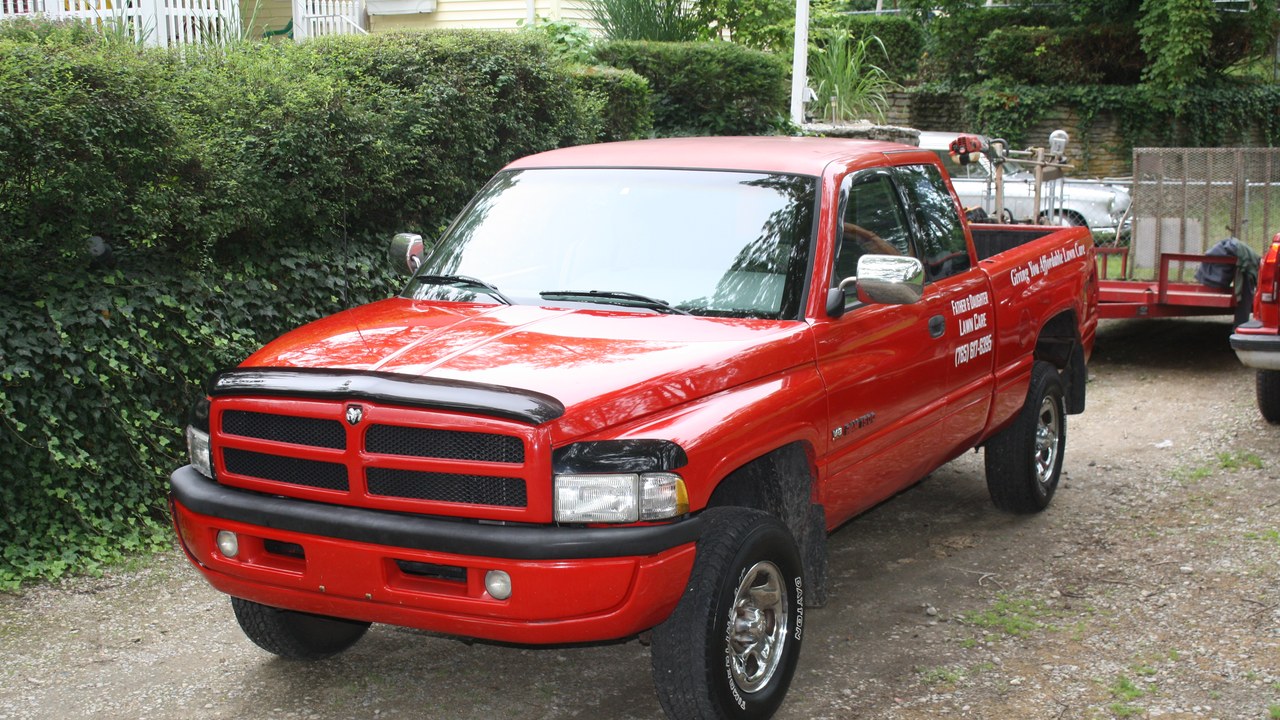
Chrysler has told federal safety regulators that second-row seat belt buckle anchors on more than 1.27 million Ram 1500 pickups were never bolted to the truck’s body during assembly. For any household that depends on a Ram to get kids to school, gear to a job site, or a family on a road trip, an anchor that isn’t actually anchored is the kind of defect that turns a survivable crash into a serious one. The repair is free, the filing includes an unusual instruction to stop driving some of the trucks immediately, and Chrysler’s own estimate says the vast majority of the 1.27 million trucks being checked were actually built correctly.
What Chrysler Told NHTSA Actually Went Wrong
According to the Part 573 safety recall report Chrysler’s parent company, FCA US, filed with the National Highway Traffic Safety Administration on July 30, 2026, some 2019 through 2026 model year Ram 1500 pickups left the factory with the second-row center or driver-side seat belt buckle anchor unattached to the body structure. Federal Motor Vehicle Safety Standard 210 requires seat belt anchors to hold up under a specific simultaneous-loading test, and an anchor that was never bolted down cannot meet that bar. The component in question is a specific hex head bolt supplied by Relyans, a parts manufacturer based in Rochester Hills, Michigan, and identified in the filing as part number 06508760AA. Chrysler’s filing says the gap “may result in reduced occupant restraint capabilities” in a crash — plain language for a seat belt that will not do its job of keeping a passenger in the seat.
The filing’s chronology traces the problem back to January 20, 2026, when Transport Canada flagged a customer complaint about a loose second-row anchor on a 2025 Ram 1500. FCA US opened its own investigation five weeks later, spent the following months working with engineering and manufacturing teams to trace the suspect production window, and concluded on July 23, 2026 that the trucks did not comply with the federal standard. The suspect build window turned out to be enormous: any Ram 1500 produced from February 17, 2018 through April 27, 2026 is included, which covers essentially the entire current-generation production run.
Free retirement updates: Enrollment and claim windows come and go, and missing one can cost you real money. The free Retirement Shield newsletter keeps you ahead of the deadlines that matter. Sign up free.
The Notification Timeline: Dealers Since August 6, Owners Through September 24
NHTSA logged the campaign as recall 26V495; Chrysler’s internal number is 67D. Dealers were notified on or about August 6, 2026, the same day affected VINs became searchable in NHTSA’s public database. Owner letters are going out in a phased mailing that started August 18 and continues through September 24, so a truck built inside the suspect window could still be waiting on a letter weeks from now even though the recall has already been public for over a month. Rather than wait on the mail, owners can check a Ram 1500’s VIN directly against NHTSA’s recall database to see whether their specific truck is part of the 1,271,294 covered by the filing.
Why This One Carries a Do-Not-Drive, Park-Outside Advisory
Most recalls simply tell an owner to schedule a dealer visit. This filing goes further: Chrysler listed both a do-not-drive advisory and a park-outside advisory alongside the inspect-and-repair remedy. NHTSA reserves that combination for defects the manufacturer considers serious enough that an owner shouldn’t wait for a routine appointment. In practice, that means owners who receive notice their specific truck carries the advisory should stop using it for regular driving and contact their dealer right away rather than treating the letter as something to schedule around a busy week. Skipping that step to avoid a few days without the truck is a bad trade against the cost of an unrestrained passenger in even a moderate-speed collision.
The Real Odds: Chrysler Estimates Just 0.1 Percent of the Recalled Trucks Have the Defect
The scale of this recall looks alarming next to how rarely the actual defect occurred. Chrysler’s own filing estimates the defect rate at 0.1 percent of the 1,271,294 trucks involved, which works out to roughly 1,271 pickups actually built with an unbolted anchor. The filing also notes that trucks excluded from the recall population either had no related repair orders on record, were built outside the suspect window, or were confirmed at the factory to have properly attached anchors before leaving Chrysler’s control. NHTSA requires manufacturers to recall the full suspect population when production and service records can’t isolate the exact trucks with the problem, which is why every Ram 1500 built across an eight-year window is included even though Chrysler believes the true number of defective trucks is a small fraction of that. The takeaway for most owners is not to panic, but it is also not to assume their truck is fine without checking — a five-minute VIN lookup settles the question either way.
What the Free Repair Covers, and How to Get Reimbursed If You Already Paid
Chrysler’s remedy is straightforward: dealers will inspect the second-row center and driver-side seat belt buckle anchors and bolt them to the body structure at no charge if the inspection finds a problem. The filing notes Chrysler is using its general reimbursement plan on file with NHTSA, which matters for any owner who already paid a shop out of pocket to fix a loose or disconnected rear seat belt anchor before this recall became public. Under the reimbursement rules NHTSA lays out for consumers, manufacturers must cover documented repair costs going back to either the date the manufacturer told NHTSA about the defect or one year earlier, whichever is earlier — so a receipt from an independent repair shouldn’t be thrown away. The same federal rules require the dealer to perform the fix at no cost regardless of where the truck was originally bought, and any dealer who refuses should be reported straight to Chrysler.
This article was produced with AI assistance and reviewed by a human editor. Figures are linked to their primary sources; where a claim could not be verified from the public record, we say so.
More Financial Reading