A federal safety filing now covers more than 844,000 Jeep, Ram, Chrysler and Dodge vehicles because the rearview camera image can fail to appear the moment a driver shifts into reverse. The problem sits in the radio software that puts the picture on the center screen, not in the camera itself, and it can leave a driver backing out of a driveway or a crowded parking lot with no picture at all. Owners of the affected 2026 and 2027 models started getting notification letters in the mail this week.
What Campaign 26V531000 Actually Covers
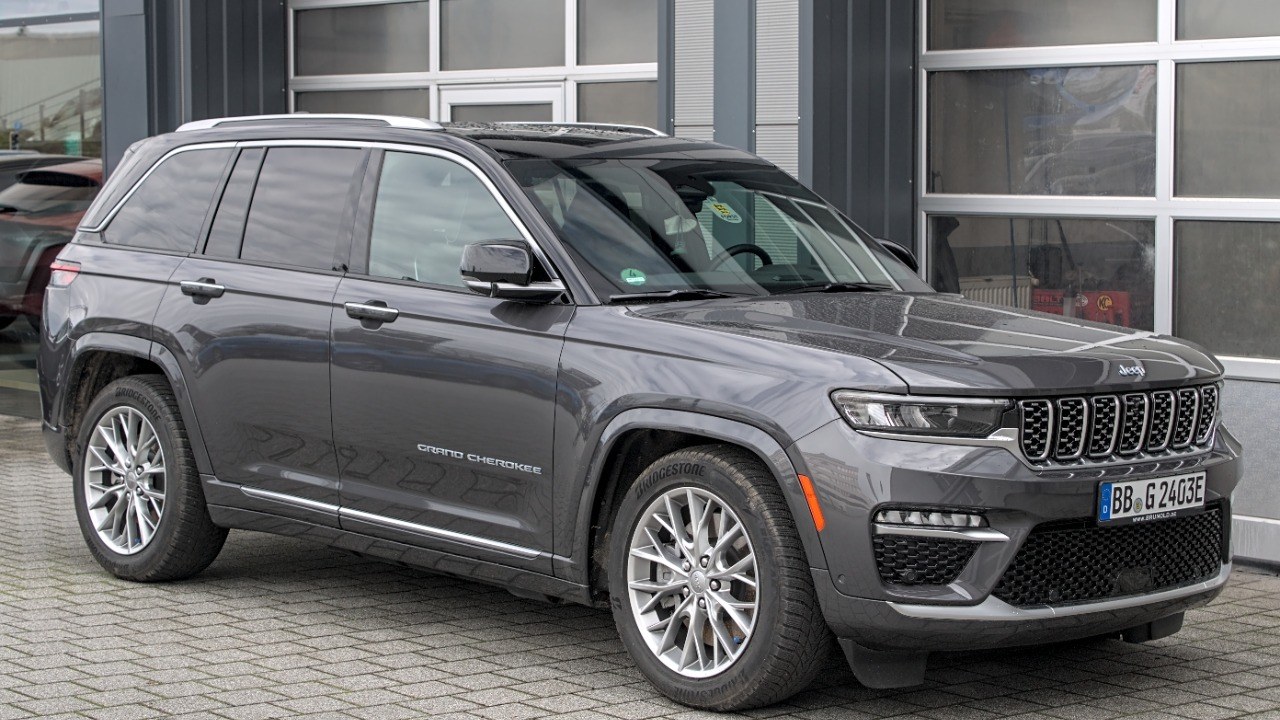
The recall, filed with the National Highway Traffic Safety Administration under campaign number 26V531000, touches 844,027 vehicles built for the U.S. market. The list spans the 2026 Jeep Wrangler, Gladiator, Compass, Cherokee, Grand Cherokee and Grand Cherokee L, and the Grand Wagoneer and Grand Wagoneer L, alongside the 2026 Ram 1500, Ram 2500, ProMaster and ProMaster EV. It also includes the 2026 Chrysler Pacifica Plug-In Hybrid and Voyager minivans, plus the 2026 and 2027 Chrysler Pacifica and Dodge Charger.
Not every vehicle within those model lines is affected, since the defect traces to a specific run of radio software rather than every unit built. The full campaign record lists the exact scope, and owners can confirm whether their specific vehicle is included by entering their 17-digit VIN into NHTSA’s public lookup tool.
Free retirement updates: Social Security and Medicare change every year, and nobody sends you a memo. Our free Retirement Shield newsletter breaks down what changed and what to do. Get it free in your inbox.
Why a Software Glitch Counts as a Federal Safety Violation
A blank backup screen might sound like a minor annoyance next to an engine or brake defect, but federal rules treat it differently. Since 2018, nearly every new passenger vehicle sold in the U.S. has been required to give drivers a clear rearview image the moment the transmission is put in reverse, under a rule known as Federal Motor Vehicle Safety Standard 111. That standard exists because backover crashes disproportionately kill small children and older pedestrians who stand below a driver’s direct sightline. A camera that intermittently fails to load isn’t just inconvenient; it’s a documented gap in a safety system the government requires every one of these vehicles to have working.
Because the image loss is a compliance failure rather than a component that might catastrophically break, Stellantis has not issued a do-not-drive or park-outside warning tied to this recall. Owners are being told to keep driving normally, but to rely on mirrors and a physical look over the shoulder until the fix is installed.
The Rear-Visibility Rule Behind Every One of These Cameras
The requirement Stellantis is now scrambling to fix isn’t new law. It traces to the Cameron Gulbransen Kids Transportation Safety Act, which Congress enacted in February 2008 to force an expanded rear field of view onto the vehicle fleet. Rather than demanding the technology overnight, NHTSA’s final rule, published in the Federal Register in April 2014, phased compliance in gradually: zero percent of vehicles built before May 1, 2016 had to meet it, rising to 10 percent of vehicles built over the following year, 40 percent the year after that, and 100 percent of every vehicle manufactured on or after May 1, 2018. Every model on this recall list is a 2026 or 2027 vehicle, built nearly a decade past that full-compliance deadline, which is part of why a blank screen counts as a violation of a mature, long-settled requirement rather than an ambiguous gray area.
The standard requires the camera to display a 20-foot-by-10-foot zone immediately behind the vehicle, and it reaches nearly the entire passenger fleet: any vehicle with a gross vehicle weight rating of 10,000 pounds or less, a category that excludes motorcycles and trailers but covers essentially every Jeep, Ram, Chrysler and Dodge model on this recall’s list. That breadth helps explain how a single radio-software defect can sweep up 844,027 vehicles across nine nameplates at once, since the underlying camera requirement applies almost uniformly across the corporate lineup.
The Free Fix: Dealer Visit or Over-the-Air Update
The remedy costs owners nothing either way. Stellantis is pushing the corrected radio software as an over-the-air update, which will trigger a prompt on the vehicle’s center touchscreen when it’s ready to install. Owners who prefer not to wait, or whose vehicle isn’t eligible for the wireless update, can bring the vehicle to any Chrysler, Jeep, Ram or Dodge dealer, where the same software gets loaded free of charge during a service visit.
Because the fix is software rather than a physical part, there’s no waiting on a parts shipment the way a mechanical recall sometimes requires. Owners taking the dealer route should still ask for a written repair order noting the update was installed, since an over-the-air install can leave no paper trail if a problem resurfaces later.
What Households Should Do Before the Letters Finish Mailing
Owner notification letters began going out on September 1, 2026, and Stellantis is mailing them on a rolling schedule that continues through late September, so vehicles further down the list may not see a letter for a few more weeks. Households that want to check sooner rather than wait for the mail can search their VIN directly through NHTSA’s public recalls database, which has listed affected VINs since mid-August.
Anyone driving one of the covered vehicles in the meantime should treat the backup camera as unreliable rather than assume it will work: check both mirrors and glance over the shoulder before reversing, especially in driveways, garages and parking lots where children or pedestrians could be out of the camera’s would-be field of view. Once the letter or the OTA prompt arrives, scheduling the update takes only a few minutes and doesn’t require leaving the vehicle overnight.
A Repeat Repair Is Worth Documenting
For most owners, a single software update should permanently resolve the blank-screen issue. The vehicles worth watching more closely are the ones where the camera image keeps failing after the fix is installed, or where the same vehicle has other unresolved electrical complaints on top of the camera problem. In those cases, keeping the recall letter and every service record becomes the paperwork trail that matters if the vehicle needs a second or third repair attempt.
This article was produced with AI assistance and reviewed by a human editor. Figures are linked to their primary sources; where a claim could not be verified from the public record, we say so.
More Financial Reading