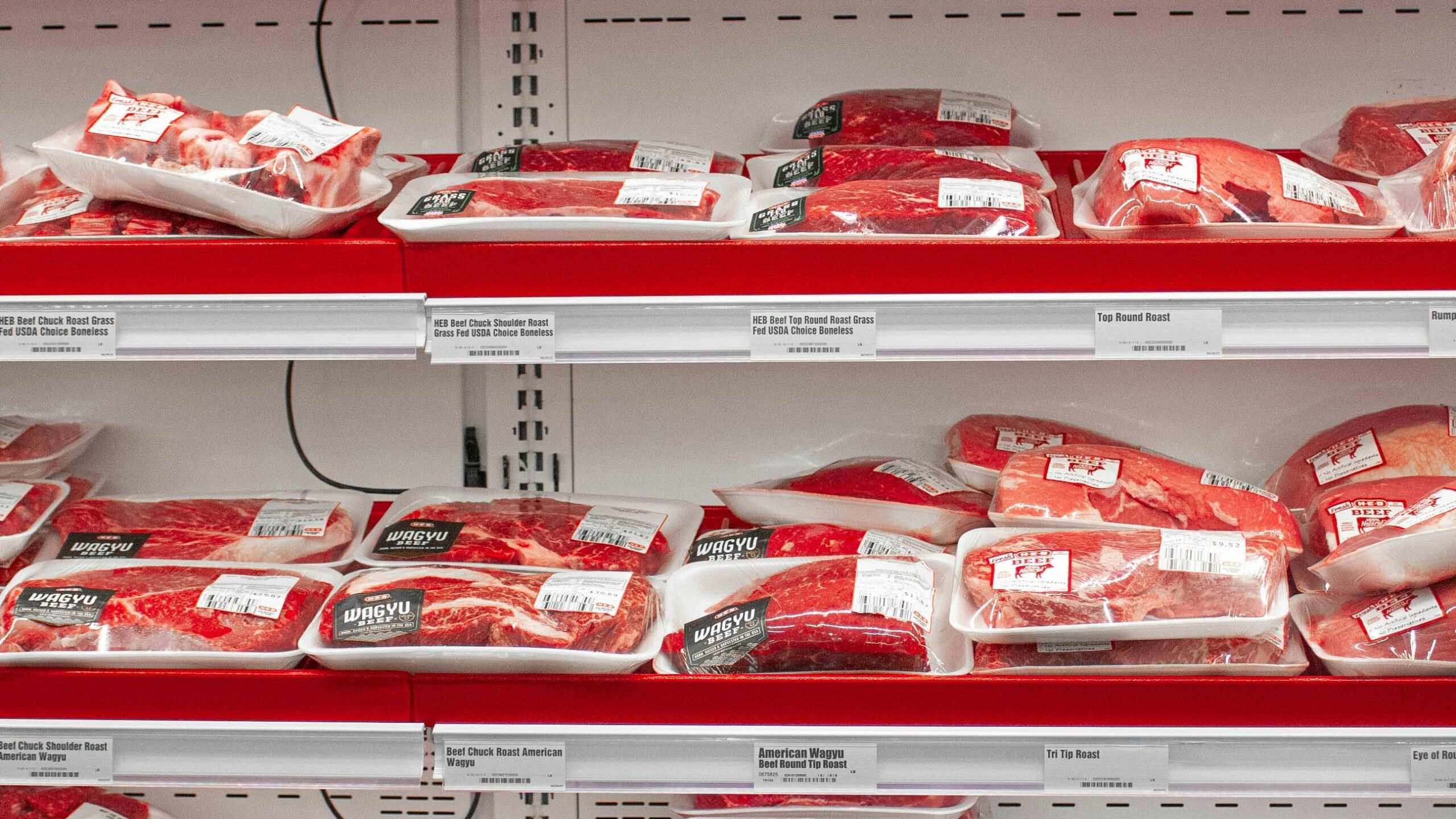
Grocery shoppers who have noticed the price of ground beef and steak climbing faster than everything else in the cart are not imagining it. The U.S. Department of Agriculture’s Economic Research Service now forecasts beef and veal prices rising 9.8 percent for all of 2026, the steepest projected increase among the 15 major grocery categories the agency tracks, and it dwarfs the 2.5 percent increase USDA expects across groceries overall this year. Behind the number is a straightforward supply story: fewer cattle, tighter production, and a beef aisle that has not caught a break in more than a year.
ERS Puts 2026 Beef Inflation at Nearly Four Times the Grocery Average
USDA’s Food Price Outlook, updated August 25, forecasts beef and veal prices climbing 9.8 percent in 2026, with a 95-percent confidence interval running from 7.0 to 12.6 percent. That compares with an overall food-at-home forecast of 2.5 percent and an all-food forecast of 3.0 percent for the year, meaning beef is running roughly four times faster than the typical grocery item. The forecast is not a guess about the future in isolation; it already reflects real price movement through July, when beef and veal were 9.4 percent more expensive than a year earlier.
Among the 15 food-at-home categories ERS tracks, beef and veal carries the single largest 2026 forecast. Sugar and sweets, the next-hottest category, is forecast at 7.1 percent. Fresh vegetables sit at 5.9 percent and nonalcoholic beverages at 4.3 percent, while categories like eggs are forecast to fall sharply as poultry flocks recover. Beef stands alone at the top of the list.
Free retirement updates: Social Security and Medicare change every year, and nobody sends you a memo. Our free Retirement Shield newsletter breaks down what changed and what to do. Get it free in your inbox.
A Shrinking Cattle Herd Is Driving the Increase
The forecast traces back to how much beef is actually reaching stores. Federally inspected beef production fell almost 5 percent in July 2026 compared with a year earlier, which has kept wholesale beef prices at or above record levels for that time of year, according to ERS’s Livestock, Dairy, and Poultry Outlook. USDA analysts expect tight cattle supplies to keep production running below year-earlier levels for the rest of 2026, which is the underlying reason the beef forecast keeps landing well above the historical 20-year average pace of price growth for the category.
Cattle herds do not rebuild quickly. Ranchers who reduce their breeding herds during periods of drought or high feed costs cannot simply add cattle back the following season; calves born this year will not reach market weight for well over a year. That lag is part of why USDA’s forecast interval stretches as high as 12.6 percent — the agency is building in real uncertainty about how fast supply can respond, not just projecting last month’s trend forward.
Drought Conditions Are Adding to the Squeeze
USDA’s July 2026 Livestock, Dairy, and Poultry Outlook shows how tight the underlying cattle supply already was heading into summer. As of early July, roughly 46 percent of the U.S. cattle inventory sat in an area experiencing at least moderate drought, up from just 16 percent a year earlier, pushing pastureland conditions in several major cattle-producing regions below their 20-year average. Beef cow slaughter, meanwhile, was running at its lowest pace since 2015, a sign that ranchers are not aggressively culling herds even under dry conditions, which keeps the national cow inventory too small to quickly rebuild beef supply. Farm-level cattle prices fell 2.6 percent from June to July even as they remained 4.8 percent higher than a year earlier, a sign the run-up in prices, while still historically steep, was not accelerating month over month heading into the fall.
What the Forecast Means for a Household Grocery Bill
A forecast increase does not land evenly across every cut of beef, and it is an annual average rather than a guarantee for any single week’s shopping trip. But a household that regularly buys ground beef, steak or roasts should expect that category of the grocery bill to keep outpacing overall food inflation through the rest of 2026, based on USDA’s own numbers. Shoppers looking to offset the increase have historically leaned on cheaper proteins during periods like this one; ERS forecasts pork rising just 0.8 percent and poultry just 0.5 percent in 2026, both far below beef’s trajectory.
The gap between farm and retail also matters for how long the increase lasts. ERS forecasts wholesale beef prices rising 9.4 percent in 2026, tracking closely with the retail forecast, while farm-level cattle prices are expected to climb 9.9 percent for the year. Because those three figures are moving roughly in tandem, there is little sign in the data of a supply-chain markup layered on top of the herd shortage; the increase a shopper sees at the meat counter closely mirrors what USDA is tracking further up the supply chain, from the rancher to the packing plant to the store shelf.
Where the Number Could Move Next
ERS revises its Food Price Outlook monthly as new government inflation data comes in, and the agency has already shown this year that the beef forecast can move in either direction as production and cattle-price data update. The next scheduled revision will incorporate August’s Consumer Price Index and Producer Price Index figures once they are released, giving USDA a clearer read on whether the modest downward revision from July continues or beef inflation reaccelerates as the year moves toward its final quarter.
This article was produced with AI assistance and reviewed by a human editor. Figures are linked to their primary sources; where a claim could not be verified from the public record, we say so.
More Financial Reading