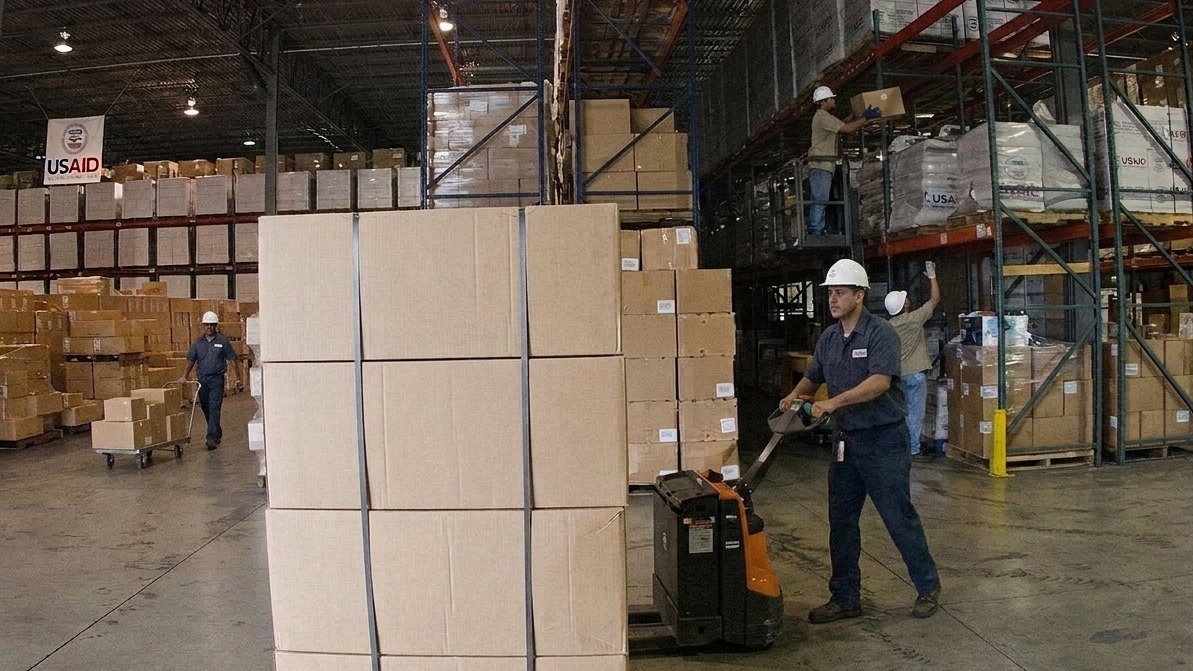
A wage that low sounds like a typo, but federal investigators found it was real. A freight company in southern California was paying some of its warehouse workers as little as $2.03 an hour, roughly a quarter of the federal minimum wage, until the U.S. Department of Labor stepped in and forced the employer to pay $1.08 million back to the people it had shortchanged. The case is closed, but the rules that made the recovery possible protect every hourly worker in the country, and most of them never use those rules.
What the Labor Department found in Calexico
The Department of Labor announced the resolution in March 2026, after its Wage and Hour Division investigated Expresso Forwarding Inc., a freight and cargo company based in Calexico, California. Investigators concluded the firm had denied minimum wage and overtime pay to 24 warehouse workers, with some paychecks working out to as little as $2.03 an hour. To settle it, the employer agreed to pay $1.08 million in back wages and liquidated damages and to bring its pay practices into line with the Fair Labor Standards Act, on a payment plan that runs from January 15 to December 15, 2026.
Free retirement updates: One number can cost or save hundreds a month in retirement. The free Retirement Shield newsletter surfaces the ones worth knowing. Sign up free.
The two numbers every hourly worker should know
The federal floor for most work is the minimum wage of $7.25 an hour, and the overtime rule adds a second guarantee: time and a half, or 1.5 times the regular rate, for every hour past 40 in a workweek. A worker who logs 45 hours is owed five hours at that higher rate, not the flat hourly figure. Those two guarantees are not optional perks an employer can trade away, and they do not disappear because a worker agreed to a lower number, was paid in cash, or was told the job did not qualify. When the math on a pay stub falls short of the floor, the gap is a legal debt the employer owes.
That is why the Calexico settlement included liquidated damages on top of the unpaid wages. In many wage cases the Wage and Hour Division recovers not just the missing pay but an equal amount again, effectively doubling the recovery, as a penalty for the violation. A worker who was underpaid by a few thousand dollars can end up owed twice that once the case is resolved.
How the free complaint process actually works
The path that recovered that $1.08 million is open to anyone, and it costs nothing. A worker who believes they were underpaid can file a complaint with the Wage and Hour Division, and the agency handles it confidentially. Investigators do not need the worker to build a legal case or hire a lawyer; the division has the authority to examine an employer’s payroll records, calculate what is owed, and pursue the back wages directly. Helpful documents include pay stubs, personal notes on hours worked, and any texts or schedules showing start and end times, but a worker who kept no records can still file, because the employer is legally required to keep accurate time and pay records.
Two protections make the process safer than many workers assume. Federal wage law covers employees regardless of immigration status, so a worker cannot be denied unpaid wages because of their paperwork. And it is illegal for an employer to fire, cut hours, or otherwise punish a worker for filing a complaint or cooperating with an investigation. Retaliation is itself a separate violation the Labor Department can act on.
Spotting the shortfall before it adds up
The households most exposed are ones where pay is irregular: cash jobs, piece-rate work, roles where hours are tracked loosely, or paychecks that never seem to match the hours actually worked. A simple check catches most problems. Dividing total pay for a week by total hours worked should never leave a figure below $7.25, and any hours over 40 should be paid at the higher overtime rate. Off-the-clock work, unpaid setup or cleanup time, and improper deductions that push pay below the minimum are all common ways the number quietly slips under the floor.
The Calexico workers recovered more than a million dollars because the law was on their side the entire time; the only thing that changed was that someone counted the hours and did the math. For a household living close to the edge, the difference between $2.03 and $7.25 an hour is not abstract, and the tools to reclaim it are free, confidential, and available in every state.
This article was produced with AI assistance and reviewed by a human editor. Figures are linked to their primary sources; where a claim could not be verified from the public record, we say so.
More Financial Reading