Roughly 7.5 million people were enrolled in the SAVE repayment plan when the courts brought it to an end, and every one of them now has a deadline to choose something else. The widely circulated version of that deadline is a single date on the calendar. The Education Department’s own description is different, and the difference determines what a borrower should be looking for in the mail.
The clock starts with a letter, not a date on a calendar
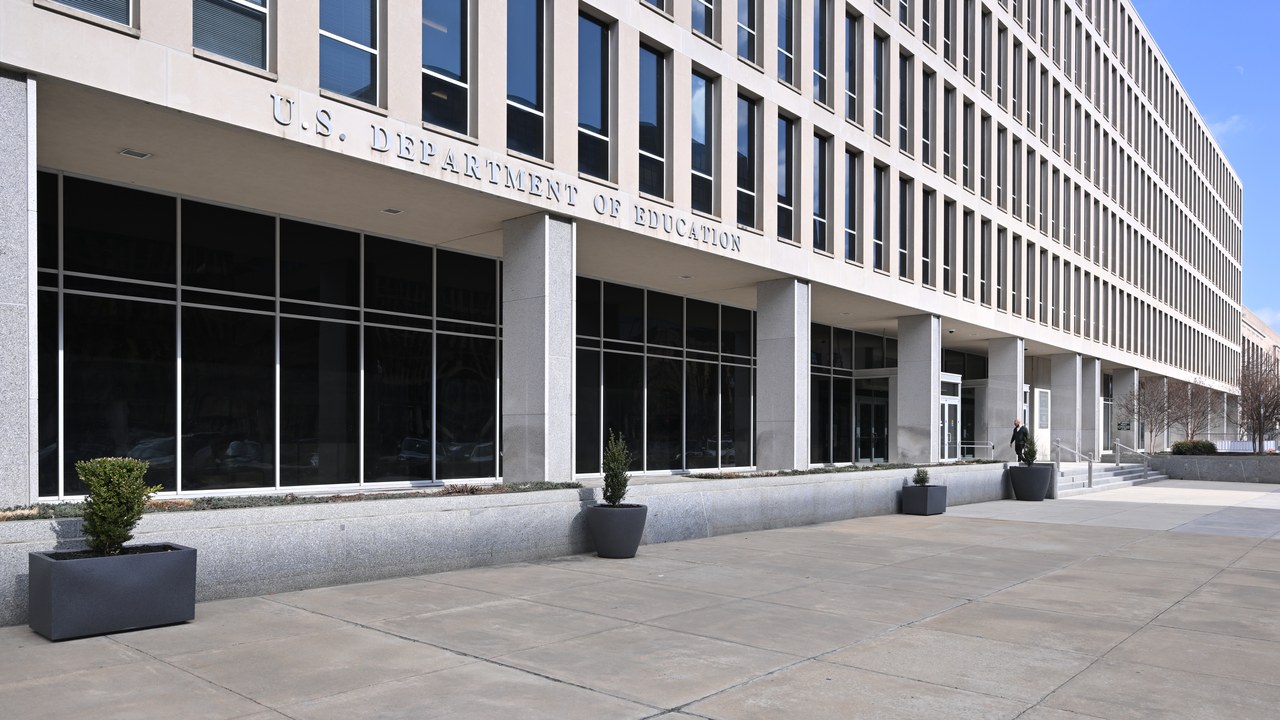
The department’s announcement of next steps for borrowers is explicit on the mechanism. Starting on July 1, federal loan servicers began issuing notices instructing borrowers to exit the SAVE plan and enroll in a legal repayment plan within 90 days. Borrowers who do not transition within the 90-day period communicated by their servicer are automatically enrolled into either the Standard Repayment Plan or the new Tiered Standard Plan.
The sentence that resolves the confusion follows immediately: servicers will notify borrowers of their specific 90-day deadline. There is no single national cutoff date in the department’s guidance. Two borrowers with identical loans, serviced by different companies, can have deadlines weeks apart, because the clock is anchored to the day each one’s notice went out.
That has a practical consequence for anyone who has been waiting for a news story to tell them when to act. There is no such story to wait for. The date exists only in a borrower’s own notice and in their servicer’s records, which means checking the account directly is the only reliable way to find it.
Free retirement updates: Miss an enrollment or claim deadline and it may be gone. Our free Retirement Shield newsletter keeps readers ahead of the ones that matter. Get the free newsletter.
What happens to a borrower who does nothing
Missing the window does not cause a default and does not stop the loan from being repayable. It causes a placement, and the placement is unlikely to be the cheapest monthly option available.
The Standard Repayment Plan and the new Tiered Standard Plan are both fixed-payment plans. The department describes the Tiered Standard Plan as offering fixed terms of 10, 15, 20 or 25 years, assigned according to a borrower’s total outstanding loan balance. A payment on a fixed plan is calculated to retire the balance over that term regardless of what the borrower earns, which is the opposite of how SAVE worked.
For a household whose income is modest relative to its balance, that is the whole risk in one sentence. A payment sized to a 10-year payoff on a large balance can be several times the payment an income-driven calculation would have produced, and it arrives by default rather than by choice.
The plan that replaced it, and what it costs
The department’s replacement is the Repayment Assistance Plan, which became available on July 1, 2026 alongside the Tiered Standard Plan. Under the department’s own description of the new structure, monthly payments under RAP fall between 1 and 10 percent of a borrower’s income, depending on how much they earn.
A percentage-of-income payment is not automatically better than a fixed one, and the comparison turns on the balance. A borrower with a small balance and a solid income may finish faster and pay less total interest on a fixed 10-year plan. A borrower with a large balance relative to income is usually far better served by a payment that is tied to earnings. The only way to know which case applies is to see both numbers.
Why the notice is easy to miss
The letter announcing a 90-day deadline does not look urgent. It arrives from a loan servicer rather than from the Education Department, often as one of several routine servicing messages, and in many cases as an email that lands wherever promotional mail from financial companies lands.
Servicing transfers make it worse. Loans move between servicers, and a borrower who has not logged into an account in a year may not know which company currently holds theirs — which means they do not know whose message to look for or whose website to check.
What to do this week
The first step is finding the deadline rather than guessing at it. A borrower’s loan servicer is identified in their account at the federal student aid site, and the notice with the specific 90-day date will have come from that servicer by mail, email or through its own message center. An address or email that changed since the loans were taken out is the most common reason a notice never arrived, and it is worth correcting first.
The second step is to run the comparison before choosing. The department publishes a loan simulator that estimates monthly payments across available plans using a borrower’s actual balances and income, which turns an abstract decision into two numbers side by side.
One further caution belongs here, because it is the detail most likely to be mixed up with the 90-day clock. The department has also described a separate deadline of July 1, 2028 for certain borrowers with older loans on phased-out repayment plans to choose among RAP, the Tiered Standard Plan and Income-Based Repayment. That is a different provision covering a different group, and a borrower coming out of SAVE should not read it as extra time. The clock that governs them is the one printed on their own notice.
This article was produced with AI assistance and reviewed by a human editor. Figures are linked to their primary sources; where a claim could not be verified from the public record, we say so.
More Financial Reading