A tax break that most eligible workers never claimed is being converted into something harder to miss: cash deposited straight into a retirement account. Treasury and the IRS have begun writing the rules for the Saver’s Match, a federal contribution worth as much as $1,000 a year to low- and moderate-income savers. It applies to contributions made for the 2027 tax year, which means the first dollars that qualify have not been contributed yet.
Fifty cents on the dollar, capped at $1,000
The mechanics are simple enough to hold in your head. The federal government matches 50% of the first $2,000 a person contributes to a 401(k), 403(b), governmental 457(b), or IRA in a year — a maximum of $1,000 annually. Put in $2,000 or more and the match tops out at $1,000. Put in $800 and the match is $400. There is no partial credit rate and no schedule of tiers to work through; the only variables are how much was contributed and how much the household earned.
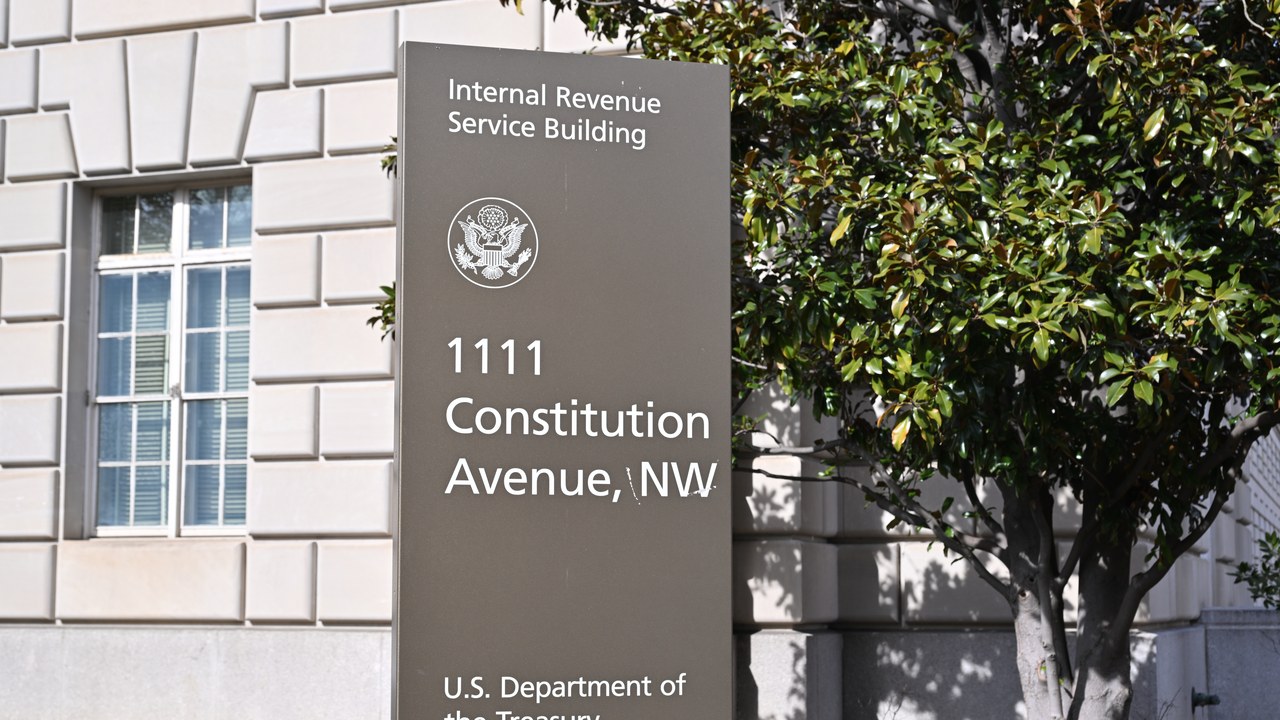
Treasury and the IRS announced on August 7 that they intend to issue proposed regulations implementing the program, in guidance numbered IR-2026-89 and detailed in Notice 2026-48. The underlying program is not a proposal — it was created in statute by section 103 of the SECURE 2.0 Act, which added section 6433 to the tax code, and it takes effect for taxable years beginning after December 31, 2026. What the August guidance settles is how the machinery will work, not whether it will exist.
Free retirement updates: Want plain-English help keeping more of your money in retirement? The free Retirement Shield newsletter covers the benefits, deadlines, and money mistakes that cost retirees, a couple times a week. Subscribe free.
The income cutoffs that decide the whole question
This is a program for low- and moderate-income savers, and the income tests are where most of the eligibility questions get answered. For the 2027 tax year, Notice 2026-48 sets the point where the match begins to shrink at $41,000 for married couples filing jointly, $30,750 for heads of household, and $20,500 for single filers and married people filing separately. From there it phases out across a range — $30,000 for joint filers, $22,500 for heads of household, $15,000 for everyone else.
The practical numbers are the top of those ranges. The notice puts it plainly: for 2027, the income limit for receiving any Saver’s Match at all is $71,000 for a married couple filing jointly and $35,500 for a single filer. Heads of household lose it above $53,250. The test runs on modified adjusted gross income, and three other conditions apply regardless of income — a person must be at least 18 at the end of the year, must not be a full-time student under the tax code’s definition, and must not be claimed as someone else’s dependent.
One detail worth noting for anyone planning more than a year out: the notice indexes those starting thresholds for inflation only for taxable years beginning after 2027, and the phase-out ranges themselves are never indexed. The window narrows in real terms over time.
The money lands in the account, not in a refund check
This is the structural difference between the Saver’s Match and the credit it replaces, and it is the reason the program is expected to reach people the old version did not. Under section 6433, the match is paid as a contribution into the saver’s own retirement account, deposited as soon as practicable after the person files a return claiming it. It is not a reduction in tax owed and not a line on a refund. A worker who contributes $2,000 in 2027 and qualifies ends up with $3,000 in the account.
There is one carve-out. A person whose match works out to more than zero but less than $100 may elect to take it as a refundable income tax credit instead of having it routed into the account. Below $100, in other words, the paperwork of moving money into a retirement plan is optional.
The timing runs a year behind the contribution. The match applies to contributions made for the 2027 tax year and, per the IRS, will be paid to eligible taxpayers starting in 2028 — after the 2027 return is filed. Treasury has said it will launch a site at TrumpIRA.gov on January 1, 2027, under Executive Order 14403, signed April 30 and published in the Federal Register in May.
What happens to the Saver’s Credit
The Saver’s Match replaces the Saver’s Credit, but not completely. The older credit under section 25B goes away with respect to elective contributions to retirement plans and IRAs — the situations the new match now covers. It survives for contributions made to ABLE accounts, the tax-advantaged savings accounts used by people with disabilities. A household using an ABLE account should not assume the old credit disappeared along with the rest of it.
What is not yet final is the regulatory detail. The August announcement is a notice of intent to propose regulations, not a proposed rule and not a final one. Comments on the notice are due October 5, 2026, and the proposed regulations follow after that. For a worker deciding whether to contribute in 2027, none of that changes the arithmetic — the statute sets the 50% rate, the $2,000 base, the $1,000 cap, and the income limits. It does mean the administrative particulars, including how a plan or IRA provider accepts the deposit, are still being worked out on a calendar that runs close to the start date.
This article was produced with AI assistance and reviewed by a human editor. Figures are linked to their primary sources; where a claim could not be verified from the public record, we say so.
More Financial Reading