A household clears out a garage over the summer, lists a couple dozen things on a resale app and collects a few thousand dollars. January comes and no tax form arrives in the mail. The natural conclusion is that the amount was too small for the Internal Revenue Service to bother with, and that the money is therefore the household’s to keep and forget.
That conclusion quietly merges two different rules. One of them has a dollar threshold and governs what the app must send. The other has no threshold at all and governs what the seller owes. They were never the same rule, and the gap between them is where people get into trouble.
The threshold belongs to the platform, and it has two parts
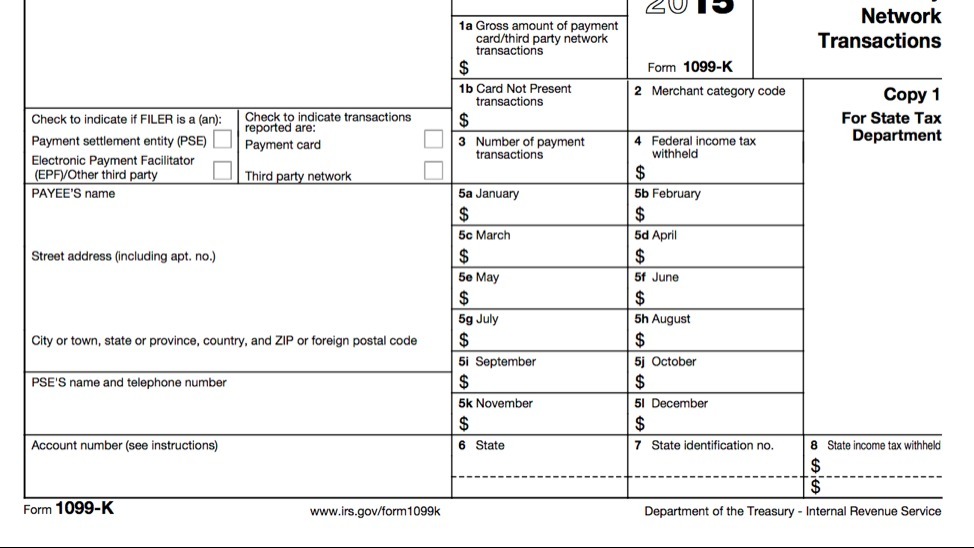
Payment apps and online marketplaces are what the tax code calls third party settlement organizations. Under the current rule, one of them is required to file Form 1099-K only when the gross amount of reportable payments to a seller exceeds $20,000 and the number of transactions exceeds 200. Both conditions have to be met. A seller who moves $40,000 across 90 transactions falls outside the requirement just as surely as one who moves $900 across 300.
That figure is not new and it is not the $600 threshold that circulated for several filing seasons. The One, Big, Beautiful Bill retroactively reinstated the reporting threshold that was in place before the American Rescue Plan Act of 2021, and the IRS issued frequently asked questions confirming the reversion to $20,000 in release IR-2025-107. The agency’s public guidance still carries those figures, and it also warns that a platform may send a form for smaller amounts anyway. Receiving one below the threshold is not an error worth arguing about.
Free retirement updates: The money rules affecting ordinary households keep changing. The free Retirement Shield newsletter turns the important ones into plain-English next steps. Get the free email.
There is a second track with no threshold whatsoever. When customers pay by credit, debit or gift card, the payment card processor issues a Form 1099-K, in the IRS’s own phrasing, no matter how many payments were received or how much they were for. The practical result is backwards from what most people expect. A woodworker running a card reader at a weekend market can get a form on a few hundred dollars, while a seller collecting through an app can clear five figures and get nothing. Those two outcomes come from the same form and two entirely different triggers.
The rule about taxable income never had a threshold
Form 1099-K is an information return. Its function is to improve voluntary compliance by giving the IRS a copy of what a platform paid out. It does not define income, it does not create a tax, and its absence does not remove one. The IRS states the point without qualification: no matter the amount of reported payments, a person who receives payments for selling goods or services must report all income on the tax return.
The obligation reaches further than card and app payments. The agency’s guidance specifies that income must be reported even when it arrives as cash, property, goods, digital assets, or from foreign sources or assets. A seller who takes $300 in cash at a flea market and $600 through a payment app has $900 of gross receipts to account for, and not one dollar of it will appear on any form filed by anyone else.
This is the specific misunderstanding that costs people money later. The $20,000 and 200-transaction test tells a platform when to file paperwork. It tells a seller nothing at all about whether the money is taxable.
What actually gets taxed when the item is an old couch
Reporting all income is not the same as paying tax on the whole number, and the difference is large for anyone selling used household goods. The gross payment amount in Box 1a is not adjusted for fees, credits, refunds, shipping, cash equivalents or discounts, and the IRS is explicit that those items are not taxable income and can be deducted from the gross figure. Keeping the platform’s payout reports and merchant statements is what makes that subtraction defensible.
For personal items — a car, a refrigerator, furniture, jewelry, silverware, the things a household owned and used — the treatment turns entirely on gain or loss. An item sold for less than it cost produces no tax liability, and the loss cannot be deducted. To keep the reported gross from being taxed anyway, the IRS offers two routes: report the payment at the top of Schedule 1 of Form 1040, or report the loss on Form 8949, which carries to Schedule D. An item sold at a profit is taxable on the difference between the sale price and what was originally paid, reported on Form 8949 and Schedule D. A mix of both in one year gets reported separately rather than netted on the form.
Selling as a gig worker, freelancer, independent contractor or hobby seller lands somewhere else again, on Schedule C as a sole proprietor. And money that was never business income in the first place should not be on the form at all: the IRS states that payments from friends and family as a gift or as repayment for a personal expense are not taxable and should not be reported on a Form 1099-K, which is why the agency advises marking those transactions as non-business inside the app whenever the option exists. Doing it at the time of payment is considerably easier than explaining it on a return two years later.
This article was produced with AI assistance and reviewed by a human editor. Figures are linked to their primary sources; where a claim could not be verified from the public record, we say so.
More Financial Reading