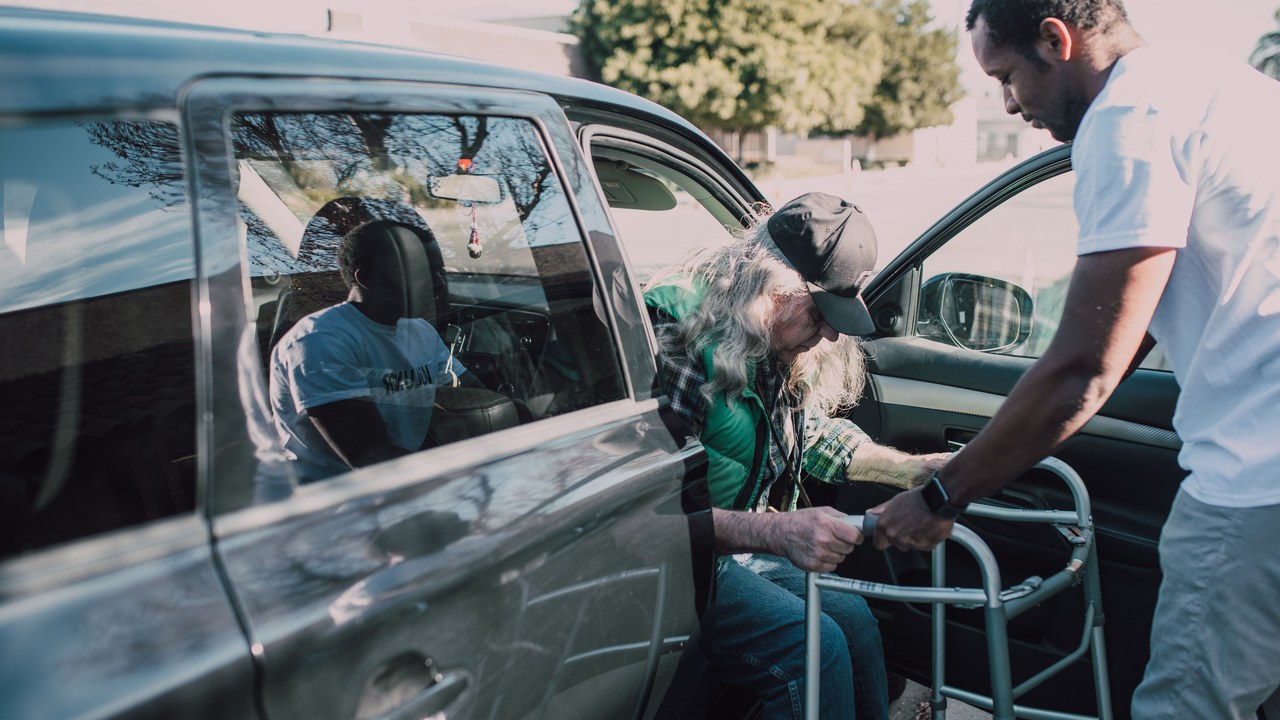
The Department of Veterans Affairs pays the main family caregiver of a seriously disabled veteran a monthly stipend, and VA sets the amount by formula. The stipend is the federal General Schedule pay rate for grade 4, step 1 in the veteran’s area, divided by 12 and multiplied by 0.625 at Level One or 1.00 at Level Two. Only the primary caregiver gets the stipend, not a second helper. Because the pay rate changes with the veteran’s location, a veteran in a city with its own federal pay table starts from a different base than one in an area on the base scale.
Who can apply for the VA caregiver stipend
The benefit comes from the Program of Comprehensive Assistance for Family Caregivers, which VA shortens to PCAFC. VA says the veteran must have a single or combined service-connected disability rating of 70% or more, must have suffered or worsened a serious injury or illness in the line of duty during any era of service, and must need in-person personal care for at least six continuous months, according to VA’s caregiver support page.
That need can come from being unable to handle daily activities, from needing supervision or protection, or from needing regular instruction. For a family, the decision is whether the person doing the daily work should file. The application is VA Form 10-10CG, and it can be filed through the online application on VA.gov, by mail, or in person with a local Caregiver Support Program team.
Retirement deadlines, in your inbox: Miss an enrollment or claim deadline and the money can be gone. Join the Retirement Money Brief and we’ll send you our Veterans Benefits Starter Checkup as a welcome gift.
Get the Brief + the veterans checkup →
We may earn a commission from links on this page.
How VA sets the monthly stipend
VA’s stipend page defines the monthly stipend rate as the Office of Personnel Management General Schedule annual rate for grade 4, step 1, based on the pay area where the veteran lives. VA divides that annual rate by 12, then multiplies it by 0.625 for a Level One caregiver or by 1.00 for a Level Two caregiver. VA’s page was last updated Sept. 14, 2026.
Which level applies depends on VA’s evaluation of the veteran’s personal care needs. Level Two is the full monthly rate, because the multiplier is 1.00. Level One pays 0.625 of it. VA does not print a dollar amount for either level, so the check depends on the pay table for the veteran’s area.
The annual rate itself comes from OPM. For a veteran in an area on the base scale, OPM’s 2026 Rest of U.S. salary table lists grade 4, step 1 at $36,409 a year, effective January 2026. The arithmetic below is not a figure VA states: $36,409 divided by 12 is $3,034.08 a month, and 0.625 of that is about $1,896.
A veteran in a high-pay metro area starts from a higher annual rate in OPM’s table for that area, and VA applies the same two multipliers to it. Families should look up the grade 4, step 1 rate for the veteran’s own locality rather than rely on the base-scale arithmetic.
Respite, health coverage and what happens to current enrollees
The stipend is paid directly to the primary caregiver, not to the veteran, and VA offers a direct deposit option for it. VA says primary caregivers also receive at least 30 days of respite care a year for the veteran, so the caregiver can take a break. A primary caregiver who has no health insurance may be able to get coverage through CHAMPVA, VA’s health plan for certain family members.
Mental health counseling is open to both primary and secondary caregivers, and both can receive certain beneficiary travel benefits when they go with the veteran to appointments. A secondary caregiver receives no stipend, so families with two helpers need to decide which one applies as primary.
Families already in the program are covered by a transition rule. VA says legacy participants, applicants and their caregivers keep their stipend amount during a transition period that a final rule extended through Sept. 30, 2028, with certain exceptions. VA also says not to send medical records with the application, because staff follow up. Questions and status checks go to the Caregiver Support Line at 1-855-260-3274, open Monday through Friday, 8 a.m. to 8 p.m. Eastern.
A separate claim for veterans who need daily help
The caregiver stipend pays the person giving care. A different VA benefit pays the veteran. Aid and Attendance is a set of monthly payments added to a VA pension for qualified veterans and survivors, and VA says a person must already receive a pension to get it, according to VA’s Aid and Attendance page.
VA lists four situations that can qualify: needing another person’s help with bathing, feeding and dressing; having to stay in bed or spend much of the day there because of illness; living in a nursing home because of a mental or physical disability; or having eyesight limited to 5/200 or less in both eyes. Applicants use VA Form 21-2680, and a medical examiner completes part of it. The pension itself is a separate claim, and the caregiver application does not start it.
Both claims start with paperwork VA says to keep complete. For the caregiver application by mail, VA lists the 10-10CG Evidence Intake Center, PO Box 5154, Janesville, WI 53547-5154. For a pension claim, VA points to its online, mail and regional office options. A family that files only one of the two leaves the other benefit unclaimed.
Could the veteran also draw a VA pension?
A family can spend months on a caregiver application while a separate pension claim, the one that can add Aid and Attendance for a veteran who needs daily help, never gets filed. The pension has its own form and its own limited-income rules, and a missed step costs the veteran monthly money.
The Veterans Benefits Action Kit is a 75-page guide that covers the three VA pension levels including Aid & Attendance and how to file for free (VA Form 21P-527EZ), with worksheets and a claim tracker for keeping each filing straight.
See the VA pension and Aid & Attendance guide for a veteran with a family caregiver →
This article was produced with AI assistance and edited for accuracy against the sources linked above.