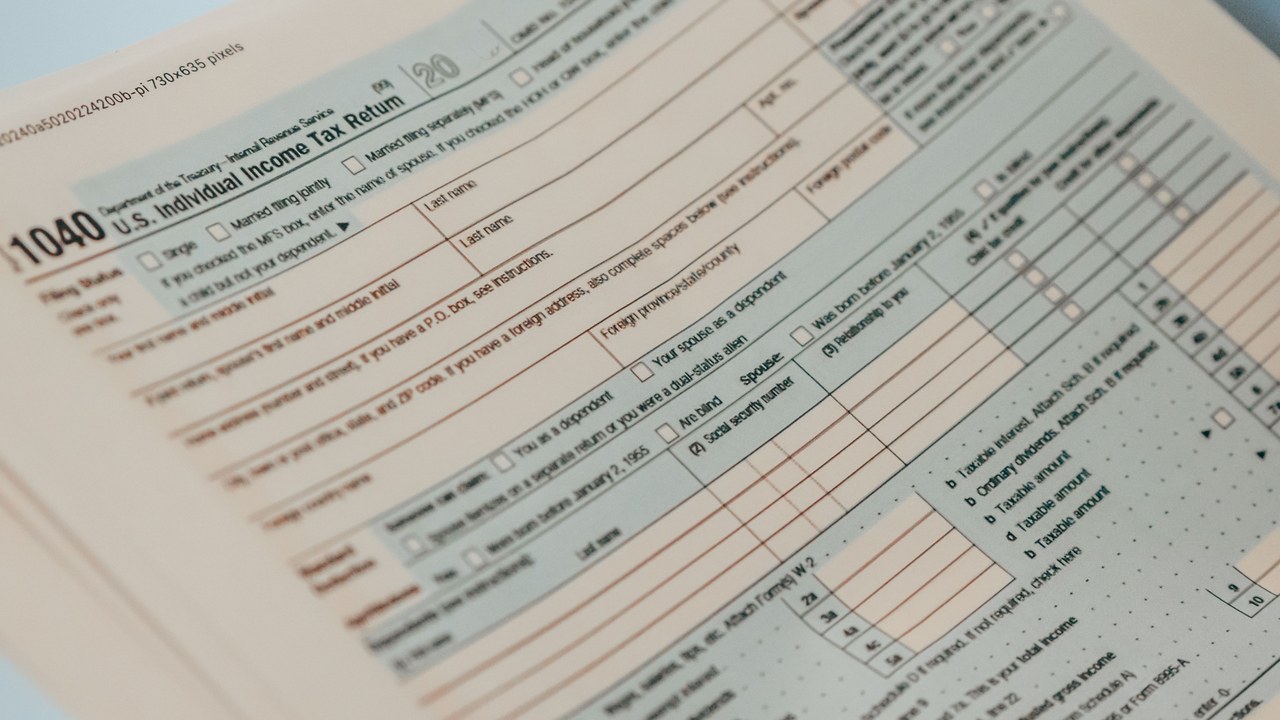
Two spouses who are both past 65 can each get a new $6,000 tax deduction, but only if they file one return together. A couple that files separately gives up the deduction, and both spouses lose it. The rule is easy to miss because most filing-status advice focuses on tax brackets rather than on which deductions a status unlocks.
The Internal Revenue Service (IRS) spells out the condition on its fact sheet about the tax changes in the 2025 budget law. The agency says a taxpayer must “file jointly if married, to claim the deduction.” That one sentence decides whether a retired couple keeps up to $12,000 off taxable income.
For a married couple where both people turned 65 by the end of the tax year, the question is which filing status to pick on the return, and what the other choice costs.
Retirement deadlines, in your inbox: Miss an enrollment or claim deadline and the money can be gone. Join the Retirement Money Brief and we’ll send you our Will My Social Security Be Taxed? Worksheet as a welcome gift.
Get the Brief + the tax worksheet →
We may earn a commission from links on this page.
What the senior deduction is worth to a couple
The IRS says people age 65 and older may claim an additional deduction of $6,000. The amount applies per eligible person, so a married couple with two eligible spouses can reach $12,000. IRS Publication 501, the guide to dependents, standard deductions and filing information, puts it the same way: “$6,000 ($12,000 if married filing jointly and both spouses are eligible).”
The deduction sits on top of the existing extra standard deduction that older taxpayers already receive. It also does not require giving up the standard deduction. The instructions for Schedule A, the form for itemized deductions, say it can be claimed even by people who itemize, and that it goes on Schedule 1-A rather than Schedule A.
Why filing separately costs both spouses
The IRS fact sheet lists the conditions in plain terms: the taxpayer must be 65 by the last day of the tax year, must put the Social Security number of each qualifying person on the return, and must file jointly if married. The IRS fact sheet on the deductions for working Americans and seniors is the free official route for those rules.
The IRS does not list a married-filing-separately exception. Because joint filing is the stated price of the deduction, a spouse who files a separate return cannot claim it, and the other spouse cannot claim it on a separate return either. A couple where one person is 70 and the other is 66 would lose the full $12,000, not just one share of it.
The IRS also published a one-page notice, Publication 6142, titled “Additional Deduction for Seniors.” It repeats the same three points: the age test, the Social Security number for each qualifying person, and the instruction to file jointly if married.
The age test and the Social Security number
The age test looks at the last day of the tax year. A spouse who turns 65 on December 31 counts for that year, even though the birthday came at the very end.
The Social Security number requirement applies to each qualifying person. The IRS says the return must show the number of every individual who is claiming the deduction. In a joint return with two eligible spouses, both numbers belong on it.
The IRS also describes the form. In its overview of the new Schedule 1-A, the agency says Part V is completed only if the taxpayer or the spouse is 65 or older. It adds that a married couple where both spouses are 65 or older can claim up to $12,000 and must file jointly.
Where the income limit comes in
The deduction shrinks for higher earners. The IRS says it phases out when modified adjusted gross income, the income figure on the return after certain adjustments, goes above $75,000 for single filers and $150,000 for joint filers.
That limit is one more reason the filing-status choice matters. The $150,000 joint threshold is the figure that applies when a couple files together, so the couple’s income is tested as a pair. Couples whose combined income stays under that line keep the full $12,000, and the IRS ties that amount to the joint return.
The IRS fact sheet is dated July 2025, with a later note about a different deduction. The Schedule 1-A overview is dated March 2026. Neither one adds a separate-filing exception for seniors.
What a couple weighs before choosing separate returns
Some married couples file separately on purpose, for example to keep one spouse’s medical costs or liabilities apart from the other’s. The IRS fact sheet does not say whether any of those reasons outweigh the lost deduction, and the answer depends on each couple’s numbers.
What the IRS does say is that the choice has a fixed cost on this deduction. A couple running the numbers for separate returns has to count $12,000 of lost deductions, and then compare that against whatever the separate return would have saved.
The new deduction covers tax years beginning with 2025, according to the IRS instructions for Schedule A. Pub 501 for 2025 is the edition that carries the senior deduction language.
Does filing jointly keep both spouses’ $6,000 deduction in place?
A married couple that files separately without checking this rule gives up the senior deduction for both spouses, and the return has no second chance to add it back. Social Security taxation and Medicare surcharges follow their own income lines on top of it, so one filing choice can ripple through a retired couple’s bill.
Cut Your Retirement Tax Bill: 12 Moves covers the new $6,000 senior deduction ($12,000 for a couple) for 2025 through 2028, how much of Social Security is taxed on one worksheet, and the 2026 numbers on one page. It also marks the Medicare surcharge line, where one dollar over can cost more than $1,100 a year per person.
This article was produced with AI assistance and edited for accuracy against the sources linked above.