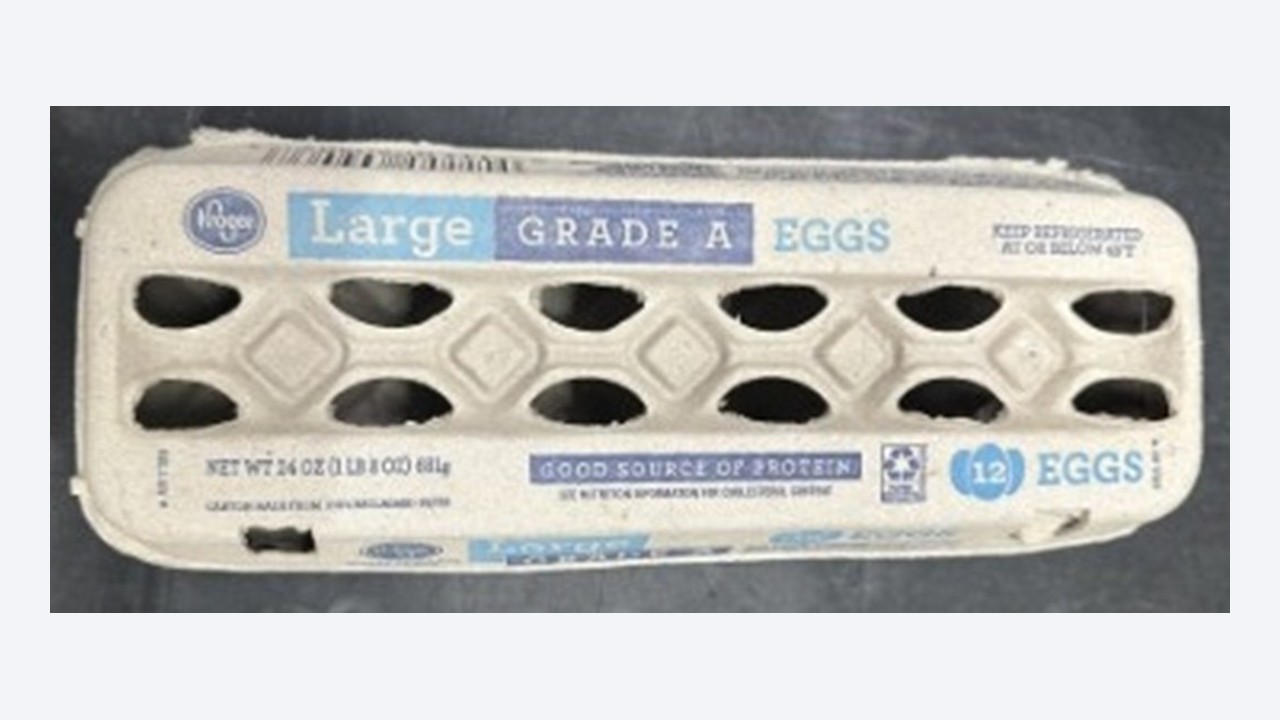
A carton of eggs already in the refrigerator may now be worth checking before breakfast. A large recall reaches several familiar store brands, including Kroger and Simple Truth, and the remedy is a full refund rather than a complicated claims process. The deciding details are printed on the carton.
Start with the plant code and date
This is not a recall of every egg sold by Kroger or every Simple Truth product. The important task is to match the brand, carton size, identifying plant code and date range, because a familiar logo alone does not establish that a carton is included.
The FDA-posted company announcement says Midwest Poultry Services voluntarily recalled 1,589,577 dozen white shell and brown cage-free eggs produced in Texas. Recalled cartons carry plant code P-1950 or 0840962 and a Julian date from 157 through 184. Their sell-by or best-by dates run from July 20 through August 17, 2026.
The affected lineup includes several Kroger sizes, from 12-count cartons to 60-count packs, along with Simple Truth cage-free medium and large brown eggs. Brookshire’s cartons and some eggs sold through smaller outlets are also on the list. The company says the eggs went to food-service and retail customers in Texas, Oklahoma and Louisiana, with some retail distribution extending into Arkansas, New Mexico and Mississippi.
Household bills rarely rise in isolation. The free Retirement Shield newsletter connects the changes that matter to working families and retirees. Read it free.
What to do with a matching carton
Do not eat eggs from a carton that matches the recall information. Set the carton aside where no one in the household will use it, then return it to the original place of purchase for a full refund. The announcement does not direct shoppers to mail a claim, pay a processing fee or provide banking information.
Keeping the carton until the store processes the return matters because the identifying information is printed on its side. A loose egg in a refrigerator tray cannot be reliably matched to the recall once the packaging is gone. A clear photo of both side panels can also preserve the code and date in case the carton becomes damaged during transport.
A household that bought eggs in the affected region but cannot find the plant code should not guess. Midwest Poultry Services lists a consumer phone number, 574-405-9531, during weekday business hours and an email address, [email protected], in the government-posted notice. The store’s customer-service desk can also explain its return procedure.
Why the safety warning is serious
Salmonella is a bacterium that can cause an illness called salmonellosis. The Centers for Disease Control and Prevention estimates that it causes about 1.35 million U.S. infections a year, with contaminated food accounting for most illnesses. Anyone can become infected, while young children, older adults and people with weakened immune systems face a greater chance of severe illness.
Typical symptoms include diarrhea, fever and stomach cramps. According to the CDC’s symptom guidance, they usually begin six hours to six days after swallowing the bacteria and often last four to seven days. A person should contact a health-care provider when symptoms are severe, including prolonged diarrhea or vomiting, bloody stool, a fever above 102 degrees Fahrenheit or signs of dehydration.
The recall notice says Midwest Poultry Services was not aware of any specific illnesses linked to the products when the announcement was issued. That is not a reason to consume a matching carton: the recall followed environmental monitoring and a root-cause analysis at two Texas farms, and the company paused distribution of fresh eggs produced there.
Reduce the chance of cross-contamination
If a matching carton leaked, clean refrigerator surfaces and anything else the eggs touched. Wash hands with soap and water after handling the carton, and keep raw egg residue away from ready-to-eat food. The CDC’s prevention advice emphasizes handwashing, separation of raw foods from other foods and prompt refrigeration of perishables.
Do not assume that an egg is safe because its shell looks normal or because it has no smell. Contamination is not something a shopper can reliably see. Likewise, transferring the eggs to a different carton does not remove the risk and makes the identifying code harder to preserve.
Households with other cartons can continue to use eggs that do not match the recall, following normal food-safety practices. The recall is specific, and the government’s product table is the most reliable checklist. That distinction prevents unnecessary food waste while keeping the affected cartons off the table.
The money step is deliberately simple
No one needs to prove illness to use the stated refund remedy. A matching product should go back to its original place of purchase, and the announcement describes a full refund. Store procedures can differ on whether a receipt is requested, so calling before making a special trip may save time.
The quickest household response is therefore practical: photograph the carton, match all identifying details against the FDA table, isolate a recalled product and take it back. That turns a broad national-looking number into a straightforward yes-or-no decision about the eggs already at home.
Main Street money decisions get easier when the numbers are explained without jargon. The free Retirement Shield newsletter delivers that help in a short email. Sign up free.
This article was researched and drafted with AI assistance and checked against the linked primary sources. Public records were used to verify every specific figure and deadline.