
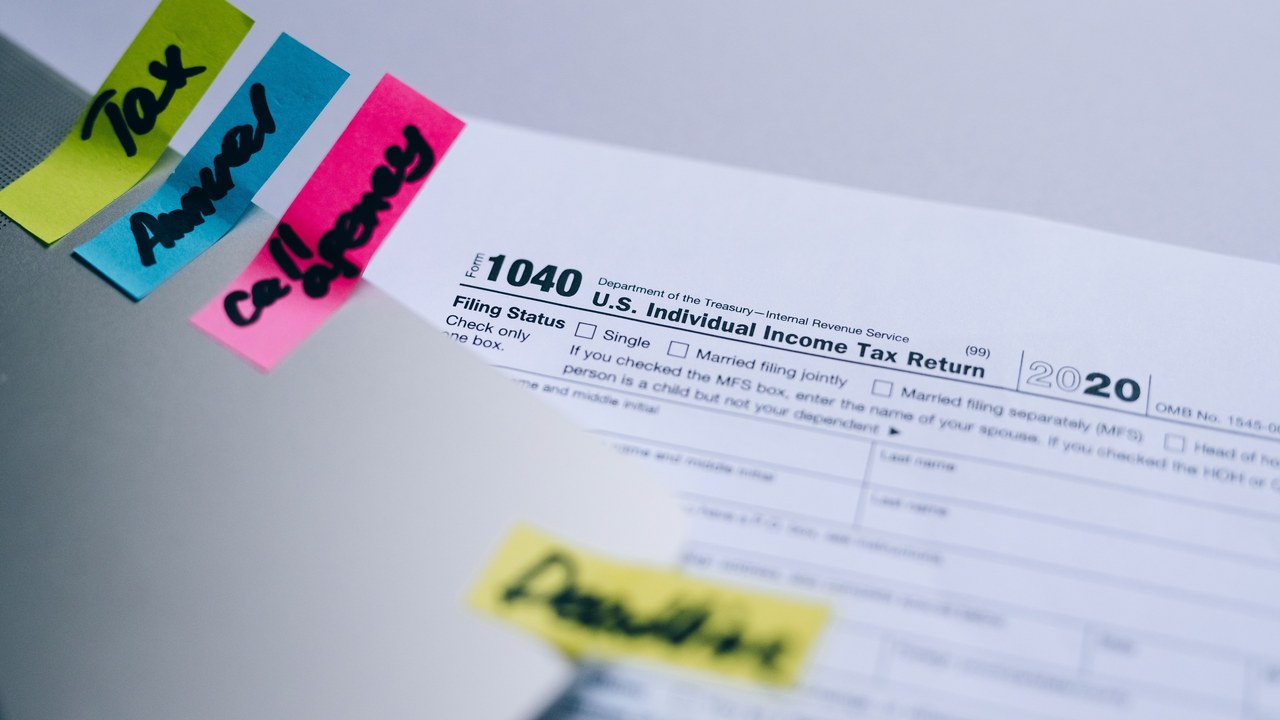
Connecticut does not tax Social Security benefits for most retirees, but the exemption has income limits. The state Department of Revenue Services says benefits are fully exempt when federal adjusted gross income is under $75,000 for single filers and under $100,000 for married couples filing jointly. Above those lines, the exemption shrinks.
Where the $75,000 and $100,000 lines fall
The Department’s seniors flyer, Form DRS-162, revised in April 2025, sets the test by filing status. A filer who is single or married filing separately qualifies for the full exemption if the amount on Form CT-1040, Line 1, is less than $75,000. A filer who is married filing jointly, a qualifying surviving spouse or head of household needs that amount to be less than $100,000.
So the $100,000 limit is not only for couples. A widow or widower within the surviving-spouse rules and a head of household use the same joint threshold, according to the flyer. Both limits are written as “less than,” so a household at exactly the line is outside the full exemption.
For a Connecticut retiree, the question is concrete: does Line 1 of this year’s CT-1040 come in under $75,000 as a single filer, or under $100,000 on a joint return, head-of-household return or as a surviving spouse? If it does, the Social Security benefit comes off the state return in full. If it does not, the retiree has to work through the worksheet to see how much stays taxable.
What changed this year: Social Security and Medicare change every year, and nobody sends you a memo. The Retirement Money Brief breaks down what changed and what to do.
Get the Retirement Money Brief →
We may earn a commission from links on this page.
What counts toward the income line
The test uses federal adjusted gross income, the figure carried onto the Connecticut return, and that figure includes more than Social Security. Pension payments, IRA withdrawals, interest, dividends and wages all feed into it. Retirees who draw from a traditional IRA can cross a line without any change in their Social Security check.
The flyer also explains where the benefit goes on the return. The taxable Social Security amount from federal Form 1040 or 1040-SR, Line 6b, is entered on Form CT-1040, Line 41. Filers who used the federal worksheets complete the Social Security Benefit Adjustment Worksheet in the CT-1040 instructions and enter its Line F on Line 41.
Will Connecticut tax Social Security above the lines?
For a retiree whose adjusted gross income lands above $75,000 or $100,000, the flyer says benefits are “partially exempt.” It does not give a percentage formula for Social Security, so the Social Security Benefit Adjustment Worksheet and the Department’s online Social Security Benefit Calculator are how a filer finds the taxable amount. The calculator sits in myconneCT at drs.ct.gov/eservices, under View Tax Calculators.
Other Connecticut breaks for retirees
The same flyer lists related senior items. Pension, annuity and non-Roth IRA distributions qualify for a subtraction that phases out at federal adjusted gross income of $100,000 for single, married-filing-separately and head-of-household filers, and $150,000 for joint filers. The IRA portion phases in at 25 percent for 2023, 50 percent for 2024, 75 percent for 2025 and 100 percent for 2026 onward.
Seniors who paid Connecticut property taxes on a primary residence, a vehicle or both can claim a credit of up to $300 against state income tax, using Schedule 3. The flyer says the credit applies to 2024 property taxes. The Department’s phone number is 860-297-5962, and its website is portal.ct.gov/drs.
The flyer adds two changes for retirees. For 2024 returns, the 3 percent bracket drops to 2 percent on the first $10,000 of income for unmarried filers and $20,000 for joint filers, and the 5 percent bracket drops to 4.5 percent on the next $40,000 and $80,000. Those benefits are capped at $150,000 of income for unmarried filers and $300,000 for joint filers and surviving spouses.
Starting January 1, 2025, pension and annuity payers generally no longer have to withhold Connecticut tax unless the payee asks or the payment is a lump sum. Retirees who want withholding use Form CT-W4P, which matters for anyone whose exempt Social Security sits next to taxable pension income.
The open question for each Connecticut retiree is which side of the line next year’s income will fall on. The Department’s flyer gives the thresholds and the form lines, and the filer’s own mix of IRA withdrawals, pension and other income determines the rest.
Will Connecticut tax your check once the IRA withdrawals count?
The Connecticut exemption turns on one number, adjusted gross income, and a large IRA withdrawal can push a retiree from under $75,000 or $100,000 to over it. The same withdrawal can raise the federal tax on benefits and affect Medicare premiums.
The Retirement Tax & Withdrawal Planner includes four calculators (provisional income, IRMAA tier, RMD schedule, Roth bracket fill) and the account withdrawal order, so each withdrawal can be tested against the income line before it happens. It also covers the senior deduction.
Get the withdrawal-order planner to test Connecticut’s $75,000 and $100,000 lines →
More Financial Reading
- 21 Ways to Stretch a $2,087 Social Security Check
- 15 Places to Find Your Share of the $4.25 Billion States Give Back
- 21 Ways Retirees Can Raise $1,000 Fast Without a Job
This article was produced with AI assistance and edited for accuracy against the sources linked above.


