
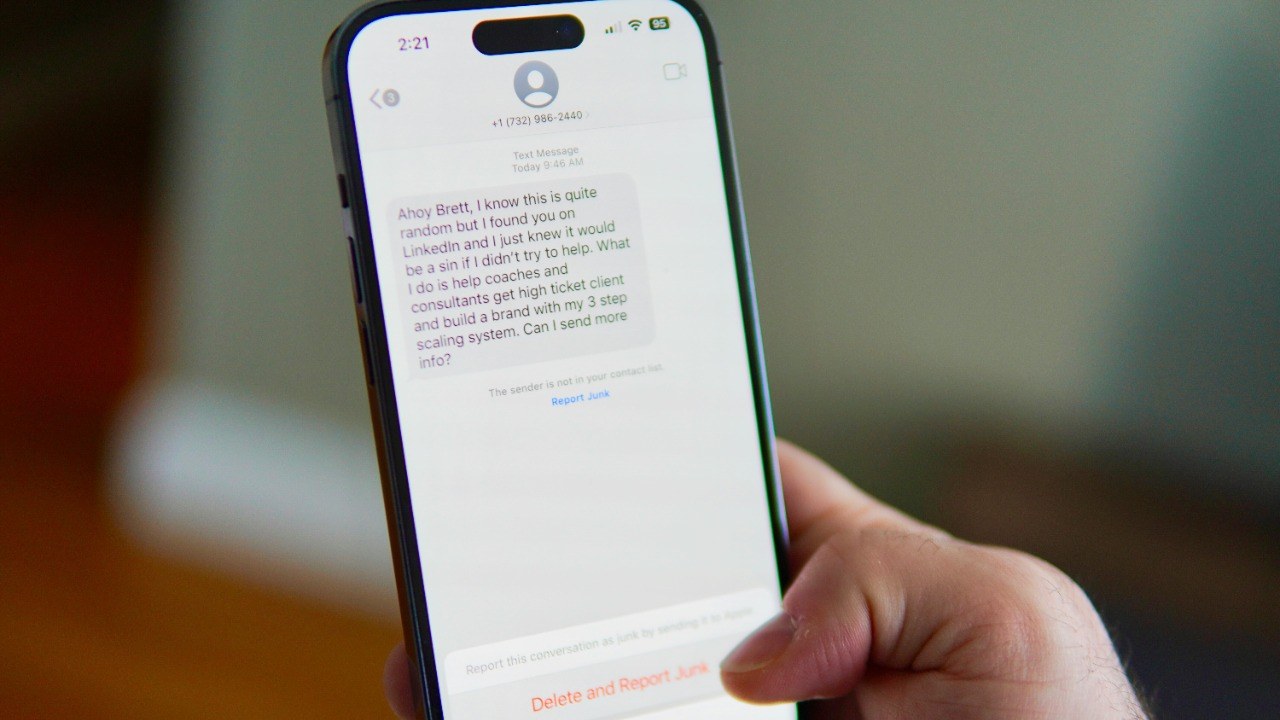
A text arrives saying the recipient is not registered to vote and must fix it right away. The FBI says that message is a trap, and with the 2026 midterm election approaching, the bureau says it is being used now.
The warning comes from the FBI’s Internet Crime Complaint Center, known as IC3. Its public service announcement dated Oct. 15, 2026, alert number I-101526-3-PSA, is titled “Scammers Exploit 2026 U.S. Midterm Election to Perpetrate Multiple Fraud Schemes.” Fake voter-registration messages are one of the four schemes it describes.
How the fake registration message works
According to the IC3 alert, victims get a text or an email saying they are not registered to vote in their state. The message urges them to click a link to what looks like a state voter registration page. The page is fraudulent.
The FBI says the goal is to steal personally identifiable information, the details that open accounts and unlock identities, for use in identity theft. Victims can then be targeted for further fraud. The alert does not put a dollar figure on losses.
How to check a registration without touching the link
The FBI’s advice is plain: do not click unknown links, and do not give personal information to people you do not know. To find out whether a registration is current, go straight to vote.gov, the federal site the alert points to, by typing the address into the browser rather than tapping anything in the message.
A registered voter who finds no problem there has the quickest sign that the text was bait.
Retirement deadlines, in your inbox: Miss an enrollment or claim deadline and the money can be gone. Join the Retirement Money Brief and we’ll send you our Scam & Identity-Theft Action Card as a welcome gift.
Get the Brief + the scam action card →
We may earn a commission from links on this page.
Why a registration scare works so well
Nothing about a registration problem sounds like a scam. It sounds like civic paperwork with a deadline, and a page that asks for personal details looks like what a real form would ask.
The alert also says scammers use AI tools to produce realistic voices, images and messages, and borrow candidates’ names, logos and slogans. A polished message is no proof that it came from an election office.
What happens if someone already entered details
The alert lists the information to gather for a report: the name of the person or company that made contact, phone numbers, addresses, email addresses and websites, payment details if money moved, and a description of how the contact began and what the person was asked to do or handed over.
Reports go to the local FBI field office or to IC3 at ic3.gov. Because the stolen item here is identity data rather than cash, the practical risk shows up later, as accounts opened in someone else’s name.
What else the FBI is flagging this season
The Oct. 15 alert updates an earlier warning, I-102924-PSA, issued Oct. 29, 2024 for that year’s general election. Its general advice is to be cautious with unsolicited calls, texts, emails and surveys, and to verify any organization and its contact information on one’s own.
The alert lists related FBI notices as well, among them I-101526-2-PSA on election crimes and what voters should know ahead of the November 2026 midterm, and I-091726-PSA on scammers who pose as law enforcement and government officials. A registration scare and a call from a supposed official can come from the same crew.
A text that mentions voting but arrives from an unknown number, urges a quick click and links to a page that asks for personal details fits the pattern the FBI describes. A real registration question is better settled by typing the address of the state or federal site into a browser.
The alert does not say how many people have received the fake registration texts, and the FBI has not published a loss figure. Its message to recipients is simple: a registration question is settled at the official site, never through a link in a message that arrived unprompted.
Entered a Social Security number on a fake voter page?
Identity data typed into a fake registration page does not expire. The FBI says the harvested details are used for identity theft and to pick out victims for more fraud, and the damage can surface months from now as a new account nobody opened.
The Senior Fraud Defense & First-Hour Recovery Kit includes the free credit-freeze steps, laid out in order, along with its first-hour clock for the minutes after a scam. Its reporting section explains what each report does once filed.
Get the credit-freeze kit for after a fake voter-registration link →
More Financial Reading
- 21 Ways to Stretch a $2,087 Social Security Check
- 15 Places to Find Your Share of the $4.25 Billion States Give Back
- 15 Ways Out of 22% Credit Card Interest
This article was produced with AI assistance and edited for accuracy against the sources linked above.


