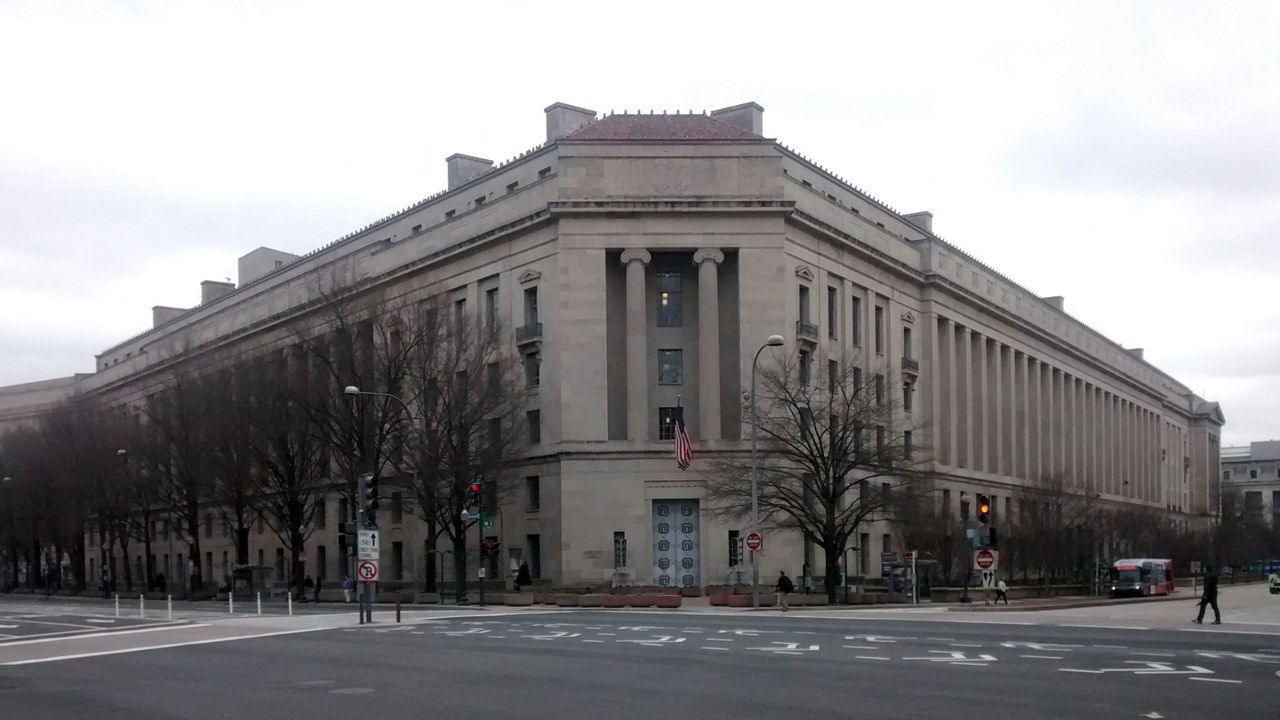
The Justice Department’s National Fraud Enforcement Division has told federal prosecutors to move on suspected fraud money early, seizing assets before anyone is indicted. The instruction came in a directive, numbered 26-13, issued on Oct. 8 by Assistant Attorney General Colin M. McDonald. It also calls for digital takedowns, so that money tied to a scheme can be frozen while the scheme is still running.
What Directive 26-13 says
In its announcement of McDonald’s memorandum, the department describes a comprehensive approach for the division and tells prosecutors to use “early, pre-indictment asset seizures.” The goal stated is to freeze the proceeds of fraud in real time. An indictment is the formal charge that opens a criminal case, so a pre-indictment seizure means the money can be locked up before charges are filed.
The department backs the directive with a number. It cites a Government Accountability Office estimate that the federal government loses between $233 billion and $521 billion a year to fraud. That range is the GAO’s estimate of losses to federal programs, as the department cites it. It is not a count of what individual scam victims lose, and it is not the amount the new directive is expected to recover.
People who lose money to a scam are left with a practical question. Faster seizures sound like a way to get stolen money back, and the question for a victim is whether the freeze reaches their own case. Anyone who has sent money to a stranger, a fake romance, a fake bank agent or a fake government caller wants to know whether any of it can be recovered, and who to call first.
The next thing to watch is the first seizures announced under Directive 26-13.
Get the next update the morning it lands →
A division created this year
The division itself is recent. Ropes & Gray, a law firm that summarized McDonald’s first memorandum, reports that the National Fraud Enforcement Division was set up in April 2026, when Acting Attorney General Todd Blanche directed it to take operational control of three units that had belonged to the Criminal Division: the Tax Section, the Health Care Fraud Unit, and the Market, Government, and Consumer Fraud Unit. That first memorandum is dated Aug. 13, 2026.
According to Baker Hostetler’s review of the August memo, the division has grown to more than 500 attorneys and staff, and its resources include asset recovery attorneys and investigators. Both firms list the same five priority areas: public trust and financial integrity, health care, internal revenue, global trade and commerce, and corporate misconduct.
Whose fraud the division targets
Ropes & Gray describes the division’s focus as fraud against the public fisc, meaning government programs, procurement and taxpayer dollars. Its summary lists government procurement fraud such as bid rigging, fraud against federal benefit programs including student loans, disaster relief and small business programs, Medicare and Medicaid fraud, criminal tax enforcement, customs and sanctions evasion, and corporate investigations.
Those are cases where the victim is the government. Individual scams, like the romance and impostor schemes that cost older Americans money, are not named in the summary of the August memo. The October directive tells prosecutors how to move on fraud money generally, and the department has not said how seized funds would find their way back to people who were defrauded, or which cases the new tool will be used on first.
The directive is a rule for prosecutors, not a program for victims. The facts the department has published include no form, no deadline and no payout, and nothing in them tells a person who lost money to wait for the division to act.
Why early seizure matters in a scam
Scam money is hard to chase once it leaves the account it started in. The Federal Trade Commission’s guidance for a person who has already paid a scammer starts with speed: contact the company or the bank right away, say that the payment went to a scammer, and ask for the money back.
The idea behind the directive is the same one, applied by prosecutors: act early, before the money is gone. The FTC’s romance scam page adds that the payment methods scammers ask for include wire transfers, gift cards, money transfer apps and cryptocurrency, which is why the first call goes to whoever handled the payment.
Reporting a scam while the money can still move
The first call is to the bank, card company or payment app. After that, scams can be reported to the FTC at ReportFraud.ftc.gov.
The Justice Department’s Elder Justice Initiative keeps a senior scam alert page with links to find help or report abuse and to victim services. It is a place to look for local help when a case involves an older person.
Whatever route is used, the records matter: the name the scammer used, the app or phone number, every date and amount, and how each payment was sent. Prosecutors cannot freeze what they cannot trace, and a clear trail is what any investigator starts with. Directive 26-13 is the Justice Department’s statement of how it intends to chase that money. What it recovers in actual cases will show up in later announcements.
More Financial Reading
- 24 Ways to Stretch a $2,087 Social Security Check
- 17 Places to Find Your Share of the $4.25 Billion States Give Back
- 18 Ways Out of 22% Credit Card Interest
This article was produced with AI assistance and edited for accuracy against the sources linked above.