
An adult on SNAP who is able to work and has no child under 14 in the household can collect benefits for only three months in any three-year stretch, unless the adult works or takes part in a work program for at least 80 hours a month. The rule is the one USDA’s Food and Nutrition Administration calls the time limit, and it now reaches adults through age 64 rather than stopping at 54.
What counts toward the 80 hours is broader than a paycheck, and that is the part of the rule least often spelled out. USDA says the work can be unpaid, done for goods or services instead of money, or done as a volunteer.
Two pieces of the Organizer fit this rule: The SNAP & Medicaid Renewal Organizer includes the SNAP work-rule time limit and who is exempt, along with a renewal and reporting calendar for keeping a household’s SNAP dates in one place.
Open the SNAP time limit, its exemptions and the reporting calendar →
Three months, counted across three years
USDA’s work-requirements page, updated July 16, 2026, describes the affected group as able-bodied adults without dependents and states the limit in one line: an adult cannot get SNAP for more than three months in three years without meeting the work standard. The agency’s eligibility page, which covers October 1, 2026 through September 30, 2027, gives the window as a 36-month period.
The three months are a running total across that window, not a fresh allowance each time an adult applies. Neither page spells out how a state decides which months to count, so that detail sits with the state agency that runs the program.
Four ways to reach 80 hours
The work-requirements page lists four routes, and an adult only needs one of them:
- Work at least 80 hours a month.
- Take part in a work program at least 80 hours a month.
- Take part in a combination of work and work-program hours.
- Take part in workfare for the number of hours the state assigns.
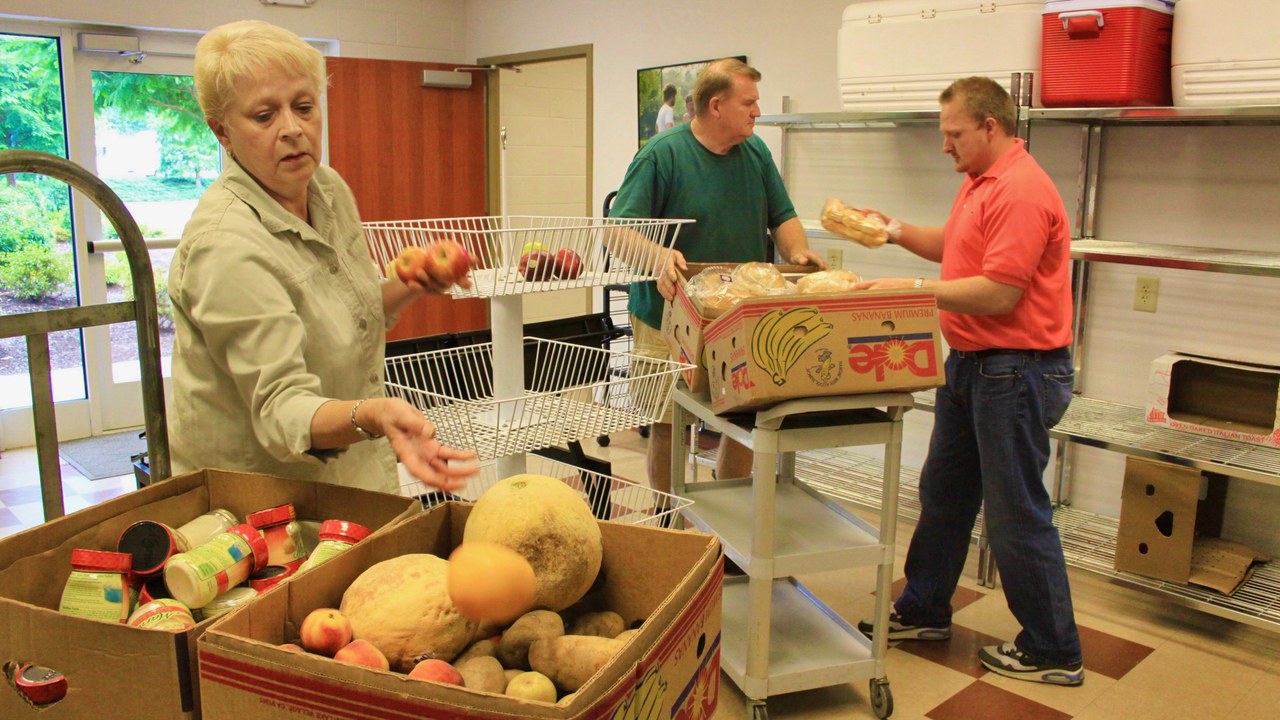
The first route is the one with the broad definition. “Work can be for pay, for goods or services (for something other than money), unpaid, or as a volunteer,” the page says. Volunteer hours can therefore count toward the monthly total on USDA’s wording, though the page does not say what proof a state asks for.
The eligibility page states the same standard as 20 hours a week instead of 80 a month. Both are USDA’s own wording of one test, which is why a household can see two different-looking numbers on two agency pages and still be reading the same rule.
Why the age ceiling is 64, not 54
The work-requirements page still names ages 18 to 54. A September 4, 2025 implementation memo from Ronald Ward, Acting Associate Administrator for SNAP, says otherwise. After the One Big Beautiful Bill Act was signed on July 4, 2025, the memo says, the law “increases the upper age exception to 65 and older.” An adult is therefore subject to the rule from 18 through 64.
The same memo changes the dependent test. It “limits the exception based on responsibility to care for a dependent child to those with a child under 14 years of age.” Under the older page text, anyone with someone under 18 in the SNAP household was excused. Under the memo, a household whose youngest child is 14 or older no longer is. The memo adds that “these changes were effective upon enactment,” and USDA’s work-requirements page says it is still “in the process of providing guidance” on the changes.
Who sits outside the clock
The page lists exceptions for an adult who cannot work because of a physical or mental limitation, who is pregnant, or who is excused from the general work requirements. It also still prints exceptions for veterans, people experiencing homelessness and young adults who were in foster care on their 18th birthday. The memo says the law removed those last three. It adds new exceptions for people defined as an Indian, an Urban Indian or a California Indian under the Indian Health Care Improvement Act.
The memo also changes where states can ask USDA to waive the time limit. States other than Alaska and Hawaii may now request a waiver only when an area’s unemployment rate is at least 10 percent. Waivers are the other lever on the clock, and the memo leaves them with a narrower set of areas than before.
Hours that have to be shown, months that cannot be rewound
The difficulty for an adult near the limit is that the rule is stated once but applied through a state. USDA’s pages say that unpaid and volunteer hours count and that a combination of work and work-program hours is allowed, but neither says what record a state accepts, or whether a month is counted when only part of the hours were logged. An adult working irregular shifts, caring for someone informally or volunteering in two places has to add the pieces up each month against the 80-hour floor.
The clock adds a second pressure. Because the three months are drawn from a 36-month window, a month used earlier in the window is one fewer later, and the work-requirements page still describes a narrower cohort than the memo does. An adult who is 58, or whose youngest child is 15, would read the printed page as saying the limit does not apply.
The official route is free: USDA’s Food and Nutrition Administration publishes the rule, the eligibility tables and the memo at no cost, and the state SNAP agency decides how hours are verified.
Eighty hours a month, written down
The three-month limit leaves a gap between what USDA’s pages say counts as work and what a state will accept as proof of it. The memo has already moved the age ceiling to 64 and the child threshold to 14, while the work-requirements page has not caught up, so a household can misread which side of the limit it is on.
The SNAP & Medicaid Renewal Organizer covers the SNAP work-rule time limit and who is exempt, and it adds a renewal and reporting calendar for keeping the dates of a case in order.
Open The SNAP & Medicaid Renewal Organizer’s SNAP work-rule time limit and exemption pages →
This piece was drafted with AI assistance; the hours, age, dependent-child and exemption terms were checked against USDA’s work-requirements page, its eligibility page and the September 2025 implementation memo.


