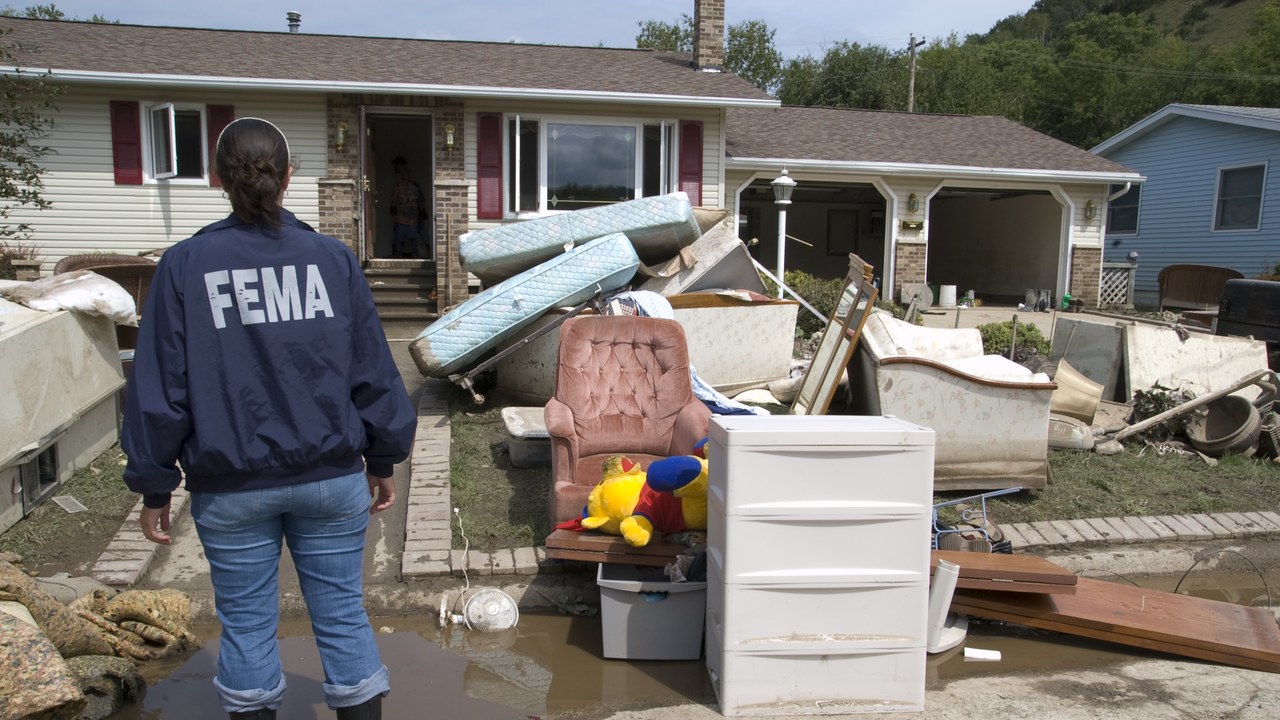
Households in seven Ohio counties can now apply to FEMA for help with flood damage, after a federal major disaster declaration dated October 2. The declaration, numbered DR-4945-OH, covers an incident period of August 10 through August 22 and names Clermont, Franklin, Hamilton, Licking, Morgan, Muskingum and Perry counties. It activates the Individuals and Households Program, the arm of FEMA that pays disaster grants directly to residents rather than to governments.
What the DR-4945-OH record says, county by county
FEMA’s open-data feed lists one line for each designated area, and the seven lines for disaster 4945 agree on every field that matters. Each carries a declaration date of October 2, 2026, an incident begin date of August 10 and an end date of August 22. Each is flagged as having the Individuals and Households Program declared. The same lines show no public-assistance or hazard-mitigation program declared, which means the declaration, as recorded on the morning of October 4, is a households declaration and not a package for local governments.
The declaration title in the feed is wider than the word flooding suggests: severe storms, straight-line winds, tornadoes, flooding and landslides. FEMA classifies the incident type as flood. Residents of the seven counties whose damage came from wind or a tornado during those same August dates fall under the same declaration title, since the title is what defines the disaster.
Seven counties approved from a 23-county request
The declaration is narrower than what Ohio asked for. In early September, Gov. Mike DeWine asked the president for a major disaster declaration covering 23 counties, telling Washington the storms were a disaster of such severity and magnitude that it exceeds the capabilities of the State of Ohio, local governments, and disaster relief organizations to provide comprehensive support. Sixteen of those counties, among them Athens, Washington, Butler and Adams, do not appear in the DR-4945-OH record as read on October 4. Whether any are added later is a decision FEMA has not announced in the record, so residents outside the seven counties have no federal households program to apply to under this number today.
John Wieber, interim director of Licking County Emergency Management, had explained the stakes before the decision came. If the federal declaration were approved, he said, that would open the programs through which people can apply for disaster relief money. Licking County is now one of the seven.
What the Individuals and Households Program pays for
FEMA’s description of the Individuals and Households Program splits the help into housing and other needs. Housing covers temporary housing while a home cannot be lived in, such as rental assistance or reimbursement for hotel costs, plus funding to repair an owner-occupied primary residence, including access routes. Other needs covers personal property and vehicles, moving and storage, and medical, dental, child care and funeral costs.
The ceilings were reset this fall. A Federal Register notice published September 29 sets the maximum award at $44,800 for housing assistance and $44,800 for other needs assistance for disasters declared on or after October 1, 2025, a 2.9 percent inflation adjustment. DR-4945-OH falls inside that window. These are maximums for a household, not payments, and the program pays only for needs that remain after insurance.
A second notice of the same date fixed the Serious Needs Assistance award at $790, another payment made under the Individuals and Households Program, effective October 1, 2025. FEMA’s declaration record does not say whether that payment will be activated for this disaster, so the amount stands as the program’s current figure rather than a promise for these counties.
Applying to FEMA directly, by web, phone or in person
FEMA’s program page lists three routes, all run by the agency itself: online at DisasterAssistance.gov or through FEMA’s mobile app, by phone at 1-800-621-FEMA (1-800-621-3362; TTY 800-462-7585), or in person at a FEMA Disaster Recovery Center. There is no intermediary in that list, and no step that runs through a contractor or a paid preparer.
The same page sets the conditions an applicant must meet. The applicant must complete an application and pass identity verification, must be a U.S. citizen, non-citizen national or qualified alien, must have unmet needs after insurance benefits, and must show expenses directly caused by the declared disaster. Insurance therefore comes first for a household that carries a flood or homeowners policy: the program fills gaps and does not duplicate a payout.
The registration deadline FEMA has not yet posted
No registration deadline appears anywhere in the DR-4945-OH record. The open-data feed carries no deadline field for this disaster, and FEMA’s program page does not state one. FEMA, as the agency that administers the program, is the body that will publish the final date for these seven counties, and the declaration record gives no sign yet that it has done so. Until that date appears, residents can still register with FEMA now through the routes above.
Nothing in the record shows a Disaster Recovery Center location for these counties either. Earlier in September, before the declaration, Licking County held multi-agency resource center events at the Hebron New Life Community Center on September 9 and 10, which were county-organized sessions and not FEMA registration sites.
Records Licking County officials told residents to start gathering
Wieber’s advice, in the Licking County coverage, was practical and specific to damage claims: keep lists of belongings, and hold on to receipts, quotes and invoices. Those papers are what turn a damaged-property claim into an unmet-needs claim after insurance, which is the test FEMA’s page sets. A household whose repairs are already complete has receipts; a household still waiting on a contractor has quotes and estimates instead.
The program’s rules point the same way at every step. The expense has to trace to the August storms, it has to remain after insurance, and FEMA verifies identity before anything is paid. The October 2 declaration for the seven counties is the document that makes all of that possible; the deadline notice, when FEMA posts it, will determine how long households have to act.
The repair bills that outlast the first grant
The DR-4945-OH declaration for Clermont, Franklin, Hamilton, Licking, Morgan, Muskingum and Perry counties opens a FEMA households program, but flood-damaged homes in those counties also carry longer-running costs: repairs that stretch past the first award, and heating and cooling systems that came through August damaged. Property-tax relief and home-cost help run on their own applications and calendars, separate from FEMA’s.
The Senior Property Tax & Home-Cost Relief Kit is an 11-page kit that covers heating, cooling and home-repair help and includes an application log and renewal calendar for keeping those separate deadlines in one place.
Line up the home-repair and renewal dates in The Senior Property Tax & Home-Cost Relief Kit →
This piece was drafted with AI assistance; the declaration details were checked against FEMA’s OpenFEMA record for DR-4945-OH and its Individuals and Households Program page, and the award maximums against the September 29 Federal Register notices.