
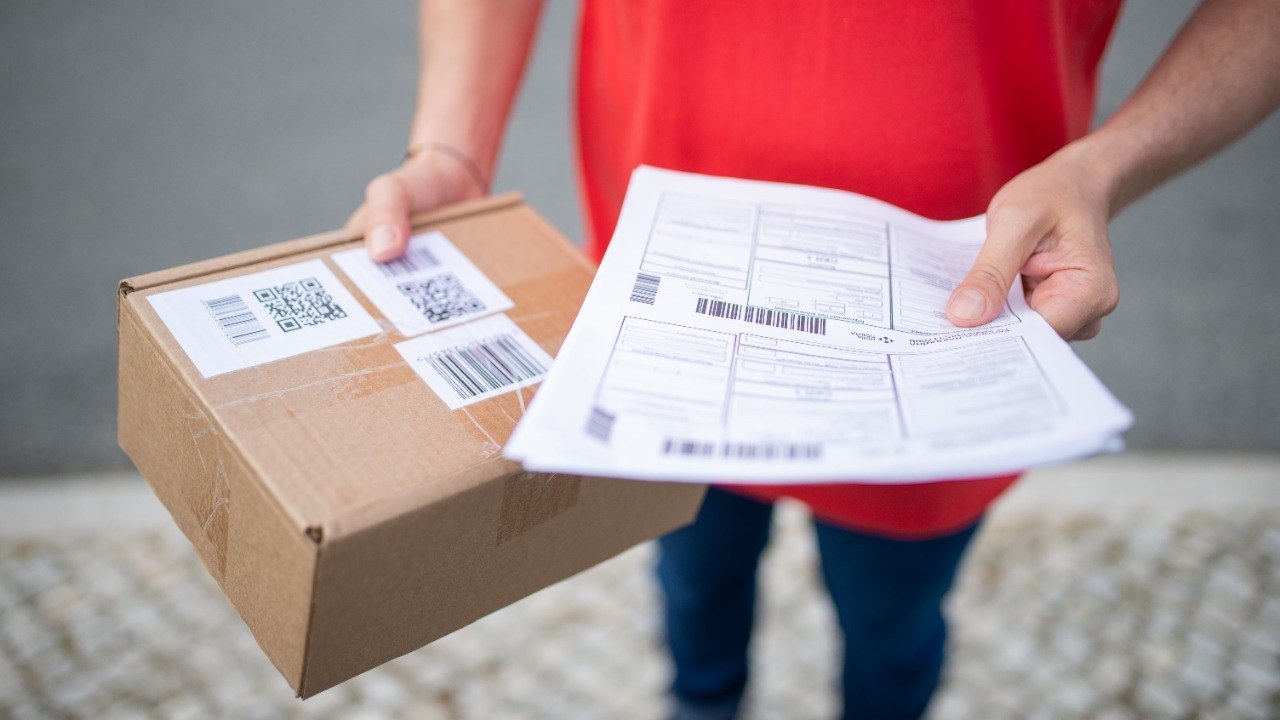
A package worth $800 or less used to cross the border without duty, which meant a $40 trinket ordered from an overseas seller usually arrived with no customs bill. That changed in June. U.S. Customs and Border Protection published two interim final rules on June 24, 2026, indefinitely suspending the exemption in 19 U.S.C. 1321(a)(2)(C) for shipments arriving by every mode, including the international mail. Whether a particular small parcel actually carries duty, and how much, depends on what is in the box.
Two CBP rules, one for carriers and one for the mail
The first rule, published in the Federal Register as “Indefinite Suspension of the De Minimis Exemption for Merchandise Arriving Through All Modes Other Than the International Postal Network”, took effect the day it was published, June 24, 2026. It suspends the administrative exemption for merchandise valued at $800 or less arriving by express carriers, freight and any other route except the post. Comments were due July 24, 2026.
The second rule covers the post. According to CBP’s companion notice on mail shipments and a new postal informal entry, the exemption is also indefinitely suspended for merchandise arriving through the international postal network, with the rule effective July 24, 2026, except for the provision at 19 CFR 145.31, which took effect June 24. The first rule describes the postal action as a concurrent rulemaking. Read together, the two documents leave no route into the country, by carrier or by mail, on which the $800 exemption still applies.
Where the authority comes from
Both rules are CBP’s own. The agency says its statutory discretion under 19 U.S.C. 1321 lets the Secretary except merchandise from the exemption where that is necessary to protect the revenue or to prevent unlawful importations, and the first rule states that the suspension aligns with Executive Orders 14324 and 14388 while CBP acts independently of them. The Commissioner, Rodney S. Scott, signed the carrier rule.
The rule also addresses litigation over tariffs. It notes that the Supreme Court’s February 20, 2026 decision in Learning Resources v. Trump held that the International Emergency Economic Powers Act does not authorize tariffs, but did not address the de minimis suspension, and that Executive Order 14389 ended certain tariff actions while maintaining the suspension.
What decides whether a $40 parcel is charged
The rule does not attach a flat charge to a package. According to the carrier rule, no new duty rates are imposed: existing tariff classifications and duties now apply without the exemption. The postal rule spells out the inputs. A filer must supply the 10-digit Harmonized Tariff Schedule classification of the goods and the country of origin, and the duty rate that follows may be a percentage of value or a specific rate, in which case the quantity or weight is also required.
That is the condition behind the word “can” in the headline. A $40 item no longer escapes duty because of its low value, but the amount charged is whatever the tariff schedule sets for that product from that country, and neither rule states a dollar figure for a typical parcel. The carrier rule also contains no statement of its effect on households, so any per-household cost estimate has to come from outside the rule.
Entry type 11, postal informal entry and the Pay.gov deadline
Because the exemption is gone, suspended shipments need an appropriate entry type. The carrier rule points to existing informal entry procedures for merchandise valued at $2,500 or less, typically Entry Type 11, with formal entry under 19 U.S.C. 1484 and 1485 for shipments above that value. It also says the voluntary electronic test known as Entry Type 86 has been suspended.
For the post, CBP created postal informal entry. The filing is electronic, and the filer, who may be the owner, the purchaser or a licensed customs broker, submits payment through Pay.gov by the 7th of the month following the parcel’s arrival. The mail notice mentions no separate fee for the filing.
The exemptions that survive the suspension
Not every low-value item is swept in. Both rules leave in place the exemptions in 19 U.S.C. 1321(a)(2)(A) and (B). Bona fide gifts can still enter free of duty under the first of those, with a $100 limit, and personal or household articles accompanying a traveler can still enter under the second, with a $200 limit. The carrier rule adds that the gift provision allows $200 for gifts from certain islands. The exemption that went away is the one for ordinary commercial parcels valued at $800 or less.
No end date, and a statutory one in 2027
The suspension is open-ended. The carrier rule says a modification or revocation will be announced by the Commissioner in the Federal Register, and it names no end date. A search of the Federal Register’s listing of CBP documents mentioning de minimis published since June 25 turns up no notice lifting or changing the suspension; the one document it returns, a July 8 information-collection notice about court-ordered refunds under the International Emergency Economic Powers Act, refers to a court order that addresses duty-free de minimis treatment and leaves the suspension untouched.
The rule also says the One Big Beautiful Bill Act statutorily terminates the exemption effective July 1, 2027, which means the exemption is slated to end by statute whether or not CBP’s suspension is ever revoked. The agency lists Christopher Mabelitini, Director of the Intellectual Property Rights and E-Commerce Division in CBP’s Office of Trade, as the contact for the rules, at 202-325-6915 or [email protected].
The primary record for the headline claim is the June 24, 2026 carrier rule and its postal companion: both indefinitely suspend the $800 de minimis exemption, both leave gifts and traveler articles in place, and both route low-value parcels through entry procedures that apply the tariff schedule’s existing duties.
Import duties are one pressure on the household budget, and the rest have deadlines
CBP’s suspension of the $800 exemption changes what small overseas purchases cost at the border, but it does not touch the recurring home costs that come with applications of their own. Property-tax relief and heating and cooling assistance run on separate renewal calendars, and a missed date means a missed year.
The Senior Property Tax & Home-Cost Relief Kit is an 11-page kit covering the 5 kinds of property-tax relief and the circuit-breaker credit that includes renters, with an application log and renewal calendar for tracking each date.
Keep the home-cost renewal dates on one calendar →
This piece was drafted with AI assistance; the rule details were checked against CBP’s two June 24, 2026 Federal Register rules and the Federal Register’s listing of later CBP de minimis documents.


