
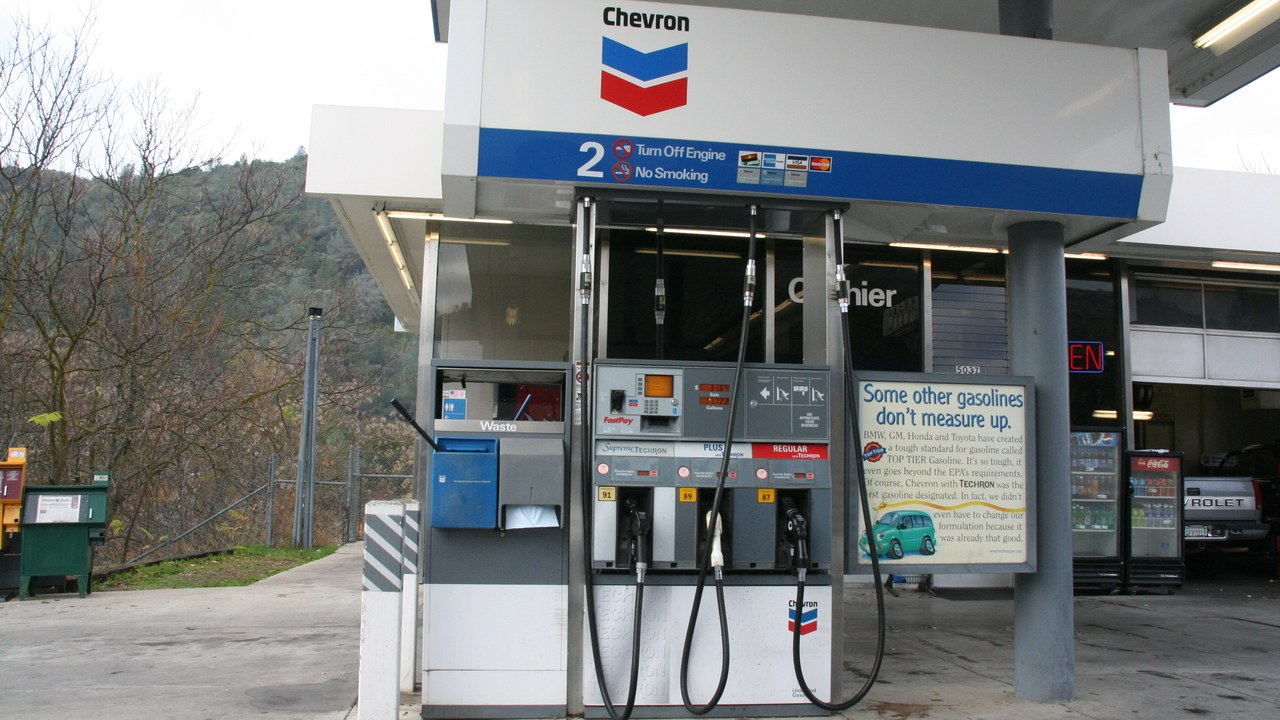
Regular gasoline averaged $4.465 a gallon across the United States for the week ending September 28, 2026, and on-highway diesel averaged $6.382, according to the Energy Information Administration. Both prices slipped from the prior week, but both sit far above where they stood a year earlier, which is the comparison that matters for a household budget set twelve months ago.
The federal statistics agency publishes the figures every Monday, and the next release is scheduled for October 6. Until then, September 28 is the most recent week on record, so the two numbers in this report are the current ones.
The September 28 readings, week over week and year over year
EIA’s weekly retail fuel page shows gasoline down $0.013 from the previous week, which puts the prior week near $4.478. Diesel fell more sharply, $0.147, from roughly $6.529. A one-week move of a penny and a half in gasoline is noise; the year-over-year gap is the signal. Gasoline is up $1.347 a gallon from the same week in 2025, meaning a year ago the national average was about $3.118. Diesel is up $2.628, from about $3.754.
What a fill-up and a year of driving cost at these prices
Take a driver who buys 15 gallons at a time. At $4.465 a gallon, the tank costs about $66.98. At last year’s implied $3.118, the same tank cost about $46.77, so each fill-up now runs roughly $20 higher.
Stretch that over a year with a hypothetical household that drives 12,000 miles in a car averaging 25 miles per gallon. That is 480 gallons. The $1.347 jump adds about $647 to the annual gasoline bill, before any change in how much the household drives. For a retiree on a fixed benefit, $647 is more than a month of many utility bills.
The same hypothetical driver can see how little the latest weekly dip matters. A $0.013 decline across 480 gallons saves about $6.24 over a full year, set against the $647 year-over-year increase. A driver in California buying those 480 gallons at $6.189 instead of the Gulf Coast’s $3.924 would pay about $1,087 more for the same miles.
California at $6.189, the Gulf Coast at $3.924
The national average hides a wide spread. EIA reports the West Coast region at $5.724 for gasoline, with California alone at $6.189. The Gulf Coast is the cheapest region at $3.924. The East Coast stands at $4.290, the Midwest at $4.291 and the Rocky Mountain region at $4.486.
The gap between California and the Gulf Coast is $2.265 a gallon, or about $34 on a 15-gallon fill-up. Diesel shows the same geography, with the West Coast at $7.357 and the Gulf Coast at $5.955, while the East Coast reads $6.137, the Midwest $6.526 and the Rocky Mountain region $6.407.
Diesel’s steeper climb
Diesel rose by nearly twice as many dollars as gasoline over the year, $2.628 against $1.347, and it now costs about $1.92 a gallon more than regular gasoline ($6.382 minus $4.465). Most households do not fill a diesel tank, but diesel is the fuel burned by the trucks that deliver groceries and by much farm equipment, so the retail price is a useful marker for pressure further up the supply chain. EIA’s page reports the pump price only and does not measure that pass-through, so the link from a $6.382 diesel average to a grocery receipt remains an inference rather than a published figure. What the page does establish is the direction: down this week, sharply up on the year.
A diesel pickup or work truck makes the stakes larger. A hypothetical owner burning 1,000 gallons a year pays about $2,628 more at the current year-over-year gap than at last year’s price, using EIA’s $2.628 figure. That is a business-expense or household-budget line, depending on who holds the keys.
Winter heating oil has not been repriced yet
Another fuel gauge is missing for now. EIA’s residential heating oil series is seasonal. Its last weekly print was $5.535 a gallon for the week ending March 30, 2026, and the next release is scheduled for October 7. That March figure is an old anchor, not a current price, so households that heat with oil will not see a new reading until next week.
Where official forecasts and the consumer price index point
The Bureau of Labor Statistics’ August consumer price index shows how much of the inflation story is fuel. Headline prices rose 3.4% over twelve months, but gasoline alone was up 27.4% and the broader energy index up 16.3%, while the index excluding food and energy rose only 2.4%.
EIA’s September Short-Term Energy Outlook, published September 9, forecasts a 2026 average regular gasoline price of $3.84 a gallon and $3.35 for 2027. Those are projections, not observations, and the current $4.465 reading already sits above the 2026 figure. The agency’s weekly numbers, not its forecasts, are what drivers actually pay at the pump.
Housing-cost help that homeowners and renters often miss
Older homeowners and renters on fixed incomes often pay more for property taxes and home upkeep than they have to, because freezes, exemptions and credits are scattered across state and local offices. Keeping track of which applications are due, and when each one renews, is the job that tends to slip.
The Senior Property Tax & Home-Cost Relief Kit is an 11-page guide covering the five kinds of property-tax relief, the circuit-breaker credit that includes renters, and heating, cooling and home-repair help, with an application log and renewal calendar to keep the dates in one place.
Open The Senior Property Tax & Home-Cost Relief Kit →
This report was drafted with AI assistance and checked against the EIA, BLS and EIA outlook pages linked above.


