
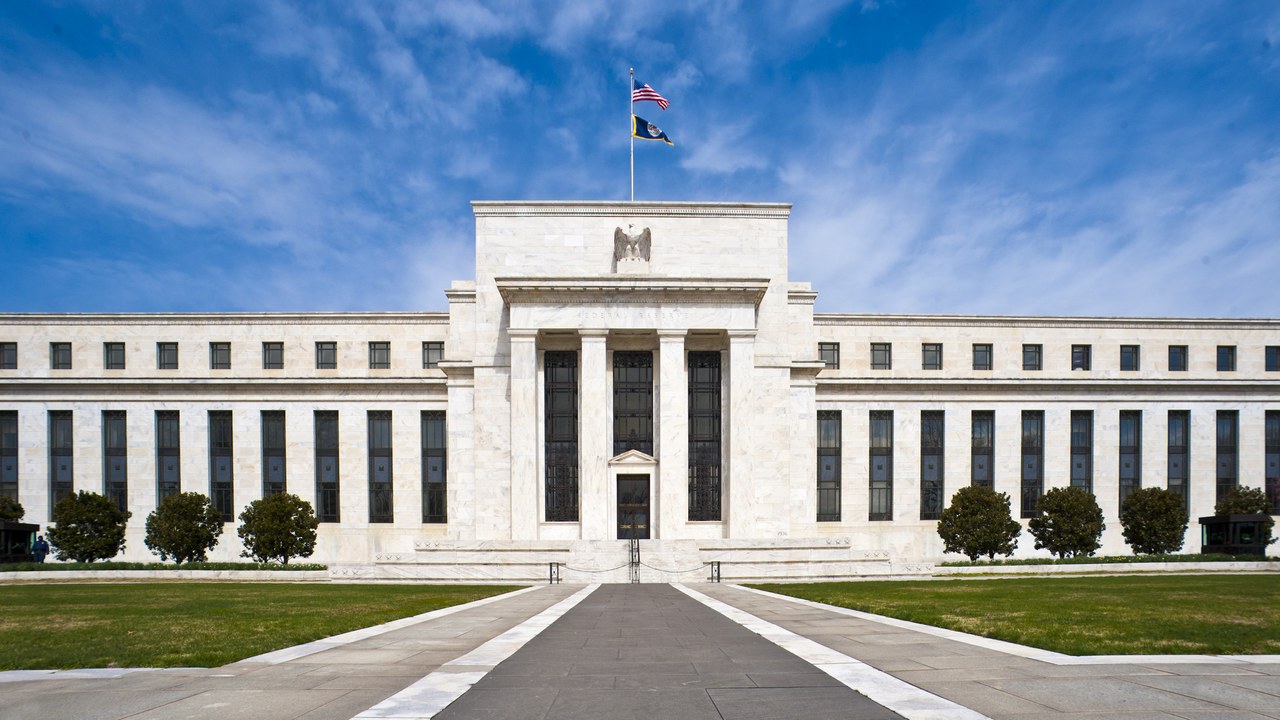
A quarter-point decision at the Federal Reserve on Sept. 16 reached household borrowing within a day. U.S. Bank raised its prime lending rate to 7.00% from 6.75%, effective Sept. 17, and the Fed’s H.15 table lists the bank prime loan rate at 7.00% for every business day of Sept. 21-25. Borrowing that follows prime moves with it.
A 12-0 vote and a higher target range
The Federal Open Market Committee’s Sept. 16 statement says the Committee decided to raise the target range for the federal funds rate by 1/4 percentage point, to 3-3/4 to 4 percent. The vote was unanimous. The statement says inflation remains elevated and that the action “will support a timelier return to the Committee’s 2 percent goal.”
The federal funds rate is what banks charge one another for overnight loans, so it never appears on a household statement. It is the starting point for the prices that do. The Fed’s H.15 release shows the effective federal funds rate at 3.88%, inside the new range.
How 6.75% turned into 7.00%
Prime is a rate each bank posts for itself, and the Fed’s H.15 table reports the bank prime loan rate as a series. In its Business Wire announcement, U.S. Bancorp said the bank “increased its prime lending rate to 7.00 percent from 6.75 percent, effective tomorrow, September 17, 2026,” at all U.S. Bank locations. The release does not mention other banks.
The earlier level is documented too. The St. Louis Fed’s monthly prime rate series shows 6.75% for August 2026. The spread has not changed. Prime at 7.00% sits 3.00 points above the 4.00% top of the new target range, and 6.75% sat 3.00 points above the old top of 3.75%. The quarter point passed through in full.
Where lenders print the link to prime
Whether a particular balance is affected depends on how the lender writes its rate. Two large lenders show the connection on their own pages. Chase’s Freedom Unlimited page describes its variable APR as the minimum of a prime-plus-margin figure and 29.99%, and it printed the low end as “6.75+11.49” when it was read on Sept. 29. Bank of America’s home equity line page says its variable introductory rate is “based upon The Wall Street Journal Prime Rate” minus a discount and “can change periodically based on Prime.”
The Chase formula also carries a ceiling: the same page caps the rate at 29.99%, so a margin added to prime cannot push the printed APR past that figure. The Bank of America line works the other way around, with a discount taken off prime during the introductory months and a different, higher rate afterward.
Those are two examples, not a count of every card or credit line. A cardholder’s own agreement and statement say which index applies. Rates that are fixed for a loan’s life do not follow prime at all, and neither does a promotional rate until it expires.
What a quarter point adds to a balance
The arithmetic is simple. A quarter point is 0.25% a year, so a $10,000 card balance carries about $25 more in interest over a year, or roughly $2 a month, if the balance stays put. A $50,000 balance drawn on a home equity line carries about $125 more a year, or around $10 a month on an interest-only basis. Balances that shrink cost less, and balances that grow cost more, because interest is figured on what is owed day by day.
A single quarter point is modest against rates that already run well into double digits on cards. Its weight comes from repetition: the amount is added to every variable balance a household holds, and it stays until prime changes again. Someone carrying a card balance, a line of credit and a variable-rate loan pays the extra quarter point on all three.
Pages that lag the change
Lenders’ public pages do not all update at once. When the Chase page was read, it still displayed 6.75 as the prime figure in the formula, which is why the printed range of 18.24% to 27.74% had not yet moved. Chase’s pages read for this report do not say when a prime change reaches an account, so the timing on a given statement is a question for the card agreement or the issuer.
The safest reading of a statement is the one the lender’s own disclosure gives: the index, the margin and the resulting annual percentage rate. Adding the margin to 7.00 reproduces the rate a variable account should show once the change has been applied. Comparing that result with the APR printed on the latest statement shows whether the adjustment has arrived.
The figures behind the change
The Federal Reserve’s H.15 release puts the bank prime loan rate at 7.00% for Sept. 21 through Sept. 25, and the Sept. 16 FOMC statement documents the target range that pushed it there. Those two federal pages, together with U.S. Bank’s own announcement of the 6.75% to 7.00% move, are the record behind the rate now sitting in card and credit-line formulas.
Short rules for balances, collectors and frozen accounts
The kit is written for households that hold bank accounts and carry debts, such as card balances or a collector’s letter, and want the protections gathered in one short document. It addresses the problem that the rules around deposits and debt collection are scattered across several places and are hard to recall when a letter or a frozen balance arrives.
The Bank Account & Debt Protection Kit is a 10-page kit that lays out the 2-month bank protection rule and the debt-validation steps, with a protected-funds and dispute log for keeping track.
Get the debt-validation steps in The Bank Account & Debt Protection Kit →
This article was drafted with AI assistance and checked against the Federal Reserve, U.S. Bank, Chase and Bank of America pages it cites.


