
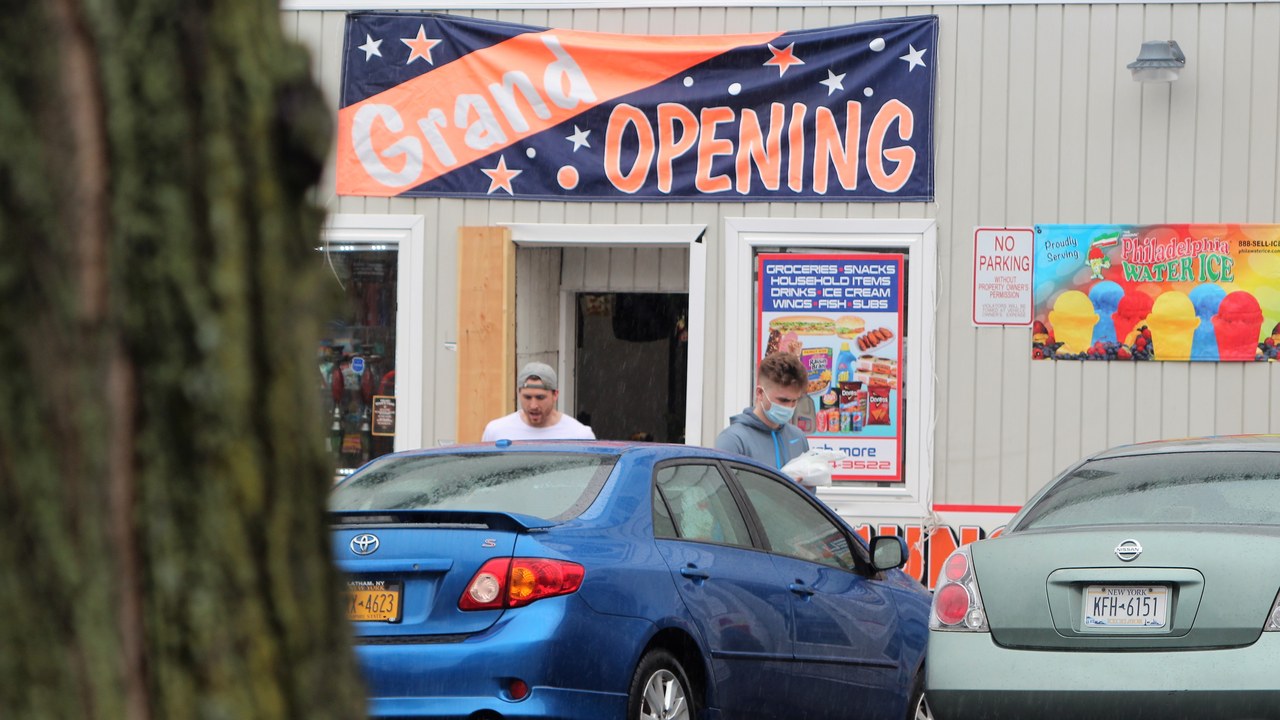
The Trump administration’s Department of Agriculture has moved against 170 food stamp retailers across New York City, spanning all five boroughs, with penalties that range from a temporary suspension to permanent removal from the program. The announcement frames New York City as one piece of a much larger nationwide sweep against retailer fraud in the Supplemental Nutrition Assistance Program. The action targets stores, not individual benefit recipients, and does not change what a SNAP household can buy or how much it receives each month.
Operation SNAP Back’s Five-Borough Sweep
The action against New York City retailers falls under an enforcement effort the U.S. Department of Agriculture calls Operation SNAP Back, announced September 18, 2026. The department’s press release states that 170 retailers across the five boroughs, Manhattan, Brooklyn, Queens, the Bronx and Staten Island, were targeted in the New York City phase of the effort. The release does not name the individual stores, but it describes the sweep as concentrated on retailers suspected of trafficking, the practice of exchanging SNAP benefits for cash rather than food, and on stores running illegal point-of-sale equipment built to process those fraudulent transactions.
Inside the organizer: A retailer crackdown changes nothing about a shopper’s own benefit status, but the SNAP & Medicaid Renewal Organizer’s renewal document checklist and its 51 state packs cover the separate paperwork, recertification and EBT problem-reporting, that determines whether that benefit stays active from one year to the next. Open The SNAP & Medicaid Renewal Organizer to see those two pieces side by side.
From Suspension to Permanent Disqualification
The department’s release describes penalties in New York City ranging from temporary removal from the SNAP retailer program to permanent program disqualification, alongside fines. That range matches the general enforcement structure the agency’s Food and Nutrition Administration lays out on its own SNAP fraud-prevention page, current as of September 8, 2026, which lists temporary or permanent disqualification, application denial or withdrawal, civil monetary penalties, and criminal prosecution as the tools available against a retailer found violating program rules. The federal regulation underlying that structure, 7 CFR 278.6, states that the agency disqualifies a firm permanently once its personnel are found to have trafficked, making permanent removal the default outcome rather than a rare escalation; a civil money penalty can substitute for that permanent disqualification only if the store can show it had an effective compliance program already in place.
The Nationwide Numbers Behind the New York Action
The New York City figures sit inside a larger national total the same press release reports. Nationwide, the department states that nearly 6,000 retailers have been disqualified or suspended and that more than 2,000 illegal point-of-sale devices, equipment used to process fraudulent EBT transactions, have been disabled or blocked. The 170 New York City retailers represent a small fraction of that national total, but the release singles out the city’s five boroughs as a distinct phase of the broader operation rather than folding the number into the nationwide count without detail. That framing suggests New York City drew specific attention as a concentration point for the kind of point-of-sale fraud the operation is built to find.
What Trafficking Looks Like at the Register
SNAP trafficking, the conduct the penalty structure targets most directly, typically involves a retailer swiping a customer’s EBT card for a cash value greater than the actual groceries purchased, then pocketing a cut of the reported benefit amount. It also covers a store ringing up ineligible items, such as alcohol or non-food goods, as if they were SNAP-eligible groceries. Both practices divert money away from the program’s intended purpose and are the kind of conduct the federal regulation’s civil monetary penalty and disqualification tools are built to punish once investigators build a case against a specific store. Illegal point-of-sale devices, the kind the nationwide sweep disabled by the thousands, are typically the tool that makes fabricated or inflated transactions possible in the first place.
No Change for a Shopper’s Own Benefit
A SNAP household shopping in New York City sees no change to eligibility, benefit amount or monthly deposit date because of this enforcement action. What can change, if a household’s regular store is among the 170 targeted, is where that household can use its card once a suspension or disqualification takes effect; a store that loses its authorization stops accepting EBT payments immediately, regardless of how loyal its customer base has been. The department’s release frames the enforcement as protecting program integrity broadly rather than as a policy directed at any individual recipient’s benefits, and it does not list an appeal deadline or claim process for shoppers, since none applies to them.
Part of a Broader Pattern of SNAP Enforcement
Operation SNAP Back’s New York City phase follows a pattern the department has used in other cities and states this year, announcing retailer counts and penalty ranges city by city or state by state rather than as a single running tally. The approach lets the department point to concrete, geographically specific numbers, 170 stores in New York City, nearly 6,000 nationwide, rather than describing enforcement only in general terms. For a retailer, the practical stakes are the same wherever the sweep lands: an authorization that can be suspended quickly and, for trafficking specifically, is presumed permanent once the federal regulation’s trafficking finding is made.
A Retailer Crackdown and the Benefit Paperwork It Doesn’t Touch
Operation SNAP Back’s action against 170 New York City stores addresses fraud on the retailer side of the program, but it leaves untouched the recertification packet and reporting deadlines that determine whether a household’s own SNAP or Medicaid coverage stays active. A shopper whose regular bodega loses its EBT authorization still has to keep up with that separate paperwork on schedule, whatever store ends up filling the gap.
The SNAP & Medicaid Renewal Organizer includes a renewal document checklist and work-hours/EBT/contact logs built for exactly that separate side of keeping benefits active.
Open the EBT and contact logs in The SNAP & Medicaid Renewal Organizer.
This article was produced with AI assistance and reviewed by a human editor, drawing on USDA’s own press release, fraud-prevention page and the governing federal regulation.


