
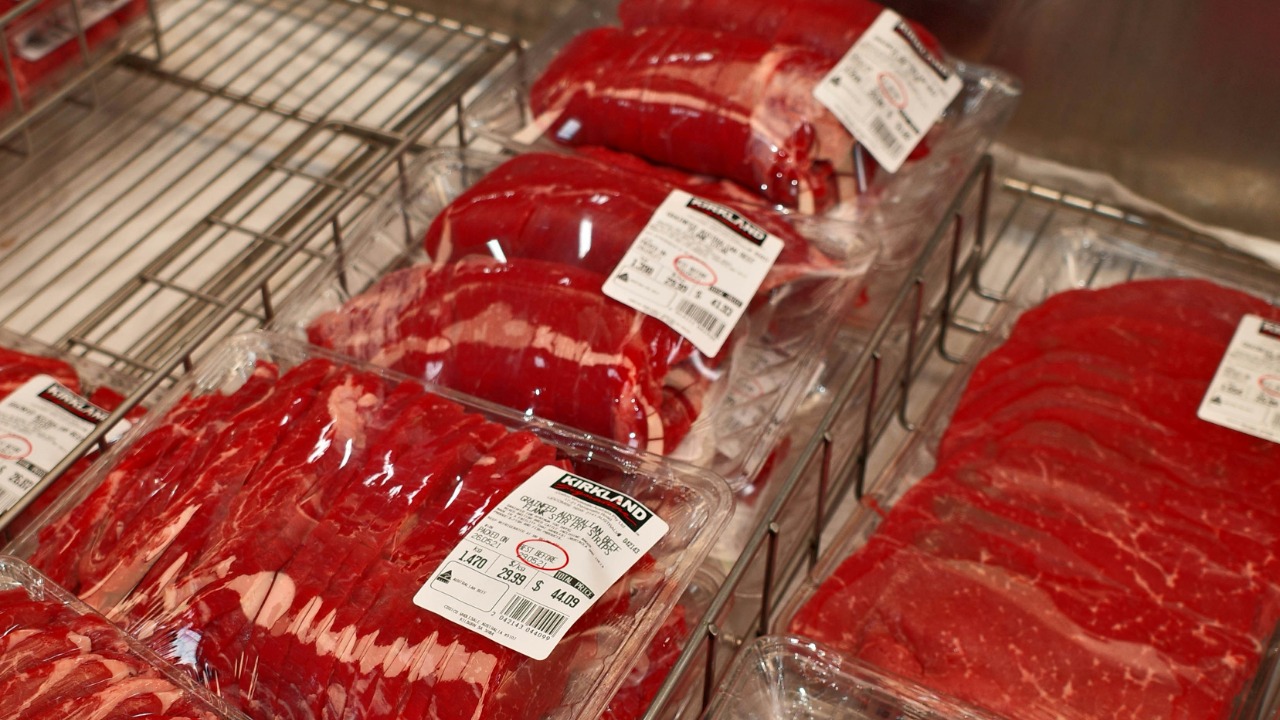
Two items in the grocery cart pulled far harder on household budgets than the rest of the cart over the past year. Beef and veal cost 5.9 percent more in August 2026 than a year earlier, and coffee cost 6.1 percent more, according to the U.S. Bureau of Labor Statistics’ Consumer Price Index report. Both figures run well above the 2.2 percent rise in grocery prices overall, making beef and coffee two of the more visible outliers on an otherwise fairly calm shopping trip.
Two categories running well ahead of the grocery average
The Bureau’s detailed price table for August 2026 puts the “food at home” index — the Bureau’s term for groceries bought to prepare at home — up 2.2 percent over the twelve months ending in August. Against that backdrop, beef and veal’s 5.9 percent yearly increase runs more than two and a half times faster, and coffee’s 6.1 percent increase runs nearly three times faster than the grocery aisle as a whole.
Both figures are calculated the same way every category in the report is calculated: as the percentage change between the average price collected in August 2025 and the average price collected in August 2026, based on the Bureau’s ongoing survey of retail prices nationwide.
Inside the kit: The Senior Property Tax & Home-Cost Relief Kit lays out the five kinds of property-tax relief, the circuit-breaker credit that includes renters, and help with heating, cooling and home repairs — the kind of household costs that keep climbing alongside the grocery bill. Open The Senior Property Tax & Home-Cost Relief Kit to compare them against a home budget.
What happened inside the month of August itself
Both categories actually eased slightly from July to August, even as their yearly totals stayed elevated. Beef and veal prices fell 0.6 percent during the month, and coffee prices fell 0.9 percent, according to the same Bureau table. That combination — a sharp yearly increase alongside a monthly dip — is common in the Consumer Price Index when a category rose steeply earlier in the year and is now leveling off from an already-higher base, rather than reversing course.
The Bureau’s monthly figures for individual grocery items are not seasonally adjusted, unlike the headline all-items number, so a single month’s move in either direction is a smaller signal than the twelve-month trend line the headline figures in this report describe.
Where the rest of the grocery cart moved
Fruits and vegetables were up 3.2 percent over the year and fell 0.6 percent in August, landing between the grocery average and beef and coffee’s steeper increases. Food away from home — meals bought at restaurants and other food-service outlets — rose 3.4 percent over the year and 0.3 percent in August on a seasonally adjusted basis, according to the Bureau’s summary release. Restaurant meals have consistently run ahead of grocery prices for much of 2026, a pattern this report continues.
Overall food prices, combining groceries and food away from home, rose 2.7 percent over the twelve months ending in August. That places beef and coffee’s individual increases well above not just the grocery average, but the broader food category that includes restaurant meals as well.
What a separate federal forecast expects for the rest of the year
The Bureau’s numbers describe the twelve months that already happened. The U.S. Department of Agriculture’s Economic Research Service separately forecasts where full-year prices are headed, and its Food Price Outlook, updated August 25, 2026, projects food-at-home prices rising 2.5 percent across all of 2026 — close to the Bureau’s 2.2 percent figure for the year through August. For beef and veal specifically, the Economic Research Service forecasts a 9.8 percent increase for the full year, well above the 5.9 percent the Bureau has recorded so far, which suggests the agency expects beef prices to keep climbing before the year is out.
How grocery inflation compares with the broader report
Beef, coffee and the rest of the grocery aisle sit inside a much larger Consumer Price Index report that also covers energy, housing and every other category the Bureau tracks. The all-items index rose 3.4 percent over the twelve months ending in August, unchanged from July, while the measure of inflation that strips out food and energy — what economists call “core” inflation — rose 2.4 percent over the same period. Grocery prices at 2.2 percent are running close to that core figure, which makes beef and coffee’s individual jumps stand out even more against a backdrop of otherwise moderate price growth.
The all-items index itself rose 0.4 percent for the month of August, faster than July’s 0.1 percent gain, an acceleration the Bureau tied mainly to energy prices rather than groceries. Food and energy are the two categories the Bureau treats as volatile enough to strip out of its core measure, and this report shows both of them producing outsized moves inside otherwise contained categories.
A category-by-category report, not a single grocery-bill number
The Bureau of Labor Statistics does not publish a single “cost of a grocery trip” figure; it tracks dozens of individual food categories and combines them into the food-at-home index using national spending patterns as weights. That is why a shopper’s own receipt can look very different from the 2.2 percent grocery average depending on what fills the cart. A household buying beef and coffee regularly is living through price growth closer to 6 percent, while a household favoring other proteins and grains may be seeing something closer to the overall average. The Bureau’s August 2026 news release, published September 11, remains the government’s most current word on where each category stands.
A grocery bill that outpaces the average, and a home budget that has to absorb it
Beef and coffee running well ahead of the overall grocery rate leaves less room elsewhere in a household budget, and property taxes and utility bills are two of the costs that same budget still has to cover. Unlike an item at the register, neither one comes with an automatic discount for a household feeling the squeeze.
The Senior Property Tax & Home-Cost Relief Kit covers property-tax freezes and exemptions alongside help with heating, cooling and home repairs, plus an application log for tracking which filing windows are still open.
Compare the relief options in The Senior Property Tax & Home-Cost Relief Kit.
This article was produced with AI assistance and reviewed by a human editor. Figures are linked to their primary sources.


