
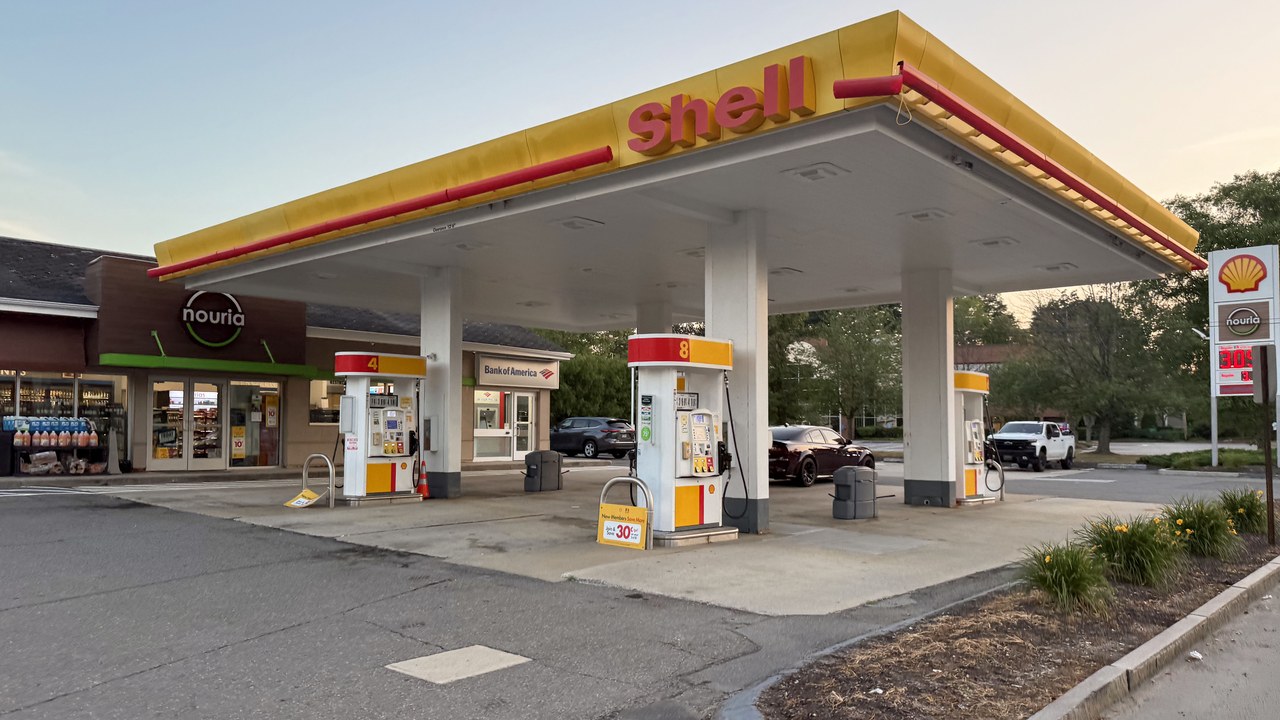
For the third week in a row, the national average price of regular gasoline moved higher, reaching $4.478 a gallon on September 21. The U.S. Energy Information Administration’s weekly survey put that $1.305 above the same week last year. Gasoline has not strung together a run of increases this size since the price spikes of 2022.
The climb has been gradual rather than sudden, adding roughly 40 cents a gallon since the end of August. Diesel, tracked in the same survey, moved by an even larger amount over the same stretch, hitting a record of its own the same week.
Three weeks that pushed the average to $4.478
The EIA’s Gasoline and Diesel Fuel Update recorded regular gasoline at $4.478 a gallon nationally for the week of September 21, up 15.9 cents from $4.319 the week before. That followed increases of 16.2 cents on September 14 and 8.6 cents on September 7, according to EIA’s weekly regular-gasoline price history, which put the average at $4.071 on August 31.
Put together, the price rose from $4.071 to $4.478 in three weeks — 40.7 cents, or almost 10% — after a summer in which weekly moves had mostly stayed under a nickel.
Inside the kit: The Senior Property Tax & Home-Cost Relief Kit lays out the different kinds of property-tax freezes and exemptions, the circuit-breaker credit available to renters, and heating and cooling assistance for a home. Those are the fixed costs that keep accumulating whether or not a gas tank gets any cheaper, and The Senior Property Tax & Home-Cost Relief Kit covers each one alongside an application log for tracking a filing window.
Where September 21 sits against 2026’s high point
Regular gasoline had already touched higher ground once this year. EIA’s history shows the national average at $4.500 a gallon on May 11 and $4.490 on May 18, both above the September 21 figure. What is notable about September 21 is that it is the highest weekly average recorded since that May 18 reading — every week in between, including a June-through-July stretch that dipped as low as $3.777 in early July, came in lower.
That means the current run of increases has not set a 2026 record, but it has erased months of decline in a matter of weeks and pushed the average back toward territory gasoline had not occupied since spring.
The distance from a year ago, and from 2022
A year earlier, on the equivalent week in September, EIA recorded regular gasoline at $3.173 a gallon — $1.305 below the current price. Gasoline has not averaged $4.478 or higher since 2022, when the national price peaked at $5.006 a gallon on June 13 of that year during a period of sharp global oil-price increases. The current price remains well below that 2022 high, even after three straight weekly gains.
Diesel, sold at filling stations alongside gasoline but tracked separately, moved further and faster: EIA recorded a national on-highway diesel average of $6.529 a gallon the same week, a series high dating back to 1994, according to the agency’s diesel price history.
How the average breaks down by region
EIA builds its national figure from five regions, and none of them moved in the opposite direction that week. The East Coast averaged $4.285 a gallon, the Gulf Coast $3.972, the Midwest $4.386 and the Rocky Mountain region $4.510. The West Coast, at $5.600, remained the most expensive region in the country, with California alone averaging $6.003 — the only place in the EIA survey where regular gasoline already tops $6.
The Gulf Coast’s $3.972 average was the lowest of the five regions, meaning the same week that pushed the national number to a fresh multi-month high still left drivers in that region paying noticeably less than the country as a whole.
A year that started near $2.80
The distance gasoline has traveled in 2026 stands out most against where the year began. EIA’s regular-gasoline history put the national average at $2.796 a gallon on January 5. By September 21 it had risen $1.682, or 60%, over the course of the year. EIA’s next weekly figures, covering the week through September 28, are due out September 29.
The home-cost side of a rising gas bill
A third straight weekly increase at the pump is the kind of cost most households notice right away, while property-tax bills and utility charges keep climbing quietly in the background with no comparable weekly headline. That gap in attention is exactly where relief programs go unclaimed, since nothing prompts a homeowner to check for a freeze, an exemption or a heating-assistance program the way a gas station sign does.
The Senior Property Tax & Home-Cost Relief Kit gathers the circuit-breaker credit that includes renters and heating and cooling assistance into one place, alongside a renewal calendar for keeping track of deadlines.
Compare the relief options in The Senior Property Tax & Home-Cost Relief Kit.
This article was produced with AI assistance and reviewed by a human editor. Figures are linked to their primary sources.


