
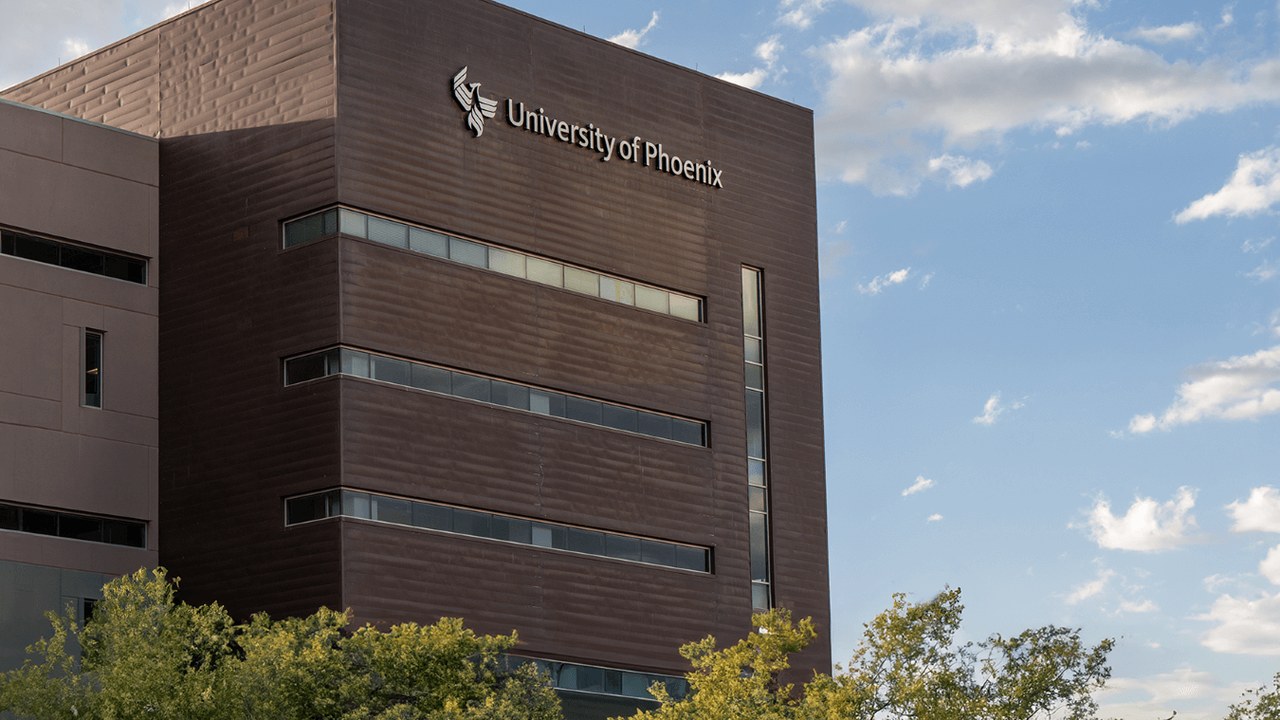
A decade after the advertisements ran, the paperwork is still moving. The U.S. Department of Education has determined that borrowers who enrolled at the University of Phoenix because of the school’s claims about job opportunities with big-name employers are entitled to have their federal student loans wiped out entirely, not trimmed. The department is still working through applications, and the relief it has committed to is total rather than proportional.
What The Department Actually Determined
The finding sits in a document the department published on its own federal student aid site rather than in a court ruling. Applying a preponderance-of-the-evidence standard, the department concluded that the University of Phoenix made substantial misrepresentations to federal student loan borrowers from September 21, 2012 through December 31, 2014, and that borrowers reasonably relied on those misrepresentations to their detriment. The eligible period is a hard edge: it is the window during which the conduct was found, and it is the window the relief follows.
The department did not build the case from scratch. Its borrower defense executive summary records that it relied on evidence the Federal Trade Commission gathered during a multi-year investigation, including internal company emails, recorded phone calls with prospective students, and draft and final advertisements, then ran its own independent review alongside evidence obtained from the school during its fact-finding process.
Four dates on a settlement notice: Only one of them is the deadline that matters, and the other three are what make people miss it. See the four-date rule in The Settlement & Refund Recovery System.
“Let’s Get To Work” And The Partnerships That Did Not Exist
The campaign at the center of the finding was called “Let’s Get to Work,” and it ran on television, in person and over the phone during recruitment meetings. The school told prospective students that its relationships with thousands of corporate employers created job openings unique to University of Phoenix students, promising a degree that would, in the school’s own advertising language, get a foot in a few thousand doors, and telling students that partner companies were looking specifically at Phoenix students to hire.
The department found those relationships did not work that way. The agreements that existed were largely tuition discounts offered to a company’s existing employees in exchange for the company advertising the school internally, plus permission to display corporate insignia in a career database where every posted job was already open to the general public. Phoenix executives knew. One senior vice president described an advertisement in an email as, in his words, smoke and mirrors; another conceded in writing that the campaign lacked factual support. The advertising continued until December 2014.
Full Forgiveness, Not A Percentage
Borrower defense relief is not always all-or-nothing, which is what makes this determination worth reading closely. The department wrote that Phoenix borrowers were promised unique employment opportunities and connections to high-profile employers and did not receive them, that at best they received publicly available job listings and benefits of modest or no value, and that the school failed to rebut the department’s presumption of full relief. On that basis it determined it was appropriate to grant 100% relief to Phoenix borrowers who applied for borrower defense, enrolled within the eligible period, and enrolled because of the employer-partnership claims.
The Federal Trade Commission states the same outcome in plainer words on its University of Phoenix settlement page, updated on July 21, 2026: the department is continuing to process new and existing applications, expects to approve additional claims, and all borrowers with approved claims will receive full loan forgiveness. Applications are filed through the department’s borrower defense page, and the department notifies borrowers when a claim is approved.
The $191 Million Settlement Is A Different Pot Of Money
Two separate streams of money run through this case, and confusing them is easy. The first is the FTC’s own 2019 settlement, which at $191 million was a record for the agency at the time. Under it the school paid $50 million in cash for refunds and cancelled $141 million in debts students owed directly to the school. The FTC sent the first round of refunds in March 2021, delivering more than $45.6 million, then followed with more than $3.6 million to 130,652 people who had cashed that first payment.
Further rounds went out in July 2023 and September 2025, bringing the total refunded past $49 million, and the FTC is now sending Zelle payments to people who never cashed a check or accepted a PayPal payment in the earlier rounds. Those refunds are a separate matter from loan forgiveness: the agency states that receiving a settlement payment does not affect a pending borrower defense application, and that a former student who has already been paid may still apply for discharge.
What The First Tranche Looked Like
The scale of the initial approvals gives some sense of what full relief means in dollars. When the decision was announced on September 20, 2023, the department put the first tranche at nearly $37 million of federal loans forgiven for more than 1,200 students. Richard Cordray, then chief operating officer of Federal Student Aid, said students who trusted the school ended up with, in his phrase, mounds of debt and useless degrees.
Samuel Levine, then director of the FTC’s Bureau of Consumer Protection, called the action an important step forward rather than a conclusion, and the record since has borne that out: the September 2023 announcement described a process that would keep running, and three years later the department’s position on the agency’s current refund page is still that it expects to approve additional claims.
The Paperwork Trail Behind A Borrower Defense Claim
A discharge of this kind turns on a form filed years ago and a notice that arrives without warning, which is exactly the combination households lose track of. The Phoenix determination rewards the people who applied and kept a record of it, and leaves everyone else relying on a letter reaching the right address. Keeping the notice, the application date and the eventual answer in one place is the unglamorous work that decides how these cases end.
The Settlement & Refund Recovery System is a 36-page guide with a step-by-step filing walkthrough, the scam-proof rules and a large-print quick-start.
Read the scam-proof rules in The Settlement & Refund Recovery System.
This article was produced with AI assistance and reviewed by a human editor. Figures are linked to their primary sources.


