
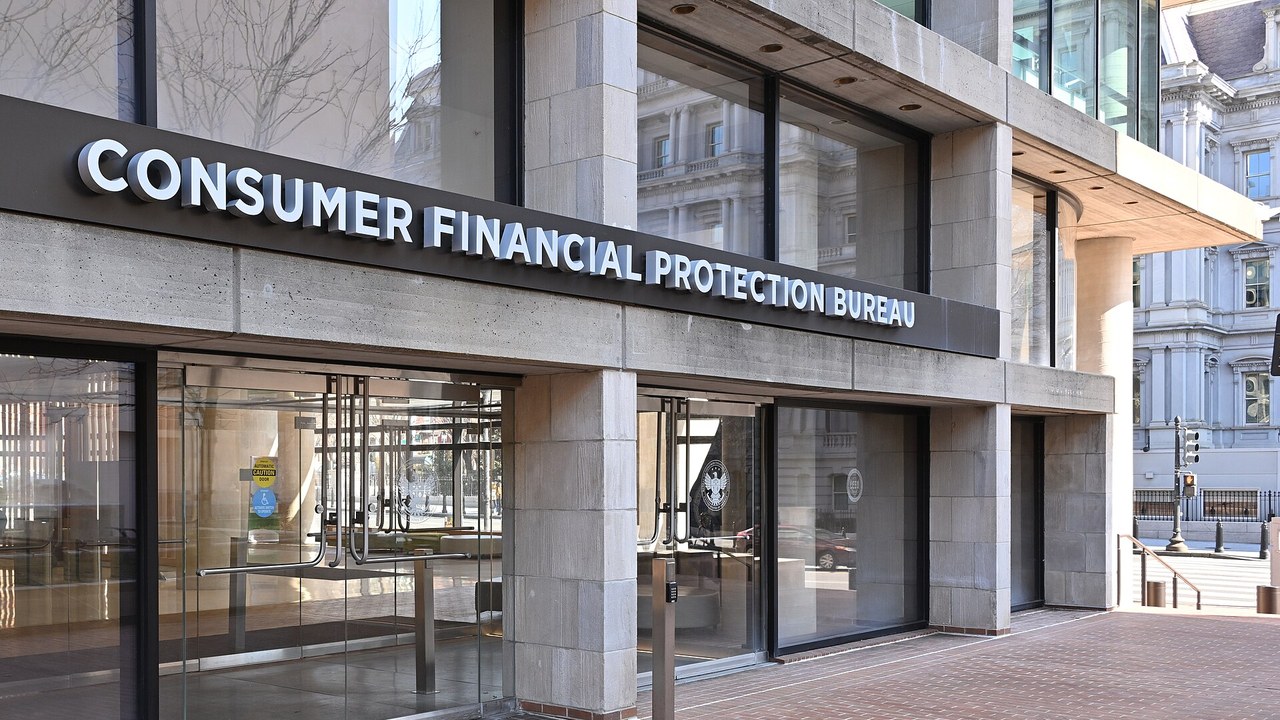
The Consumer Financial Protection Bureau keeps a public register of the enforcement cases whose money is still moving, and that register currently runs to 28 ongoing cases against 49 closed ones. A few of the names are familiar from television commercials and monthly statements. Most are not, which is precisely why the list exists: the bureau is the one holding the money, and the register is where it says who is being paid and who to call about each distribution.
All 28 Cases The Bureau Lists As Ongoing
Fifteen of the 28 are being paid out of the Civil Penalty Fund alone: All American Check Cashing; Andrew Gamber and others; Bounceback; BrightSpeed; Climb Credit; DriverLoan and Angelo Jose Sarjeant; Katharine Snyder and others; Mark Corbett; LendUp Loans; Prehired; Performant Recovery; Tempoe; Think Finance; Timemark; and Western Benefits. Five are pure bureau-administered redress, meaning the wrongdoer’s own money is going back to the people it harmed: Candy Kern-Fuller and others, Fay Servicing, JPay, Navient and Sutherland. The remaining eight draw on both pots at once: Hydra Group; Monster Loans; Lexington Law and CreditRepair.com; Performance SLC, Performance Settlement and Daniel Crenshaw; SMART Payment Plan; TMLG-CFLG; Universal Debt Solutions and others; and U.S. Equities Advantage.
The cases that reach that list share a shape. Debt-relief operations, credit-repair firms, student loan servicers, prison-money transfer services and payday lenders dominate, which is to say the businesses that collect small amounts from large numbers of people who cannot easily walk away. The bureau’s payments-by-case register, last modified on August 24, 2026, lists each defendant alongside the type of compensation and a link to the administrator handling that case’s mailings and calls.
Inside the guide: A 5-tab Excel tracker pre-filled with all 51 state unclaimed-property offices, the source vault of 12 official places money sits, and a step-by-step filing walkthrough. Open The Settlement & Refund Recovery System.
Navient’s Checks Started Going Out On February 13, 2026
The largest name on the ongoing list is the one most likely to sit in a household’s mail. The bureau sued Navient Corporation, Navient Solutions and Pioneer Credit Recovery, alleging the companies steered borrowers into forbearance instead of income-driven repayment plans, a choice that quietly added interest to balances while borrowers believed they were being helped. It also alleged that Pioneer Credit Recovery gave credit reporting companies wrong information about certain discharged loans.
The bureau’s case page for Navient, docketed as 3:17-cv-00101-RDM, records the compensation type as bureau-administered redress, the status as ongoing, and the victim-compensation window as February 13, 2026 to ongoing. Rust Consulting administers the payments. One detail on that page matters more than the rest for anyone opening the envelope: the payment does not change or reduce the student loans a borrower still owes, and the bureau tells affected consumers to keep working with their servicer regardless.
Redress Money And Penalty Money Are Not The Same Money
The register’s second column carries more weight than it looks. Redress is money a court or the bureau orders a company to pay back to the specific people that company harmed, and it can go nowhere else. A civil money penalty is different: it is a fine, and it lands in a single pooled account created by Congress in the Dodd-Frank Act, the Civil Penalty Fund, from which the bureau can compensate eligible harmed consumers from any case at all.
Under the fund’s rule, a harmed consumer may receive up to the amount of their uncompensated harm, calculated by taking total compensable harm from the terms of the order and subtracting whatever the person already received or is reasonably expected to receive. Where the order does not define the harm, out-of-pocket loss generally stands in. The fund is managed by a Civil Penalty Fund Administrator who reports to the bureau’s Chief Financial Officer and is advised by a governance board chaired by the Deputy Director.
The Allocations Behind Several Of These Names
The bureau publishes what it has set aside, case by case, every six months. Think Finance and its co-defendants drew the single largest allocation on the schedule, $384,010,544, on November 29, 2022. Tempoe followed at $192,259,616 a year later. Lexington Law’s Class A victims have received repeated allocations, including $68,037,189 on May 30, 2025, and Performant Recovery drew $14,046,207 the same day. LendUp Loans took $39,833,927 in May 2022, Climb Credit $6,618,000, Prehired $4,248,249 and Western Benefits Group $974,590.
Those numbers are allocations rather than cashed checks, and the gap between the two is the whole reason the ongoing list moves so slowly. Once money is set aside for a class of harmed consumers, the bureau still has to identify and locate the people in it, usually through a payments administrator, and the processing time varies case by case.
Nobody Can Apply, And That Is Deliberate
There is no form. Consumers cannot apply for money from the Civil Penalty Fund; the bureau decides who is eligible using the criteria in the fund rule, which in turn rely on the terms of its court and administrative orders. In the narrower situations where the bureau knows a class is eligible but lacks the information needed to pay it, it may invite claims, and it says that invitation would appear on that case’s own page in the ongoing table.
That design has an obvious side effect worth naming. Anyone who receives a call demanding payment or account details to release one of these distributions is not talking to the bureau, because the bureau’s own process never requires an application in the first place.
$3.6 Billion And 7.7 Million People Since 2010
The scale of the program is published on the bureau’s Civil Penalty Fund page, which was last modified on August 27, 2026. As of its most recent figures, $3.6 billion has gone out in Civil Penalty Fund payments to eligible consumers, reaching 7.7 million people, against $3.8 billion collected into the fund since 2010. The bureau puts total deposits through September 30, 2025 at $3,753,429,515, and notes that the account is held at the Federal Reserve Bank of New York and earns no interest. No money has been allocated to consumer education programs since 2015; the bureau says every dollar available is going to harmed consumers instead.
A Register Of Cases Is Not A Register Of People
The bureau’s page names the defendant and the administrator, never the consumer, and it offers no way to find out whether a particular household sits on a particular distribution list. What that leaves behind is a case name, a phone number and no record at all of which notices were answered, which were binned and which envelope arrived while someone was in hospital. Keeping that record is a household job, and it is the job this system is built around.
The Settlement & Refund Recovery System is a 36-page guide with the four-date rule for reading a settlement notice, the scam-proof rules and a claim log and payment tracker.
See the claim log and payment tracker in The Settlement & Refund Recovery System.
This article was produced with AI assistance and reviewed by a human editor. Figures are linked to their primary sources.


