
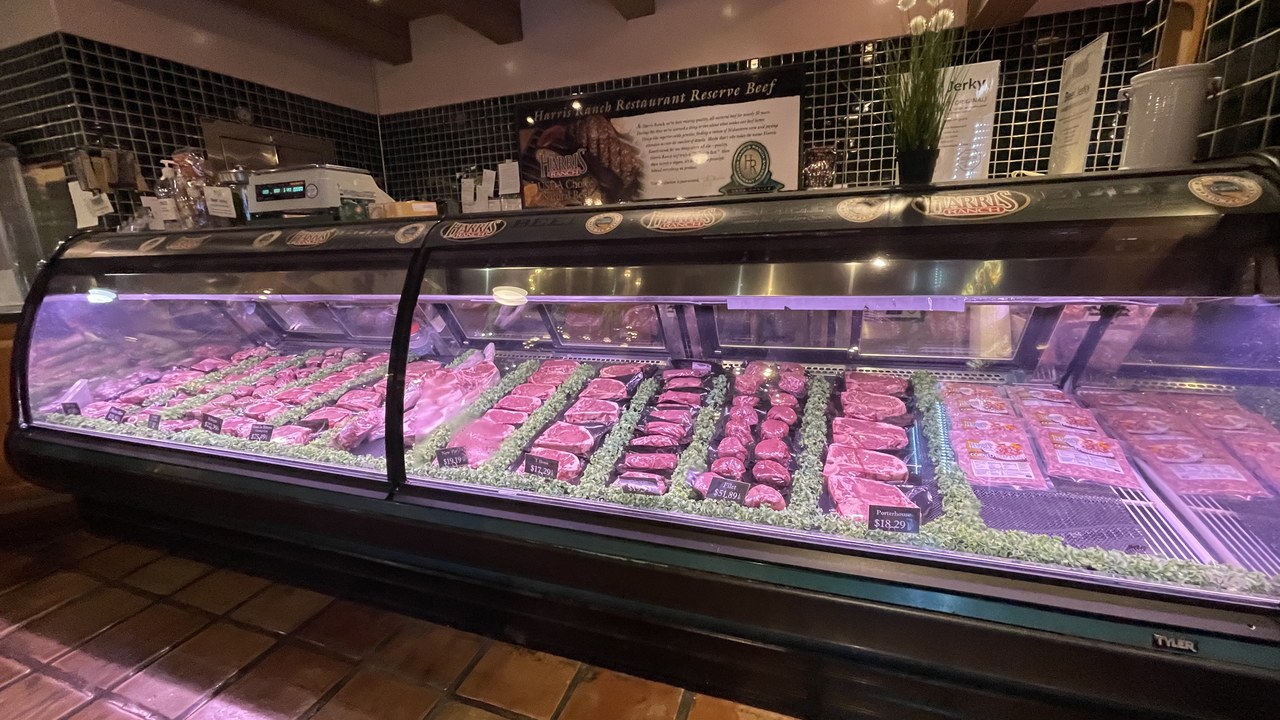
A White House order signed this month tells the Department of Agriculture to spend the next three months deciding whether grocery shoppers should be able to see where their beef was born, raised and slaughtered. The directive does not put a new label on a single package of ground chuck or ribeye today. It instructs one Cabinet department to study whether reviving that label is even legally possible, then report back before the calendar turns to 2027. For a household watching the price of hamburger, the timeline matters more than the politics: nothing at the meat case changes while the study runs, and a completed review would not by itself set a shelf price either way.
The 90-Day Review Ordered Under Executive Order 14425
President Trump signed Executive Order 14425, “Supporting America’s Ranchers,” on September 4, 2026, and the Federal Register published it six days later as 91 FR 57765. Section 4 of the order sets the assignment for the Agriculture Department in the order’s own words: “Within 90 days of the date of this order, the Secretary of Agriculture, in consultation with the United States Trade Representative, shall review all statutory and regulatory authorities that may permit the establishment of mandatory country-of-origin labeling for beef products.” Counting 90 days forward from the September 4 signing puts that deadline at roughly December 3, 2026.
The order asks for more than a legal opinion. It also requires “an economic analysis of the impacts of mandatory country-of-origin labeling that reflects current conditions and modernized practices,” addressed to the Assistant to the President for Economic Policy. Only once that report is delivered does Section 4 give the Agriculture Department room to act, and the language is deliberately open-ended: the secretary “may issue or amend regulations” to require the labeling, or “may… develop legislative recommendations” instead, routing the question to Congress rather than settling it inside the department.
Inside the kit: The 5 kinds of property-tax relief, the circuit-breaker credit that includes renters, help with heating, cooling and home repairs, and an application log and renewal calendar. Open The Senior Property Tax & Home-Cost Relief Kit.
Grocery Shelves Are Unchanged While The Review Runs
Nothing in Executive Order 14425 puts a country-of-origin sticker on a beef package this year. The order itself describes the current baseline as voluntary, crediting the administration with “enforcing voluntary ‘Product of USA’ labeling,” a program packers can choose to use rather than one every retailer must follow. Section 4 gives the Agriculture Department permission to eventually require the label; it does not direct that outcome. Even a decision to move forward after the December deadline would still need either a formal regulation, with the notice-and-comment process federal rulemaking requires, or new legislation from Congress, either path adding months or years before a mandatory label could appear at a supermarket meat counter.
Mandatory Beef Labeling Already Existed Once, Then Was Repealed
The label the order is studying is not a new idea. Congress required country-of-origin labeling on beef under the 2008 Farm Bill, and retailers began posting it in 2009. The World Trade Organization ruled twice, and rejected two U.S. appeals, that the requirement discriminated against Canadian and Mexican livestock, and by December 2015 it had authorized Canada to impose $781 million and Mexico to impose $228 million in retaliatory tariffs on American goods. Congress repealed mandatory country-of-origin labeling for beef and pork inside a spending bill that same month, and the Agriculture Department’s own statement from then-Secretary Tom Vilsack confirmed it would stop enforcing the labeling rules for muscle cuts and ground beef and pork immediately. That repeal is the “statutory and regulatory authority” gap Executive Order 14425 now tells the Agriculture Department to reexamine.
What A Label Would And Would Not Tell A Shopper About Price
A country-of-origin label answers one question: where an animal was born, raised or slaughtered. It does not answer the question a shopper actually weighs at checkout, which is why a package costs what it costs. Executive Order 14425 separately directs every agency involved to make sure its measures “benefit American consumers in the form of lower prices,” but that instruction sits apart from the labeling review, not inside it, and the order does not claim the label itself would lower anything. History suggests the opposite pressure is at least plausible: when the Government Accountability Office examined the run-up to mandatory labeling in a 2003 report on country-of-origin labeling, it catalogued industry estimates for beef-sector compliance costs running from tens of millions of dollars into the billions, alongside a separate grocery-industry estimate of roughly $375 million a year for record-keeping and inventory changes. Costs of that kind typically move toward the register, not away from it. A reinstated label would tell a shopper where the beef came from; on its own, it would not say whether that shopper pays more or less for it.
The Herd Numbers Behind The Push
The order frames the labeling review as one piece of a larger ranching problem. Its opening section states that “the national herd is at a 75-year low, while consumer demand for beef has grown almost 10 percent over the past decade,” a supply-and-demand gap that has already pushed beef prices higher at grocery stores regardless of what any label eventually says. The same section credits the administration with opening more than 2 million acres of Interior Department grazing land and nearly 1.6 million acres of Forest Service allotments to ranchers, moves aimed squarely at that supply side. The country-of-origin review sits alongside those steps as a separate, slower-moving track, one that will not finish before the Agriculture Department’s own 90-day clock runs out in early December.
Grocery Prices and the Bills Around Them
Grocery bills are just one line in a household budget already stretched by other costs that keep climbing regardless of what the Agriculture Department eventually decides about a beef label, property taxes, utility bills, and home repairs among them. Relief for those other costs generally exists on the books already, in the form of tax freezes, exemptions, and utility assistance, but none of it arrives automatically. Knowing which program applies, and which paperwork supports it, is the difference between relief that gets used and relief that goes unclaimed.
The Senior Property Tax & Home-Cost Relief Kit is an 11-page kit covering the 5 kinds of property-tax relief, the circuit-breaker credit that includes renters, heating, cooling and home-repair help, and an application log and renewal calendar.
See the property-tax relief options and the renewal calendar laid out in The Senior Property Tax & Home-Cost Relief Kit.
AI-assisted research and drafting; reviewed by an editor.


