
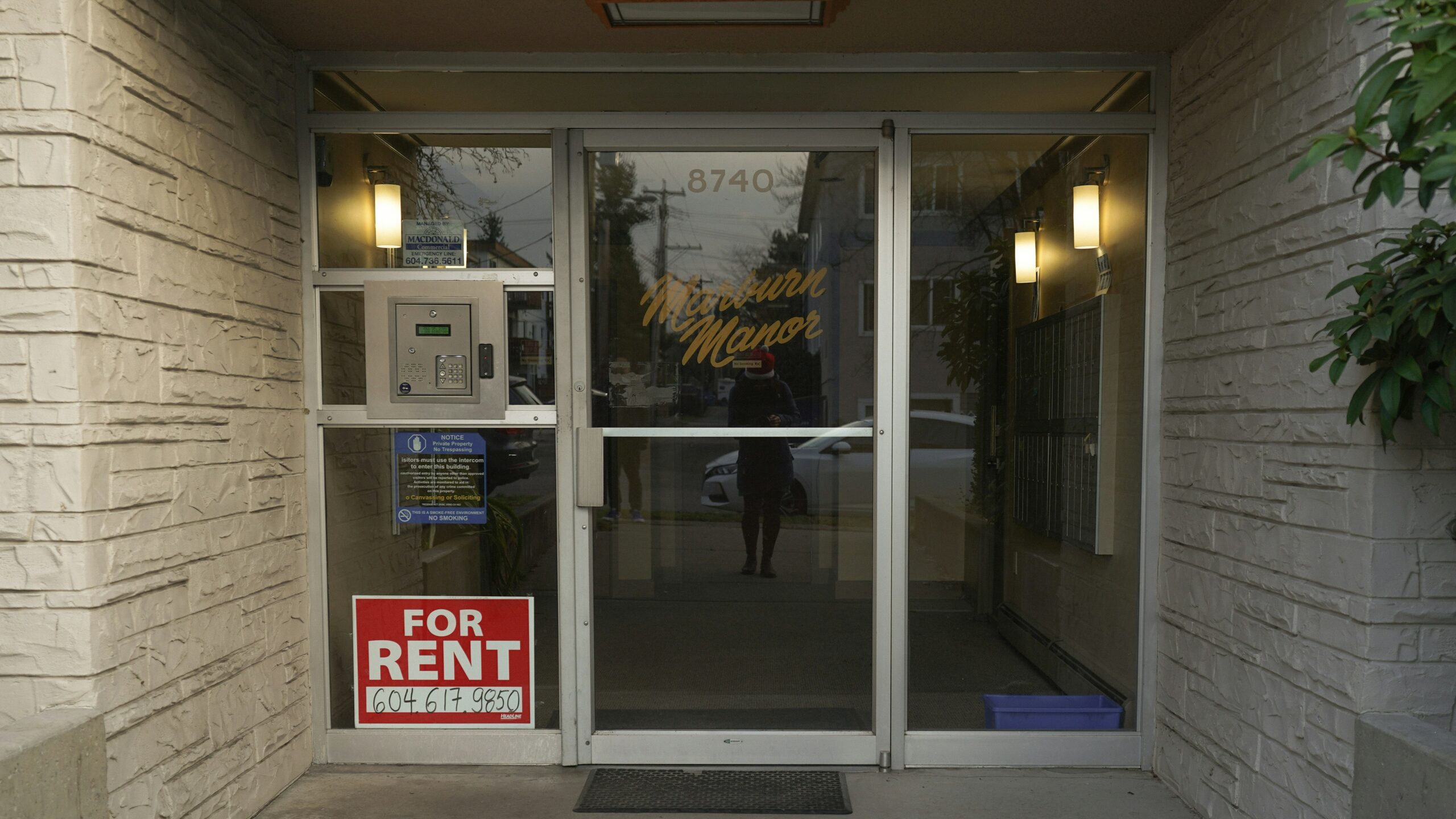
The rent ceiling that decides how much a Housing Choice Voucher covers resets nationwide on October 1, when the Department of Housing and Urban Development’s newest Fair Market Rents take hold. A separate clock buried in the same notice gives housing authorities exactly until that date to ask HUD to reconsider a number they believe is wrong. Both deadlines live inside one seven-page notice HUD published three weeks earlier, an overlap built into federal housing law rather than a scheduling accident.
The 40th-Percentile Rent Behind Every Voucher
A Fair Market Rent, or FMR, is not a cap on what a landlord may charge. It is HUD’s own estimate of what a tenant would need to pay in gross rent — shelter plus utilities other than telephone — to rent a modest, standard-quality unit in a given area. Federal regulation sets that estimate at the 40th percentile of what people who recently moved into such units actually paid, calculated separately for each metropolitan area, HUD-defined subarea and non-metropolitan county, under 24 CFR 888.113.
Public housing agencies use that published figure to build a “payment standard,” the maximum monthly subsidy attached to a Housing Choice Voucher. Under 24 CFR 982.503, an agency may set its payment standard anywhere between 90 percent and 110 percent of the published FMR without asking HUD’s permission first. The same FMR also anchors rent ceilings in HUD’s Moderate Rehabilitation Single Room Occupancy Program, the HOME Investment Partnerships Program and Emergency Solutions Grants housing, and it feeds the maximum award amounts HUD’s Continuum of Care program pays toward homelessness-assistance leases — a single annual number touching far more of the federal rental-assistance system than vouchers alone.
Relief that waits to be asked for: Property-tax freezes, exemptions and utility help are rarely applied automatically, and each has its own filing window. See the five kinds of relief in The Senior Property Tax & Home-Cost Relief Kit.
Two Dates, One Deadline: October 1
HUD’s Federal Register notice announcing the FY2027 Fair Market Rents states the timing without ambiguity: “Comment Due Date: October 1, 2026” and “Effective Date of FY 2027 FMRs: October 1, 2026, unless HUD receives a valid request for reevaluation of specific area FMRs,” according to the notice published September 1, 2026 under Docket No. FR-6553-N-03. The overlap traces back to Section 8(c)(1) of the United States Housing Act, as amended by the 2016 Housing Opportunity Through Modernization Act, which requires HUD to publish new FMRs by Federal Register notice, give the public a window to comment or request reevaluation, and hold the new rents to a start date no earlier than 30 days after that publication.
September 1 plus 30 days lands on October 1, which is why the same calendar date closes the public’s chance to object and opens the door for the new ceilings to govern rents in every affected voucher household. HUD does not treat the two as separate proceedings; both run on the single timeline printed at the top of the notice.
What Makes a Reevaluation Request Valid
Not every objection to a local number counts as a formal challenge. Under the procedures HUD spells out in the same notice, only a public housing agency may file a reevaluation request — or, in an area served by more than one agency, agencies together representing at least half of that area’s voucher tenants — and the request must arrive by the October 1 deadline through regulations.gov or by mail to HUD’s Regulations Division, according to the reevaluation instructions in the notice.
A valid request also has to bring HUD something its own calculation lacked: gross rent data more current than the 2024 American Community Survey figures behind the FY2027 numbers, preferably drawn from tenants who moved into standard-quality units within the past 24 months, in enough volume to support a fresh 40th-percentile two-bedroom estimate. Filing alone does not settle anything. An agency that files by October 1 may keep using the FY2026 FMR while HUD reviews the case, but it must still deliver the underlying survey data by January 8, 2027, or the FY2027 figure takes hold anyway; HUD has said it expects to post any revised numbers the following April.
Why the Utility Math Changed This Year
This year’s FMRs also carry a rebuilt formula for pricing utilities, a change HUD first proposed in an August 2025 notice covering the FY2026 FMRs. The Bureau of Labor Statistics told HUD in November 2024 that it would stop publishing local Consumer Price Index data on housing fuels and utilities at the metropolitan and regional level starting in January 2025, cutting off the input HUD had relied on to adjust rents for rising heating, electricity and water costs.
In its place, HUD built a weighted composite of four cost categories — electricity, natural gas, fuel oil, and water, sewer and trash — using state-level Energy Information Administration price data blended with national Bureau of Labor Statistics figures on sanitation costs. Reid Wilson, who signed the FY2027 notice as Deputy Chief of Staff to the Secretary performing the delegable duties of HUD’s Principal Deputy Assistant Secretary for Policy Development and Research, put the rebuilt formula into practice for the first time in the numbers taking effect October 1.
A Built-In Floor Against Sudden Drops
Rents do not only rise under this system. Some areas’ calculated FMRs would fall from FY2026 levels, and federal rule limits how far: a published rent may drop no lower than 90 percent of the prior year’s figure for the same bedroom size, regardless of what the raw survey data show. The FY2027 notice also sets a nationwide floor of its own — the minimum two-bedroom rent recognized anywhere in the non-metropolitan United States for FY2027 is $1,014, drawn from the population-weighted median rent across every non-metro county.
Every area’s new figure, along with the historical numbers it replaces, is posted on HUD’s Fair Market Rents dataset page, the same source public housing agencies and tenants use to check a local payment standard against the published ceiling once the October 1 numbers take hold.
Rent Ceilings and Housing Costs
The dollar figure this notice resets is only one of several fixed housing costs that follow their own official deadlines each year. Property tax bills, utility rate cases and heating-season budgets move on similar calendars, and the notices announcing them rarely explain what relief already exists for the people who have to pay. A homeowner watching a tax bill climb faces the same basic problem HUD’s rent ceiling illustrates: a number set by an agency, with no guide attached for challenging or reducing it.
The Senior Property Tax & Home-Cost Relief Kit is an 11-page kit covering the 5 kinds of property-tax relief older homeowners can request and the circuit-breaker credit that includes renters, alongside heating, cooling and home-repair help.
See the five property-tax relief categories and the renter-inclusive circuit-breaker credit in The Senior Property Tax & Home-Cost Relief Kit.
AI-assisted research and drafting; reviewed by an editor.


