
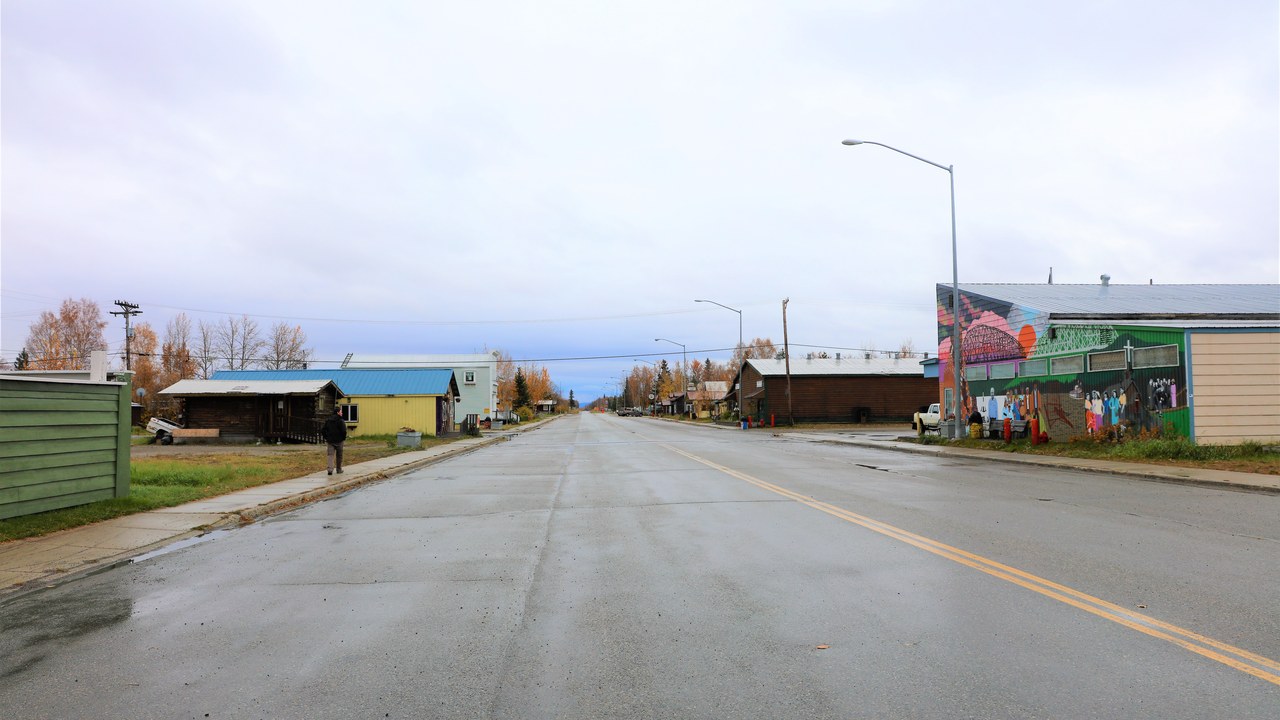
Grocery budgets funded through the Supplemental Nutrition Assistance Program do not move on a single national dial. How much a household can draw each month depends heavily on where it lives, and no state stretches that geography further than Alaska. Beginning October 1, 2026, the maximum monthly benefit for a household of four climbs to $2,027 in the state’s most remote communities, nearly double the ceiling set for an identical household across the 48 contiguous states.
Urban, Rural I and Rural II: Alaska’s Three SNAP Zones
The U.S. Department of Agriculture’s Food and Nutrition Administration does not treat Alaska as one market for food costs. Its fiscal year 2027 cost-of-living adjustment memo, dated August 21, 2026, publishes three separate maximum-allotment tables for the state: Urban, Rural I and Rural II. For a household of four, the memo sets the Urban maximum at $1,306 a month, the Rural I maximum at $1,666, and the Rural II maximum at $2,027, all effective October 1, 2026. The memo states plainly that maximum allotments for a family of four “will range from $1,306 to $2,027 in Alaska.”
The three zones are not a one-year invention; they come from a standing federal regulation, 7 CFR 272.7, which has governed SNAP administration in rural Alaska since 1980. Rural II, the tier carrying the $2,027 maximum, covers the North Slope Borough, the Nome, Bethel, Kobuk, Wade Hampton and Yukon-Koyukuk census areas, the Dillingham-Bristol Bay Borough, and most of the Aleutian Islands. Rural I, the middle tier at $1,666, applies mainly to communities off the road system within the Kodiak Island and Kenai Peninsula boroughs and the Valdez-Cordova and Southeast Fairbanks census areas. The Urban tier, at $1,306, covers Anchorage, Fairbanks, Juneau and the state’s other road-connected hubs, including specific communities the regulation carves back out of Rural I and Rural II, such as Kodiak City, Valdez and Ketchikan. The regulation ties each tier to a distinct food-cost basis calculated against Anchorage: Rural II’s is set 56.42 percent higher than Anchorage’s, Rural I’s is set 28.52 percent higher, and the Urban tier’s is only 0.79 percent higher than Anchorage itself, which is the underlying math behind the widening gap between the three maximums.
Inside the organizer: 51 state packs, a renewal document checklist, a renewal and reporting calendar, and the 90-day window after coverage is dropped. Open The SNAP & Medicaid Renewal Organizer.
The Widest Gap in the Program
Line up the four-person maximum across every jurisdiction the FY 2027 memo covers, and Rural II Alaska stands apart from the rest. The 48 states and the District of Columbia carry a $1,023 maximum for that household size, Guam carries $1,507, the U.S. Virgin Islands $1,315, and Hawaii $1,655. None of those figures comes close to the Rural II ceiling; even Hawaii’s $1,655, the nearest of the group, still falls $372 short. The distance between Rural II Alaska and the 48-state maximum, just over $1,000 for the same four-person household, is larger than the gap separating any other two jurisdictions in the memo.
An Effective Date Fixed by Statute
The October 1 start date is not a scheduling choice FNA made on its own this year. The memo ties the timing directly to federal law, stating that the adjustments are “effective as of October 1, 2026” under the Food and Nutrition Act of 2008. FNA issued the guidance on August 21, 2026, the date recorded on USDA’s guidance-document portal listing for the memo, and the agency’s SNAP FY 2027 COLA page shows the posting last updated August 28, 2026. Sasha Gersten-Paal signed the memo on behalf of Ronald Ward, the Food and Nutrition Administration’s Acting Associate Administrator for SNAP, directing every state agency, including Alaska’s, to apply the new maximums to benefits issued from October 2026 through September 2027.
The Same Zones Repeat at Every Household Size
Alaska’s three-zone structure is not limited to four-person households; the memo applies it up and down the entire household-size table. A single person’s maximum runs from $392 in the Urban tier to $499 in Rural I and $608 in Rural II. An eight-person household’s maximum runs from $2,352 to $2,999 to $3,650 across the same three zones. Section 3(u)(2) of the Food and Nutrition Act requires FNA to add 22 percent of the four-person maximum for each additional member of a household of nine or more, capped at 200 percent of that four-person figure; applied to Alaska’s three zones, that caps a household of 18 or more at $4,965 in Urban areas, $6,331 in Rural I, and $7,705 in Rural II.
Deductions and Minimum Benefits Follow the Same Map
The Rural II premium is not confined to the maximum-allotment line. The memo sets Alaska’s standard deduction as high as $385 for larger households, against a top of $308 in the 48 states, and sets Alaska’s maximum excess shelter deduction at $1,229, well above the $769 cap that applies outside Alaska, Hawaii, Guam and the Virgin Islands. The minimum benefit issued to a one- or two-person household, the smallest amount SNAP will pay rather than close the case, is $31 in Urban Alaska, $40 in Rural I, and $49 in Rural II, compared with $25 in the 48 states and D.C. Every part of the formula FNA adjusts each fall carries the same three-way Alaska split that produces the $2,027 figure at the top of the table. Not every line moves with geography, though: the maximum homeless shelter deduction rises to the same $205.66 in Alaska, Guam, Hawaii, the Virgin Islands and the 48 states alike, and the $4,750 asset limit for households with an elderly or disabled member is likewise uniform nationwide.
Geography Inside a Benefit Table
None of the tables above says anything about how a household proves it still qualifies once the new maximums take effect. A renewal notice mailed to a Rural II address travels through the same slower, less predictable mail service that already sets those communities apart from Anchorage or the Lower 48, and a missed response date ends a case just as completely for a household on the highest allotment tier as for one on the lowest. The COLA memo raises the ceiling; it says nothing about the paperwork deadline that decides whether a household keeps drawing against it.
The SNAP & Medicaid Renewal Organizer is a 13-page organizer built around 51 state packs, a renewal document checklist, and a renewal and reporting calendar.
See the state pack and the reporting calendar inside The SNAP & Medicaid Renewal Organizer.
AI-assisted research and drafting; reviewed by an editor.


