
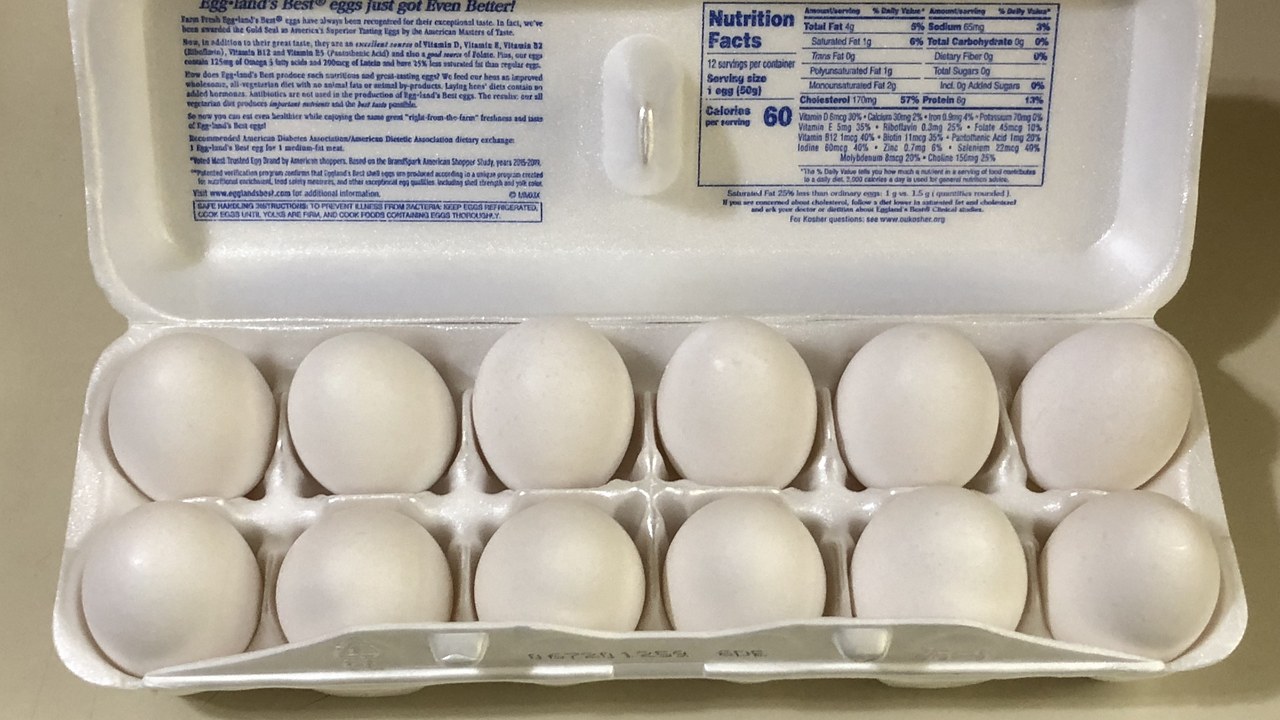
For the first time in three years, the egg aisle is moving in the direction shoppers stopped expecting: down. The Bureau of Labor Statistics reports that its price index for eggs was 23.0 percent lower in August 2026 than in August 2025, one of the largest twelve-month declines recorded for any major grocery item this year. The drop caps an unusual stretch for a product that spent 2022 through early 2025 near the top of nearly every inflation headline.
The 23% Figure, Straight From the Government’s Price Report
The Bureau of Labor Statistics publishes the number every month as part of its Consumer Price Index report, which tracks how prices change for hundreds of goods and services that households buy regularly. Eggs get their own line in the report’s detailed tables because the item has swung sharply enough, in both directions, to matter to the overall food budget on its own rather than getting buried inside a broader category.
The 23.0 percent year-over-year decline comes from Table 2 of the agency’s August 2026 Consumer Price Index detailed report, published September 11, 2026, which lists the change on a not-seasonally-adjusted basis comparing August 2026 with August 2025. It is the kind of single-line entry that rarely draws attention when it is small, but becomes a headline number when it moves this far in either direction.
Economists and grocery buyers alike have watched the egg line closely since 2022, when it became one of the more volatile entries in the entire report. The current reading marks a sharp reversal from that period, and it stands out even more because most of the rest of the government’s price basket is still moving higher rather than lower.
Free download: Property-tax freezes, exemptions and circuit-breaker credits, plus LIHEAP and shutoff protections, and what to gather before applying. Get the free property tax and utility relief finder.
How a Bird-Flu Supply Shock Turned Into a Price Collapse
The reversal traces back to a supply shock. Recurring outbreaks of highly pathogenic avian influenza among commercial laying flocks between 2022 and early 2025 repeatedly forced farms to cull infected birds, shrinking the national flock and pushing the egg index to some of the highest readings it has ever posted. Fewer hens laying eggs meant a tighter supply reaching store shelves, and prices rose to match.
As outbreaks eased and flocks were rebuilt through 2025 and into 2026, egg production recovered, and the index stopped climbing and began falling instead. That is the pattern behind the current 23.0 percent decline: not a policy change or a one-time discount, but a slower, structural rebuilding of a supply that had been squeezed for nearly three years.
Eggs Fell While the Rest of the Grocery Cart Kept Climbing
Government data shows just how unusual the egg move looks next to the rest of a typical grocery cart. Over the same twelve-month period, the Bureau of Labor Statistics’s category breakdown shows the all-items index up 3.4 percent, the overall food index up 2.7 percent, and the food-at-home index — the grocery-store portion of the food budget, as distinct from restaurant meals — up 2.2 percent.
The category that groups meats, poultry, fish and eggs together rose just 1.1 percent over the same span, meaning the egg decline was large enough to drag an entire protein category most of the way back toward flat even as beef and other meats inside that same category moved higher. Energy costs moved in the opposite direction entirely, with the energy index up 16.3 percent, a reminder that one falling grocery line does not mean a falling household budget overall.
A Small August Uptick Doesn’t Undo the Year’s Drop
The decline has not been a straight line downward every month. In the same August 2026 Consumer Price Index summary, the Bureau of Labor Statistics reported that its seasonally adjusted egg index actually rose 2.9 percent from July to August, the kind of monthly wobble common in a market still working through supply shifts left over from the avian-flu years.
A single month’s increase does not change the twelve-month comparison. The index remains 23.0 percent below where it stood in August 2025, even counting that August uptick, because the base it is being measured against was itself so elevated a year earlier.
Translating the Index Into a Carton of Eggs
For a household that buys eggs regularly, an index reading only matters once it gets translated into a shopping habit. A 23 percent decline in the price index does not mean every carton in every store costs exactly 23 percent less — the government figure is a national average built from thousands of price checks across cities and store formats — but it does describe a broad, real drop in the item’s price level compared with the depths of the 2025 shortage.
Grocery budgets that were stretched thin by egg prices during the avian-flu years are working from a materially lower baseline on that one line item now, even as other parts of the same cart, including the overall food index’s 2.7 percent yearly increase and the sharper 16.3 percent rise in energy costs, keep pushing the other direction. The Bureau of Labor Statistics is scheduled to publish its next Consumer Price Index update in October, when the September data will show whether the egg index kept falling, held near its August level, or resumed climbing.
Sorting Out Which Property-Tax Program Actually Fits
A grocery-store index moving in a household’s favor still leaves the largest fixed costs on the ledger untouched: property tax bills and utility statements that arrive on a schedule no supermarket price ever affects. Older homeowners and renters often qualify for freezes, exemptions or credits tied to those costs, but the rules vary by state and county, and the specific form or deadline that applies to a given address is rarely printed next to the tax bill itself.
The Senior Property Tax & Home-Cost Relief Kit details the circuit-breaker credit that includes renters alongside heating, cooling and home-repair help, inside an 11-page kit covering five kinds of property-tax relief with an application log and renewal calendar.
See the heating, cooling and home-repair help in The Senior Property Tax & Home-Cost Relief Kit.
AI-assisted research and drafting; reviewed by an editor.


