
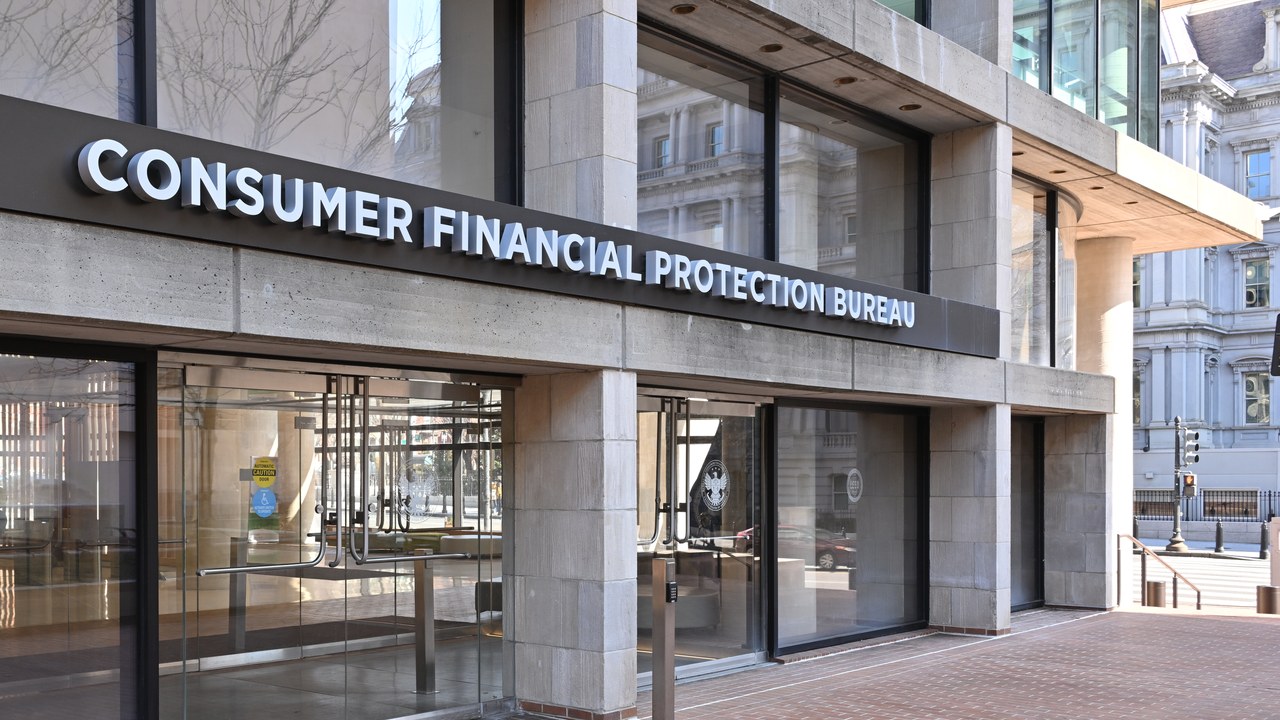
For more than a year, the federal agency built to police banks, lenders, and debt collectors has not opened a single new case against one. The Bureau’s own public log of enforcement actions runs 386 entries deep, and the most recent one is dated August 21, 2025. Nothing has been added since. For a household with an active dispute — a frozen account, a garnishment fight, a debt collector ignoring the law — that absence changes less than it might seem about which doors are actually open.
The Synapse Case Is the Last Line on the Bureau’s Own List
Checking the claim means going to the Bureau’s own enforcement-actions page, not a summary of it. With no filters applied, the database returns 386 results, sorted with the newest filing first. That newest filing is Synapse Financial Technologies, Inc., an adversary proceeding and stipulated judgment the Bureau filed on August 21, 2025. Scroll past it and the trail runs backward through 2025 and 2024 — Wise US, Equifax, Capital One, Experian — with no entry carrying a 2026 filing date anywhere across all 16 result pages.
That gap runs from August 21, 2025 to today, a little over thirteen months, clearing the bar the headline sets. It is also narrower than it first looks, because the page tracks one specific thing: a case the Bureau has actually filed in court or through an administrative order. A settlement of an older case — the Bureau announced one with FirstCash over Military Lending Act violations in July 2025 — can resolve a matter without adding a new line to the filed-date list, and the Bureau’s ongoing bank exams under its separate supervisory program are tracked nowhere on this page at all. What has stopped is new litigation. What has not stopped, at least on paper, is the underlying law.
Free account checkup: Social Security and VA deposits have protections from garnishment, but accounts still get frozen by mistake. Get the free protected-benefits checkup.
The Bureau’s Own Math: A Docket Closed, Not Replaced
The Bureau’s own 2025 Enforcement Lookback explains the mechanics behind the quiet log, in its own words rather than a critic’s. Between January 31 and December 31, 2025, the Bureau dismissed or withdrew as plaintiff in 19 pending public enforcement actions, terminated or modified 22 more, and resolved 7, leaving 8 pending as of year-end. Bureau-wide, it closed approximately 40 percent of its pending investigations. The stated criteria for what survived: pressing threats to servicemembers and veterans, fraud with identifiable victims and measurable damages, matters clearly inside the Bureau’s statutory authority, and avoiding duplication of oversight already happening at the state or federal level. Three Military Lending Act cases were among those the Bureau carried through to resolution in 2025. None of that reporting sets a timetable for resuming new filings, and the newest entry on the actions page still reads August 21, 2025.
State Attorneys General Keep an Independent Line Under Federal Law
A quiet federal docket does not close every door. Federal law gives state attorneys general their own authority to sue in the name of their state to enforce Section 1042 of the Consumer Financial Protection Act, and gives state regulators the same power over companies chartered or licensed in their own state — separate from anything the Bureau chooses to file. Before filing, a state official must give the Bureau’s enforcement division at least ten calendar days’ notice, and the Bureau may then intervene in the case, but the underlying authority to sue belongs to the state on its own account, not on loan from Washington.
That authority was narrowed, not created, in the past year and a half. In a May 2025 interpretive rule, the Bureau withdrew its own 2022 position that had read state authority broadly — allowing states to enforce any federal consumer financial law, not just the CFPA itself, and treating state and Bureau cases as able to run in parallel against the same company. The narrower, current reading limits states to enforcing the CFPA and its regulations, and applies to states the same statutory limits on which companies the Bureau itself can pursue. What the rule does not touch, by its own text, is a state’s authority to sue under state consumer-protection law, or under a federal statute that separately names state attorneys general as enforcers — authority Congress wrote into the statute directly, which a Bureau interpretive rule cannot erase.
The Underlying Statutes Still Give Consumers Their Own Case
Below state and federal regulators sits a layer of law that has never depended on the Bureau filing anything. The Fair Credit Reporting Act, the Fair Debt Collection Practices Act, the Truth in Lending Act, and the Electronic Fund Transfer Act each write a private right of action directly into the statute, letting a consumer sue a bank, lender, or debt collector in court without any agency’s involvement at all. A national bank still answers to the Office of the Comptroller of the Currency for how it treats depositors; a state-chartered bank answers to the FDIC or the Federal Reserve; a credit union answers to the National Credit Union Administration; and a nonbank company outside the Bureau’s reach can still face the Federal Trade Commission over unfair or deceptive practices. None of those lines of authority opened or closed because of what did or did not happen on August 21, 2025.
Older enforcement wins also keep working on their own schedule. Money a company was already ordered to pay back — directly, through a payments administrator, or through the Bureau’s Civil Penalty Fund — continues moving to consumers under orders issued years before the current filing gap opened. A stalled docket freezes new cases. It does not undo the ones already on the books.
A Frozen Account Doesn’t Wait For Washington
A household whose bank account gets frozen or garnished by mistake is not waiting on a federal docket to sort it out — that runs through the bank’s own dispute process, a written debt-validation request, and the protections federal rules already give Social Security and VA deposits. That sequence works the same whether or not a single agency is actively filing new cases. The mechanics of a bank dispute do not change based on who in Washington is or isn’t suing this month.
The Bank Account & Debt Protection Kit sets out the debt-validation steps and the frozen-account response inside a 10-page kit built for exactly this kind of dispute.
Look up the protected-funds and dispute log in The Bank Account & Debt Protection Kit.
AI-assisted research and drafting; reviewed by an editor.


