
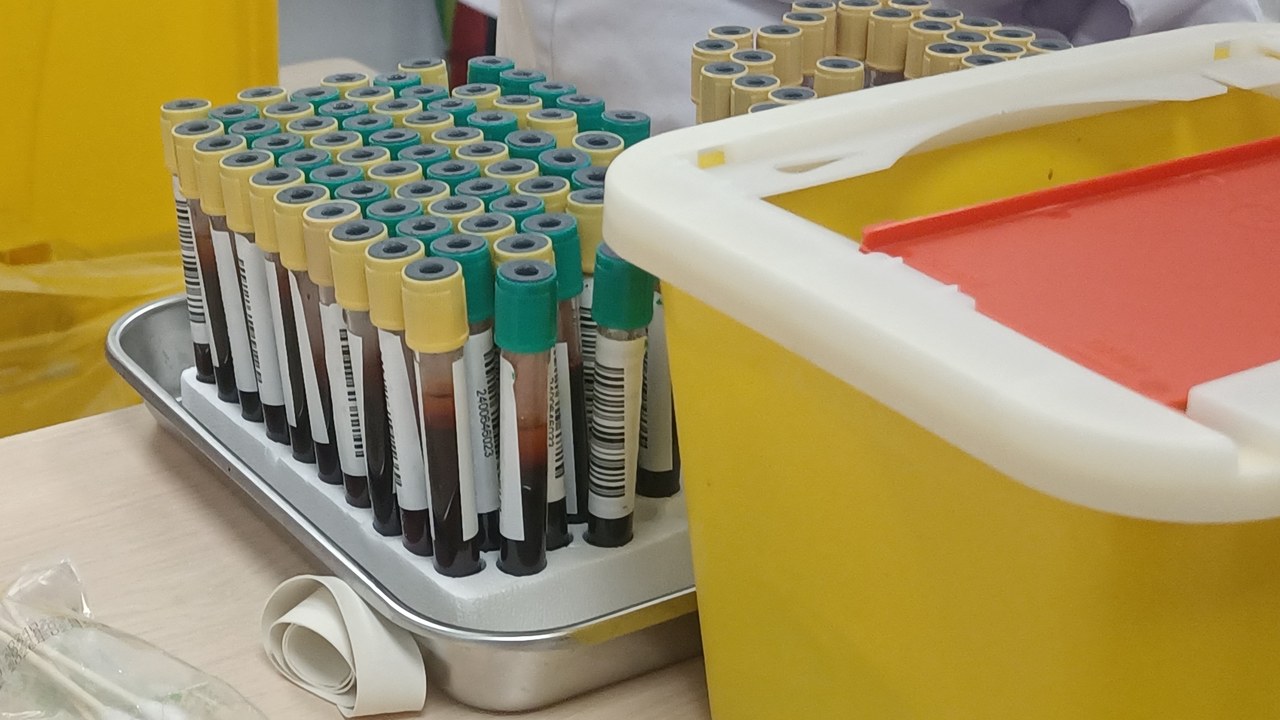
Federal prosecutors in Atlanta filed a civil fraud complaint on September 17, 2026, accusing two former executives of a Georgia clinical laboratory of causing Medicare to pay roughly $13.7 million for genetic and respiratory tests that were solicited at church health fairs, religious conferences and senior living communities rather than ordered by a treating doctor. The U.S. Attorney’s Office for the Northern District of Georgia named Jay Johnson, the former chief operating officer and chief executive officer of Capstone Diagnostics, and Austin Whiles, the lab’s former chief sales officer, as defendants under the False Claims Act. Both men are accused, not convicted, and the complaint’s allegations have not been tested in court.
How Capstone Diagnostics Allegedly Turned Community Events Into Billing Volume
According to the complaint, Johnson and Whiles ran two separate schemes between 2019 and 2021 out of Capstone, an Atlanta-based lab. In the first, prosecutors say Capstone personnel swabbed attendees at church-sponsored health fairs and religious conferences for genetic testing that no physician had requested, then used doctors’ names, signatures and standing orders — without those doctors’ permission — to make the tests look properly ordered and medically necessary.
In the second, the complaint alleges Johnson and Whiles added respiratory pathogen panels onto COVID-19 tests sought by senior living communities, inflating what Medicare paid for each test. Prosecutors say the lab relied on standing orders covering entire buildings or chains, copied physician signatures, standardized diagnosis codes regardless of a resident’s actual symptoms, and let sales personnel enter the orders instead of a treating provider, while paying conference organizers and independent marketers for referrals in what the complaint calls a kickback arrangement under the federal Anti-Kickback Statute.
Combined, prosecutors say the two schemes caused Medicare to pay approximately $13.7 million for tests generated this way. The complaint further alleges Johnson moved millions of dollars from the scheme to his now-former wife, Sarah Haslock, while Whiles is accused of secretly collecting about $4.75 million in volume-based commissions routed through independent marketers.
Free download: The first-hour steps in order, who to call at banks, agencies and credit bureaus, and what to document. Get the free scam and identity-theft action card.
One Guilty Plea, Two Settlements, and Criminal Charges Still Pending
The two men named in this complaint are not the only people implicated in the Capstone case. Capstone itself and its owner, Andrew Maloney, already resolved their exposure: Maloney separately pleaded guilty to a felony charge and, together with the lab, agreed to pay $14.3 million to settle civil liability. Capstone’s billing company, VitalAxis, Inc., separately settled its own False Claims Act exposure for $300,479.
The case traces back to a whistleblower lawsuit, United States ex rel. Allen v. Capstone Diagnostics, LLC, filed under seal in 2019 in the U.S. District Court for the Northern District of Georgia under civil action number 1:19-CV-5598-SEG by Jesse Allen, a former Capstone laboratory manager. The government intervened in that case on September 4, 2026, and filed its own complaint against Johnson and Whiles less than two weeks later.
Johnson also faces a separate criminal case. A federal grand jury indicted him in December 2025 on charges of conspiracy to commit health care and wire fraud, health care fraud, wire fraud, and conspiracy to pay and receive kickbacks in connection with a federal health care program. The Justice Department’s September 17 release describes those charges as currently pending, meaning Johnson has been charged, not convicted, and is entitled to a presumption of innocence unless the government proves its case. Whiles has not been charged criminally in connection with the scheme, based on the same release.
Why a Beneficiary’s Medicare Number Matters in This Case
Nobody who attended one of these health fairs or lived in one of the senior communities named in the complaint is accused of wrongdoing — prosecutors are targeting the lab’s former executives, not the patients whose Medicare numbers ended up on the claims. But the complaint’s core allegation is that physicians’ names and signatures were copied onto orders those doctors never wrote, which means a beneficiary’s own claims history could carry a genetic or respiratory test that was never actually discussed with a treating provider.
Medicare’s own guidance is to check that history directly rather than wait for a paper statement to arrive. A free Medicare.gov account shows Original Medicare claims as soon as they’re processed, and Medicare Summary Notices list every service billed under a person’s Medicare number so it can be compared against what was actually received. Anyone who spots a test, panel or service on a notice they don’t remember getting — especially one tied to a health fair table or a senior-living COVID test — can report it by calling 1-800-MEDICARE or the Department of Health and Human Services fraud tip line, the same 800-447-8477 line the U.S. Attorney’s office cites in its own release. Medicare also warns beneficiaries never to hand a Medicare card or number to anyone outside a doctor’s office or a known Medicare partner, which is exactly the kind of mass collection the complaint says happened at the church events.
The Statement Nobody Double-Checks
Cases like the Capstone complaint show how a test order built on a signature a patient never saw can still land on that patient’s own Medicare record. Spotting it usually depends on someone at home noticing a service, a panel or a charge that doesn’t match anything they remember agreeing to, months after the swab or the visit happened. Few households have a plan ready for that moment, or know which office to call first.
The Senior Fraud Defense & First-Hour Recovery Kit ties together the first-hour recovery plan alongside a fraud evidence and report log for writing down exactly what showed up on a statement, when it was noticed, and who was called about it.
Read the fraud evidence and report log in The Senior Fraud Defense & First-Hour Recovery Kit.
AI-assisted research and drafting; reviewed by an editor.


