
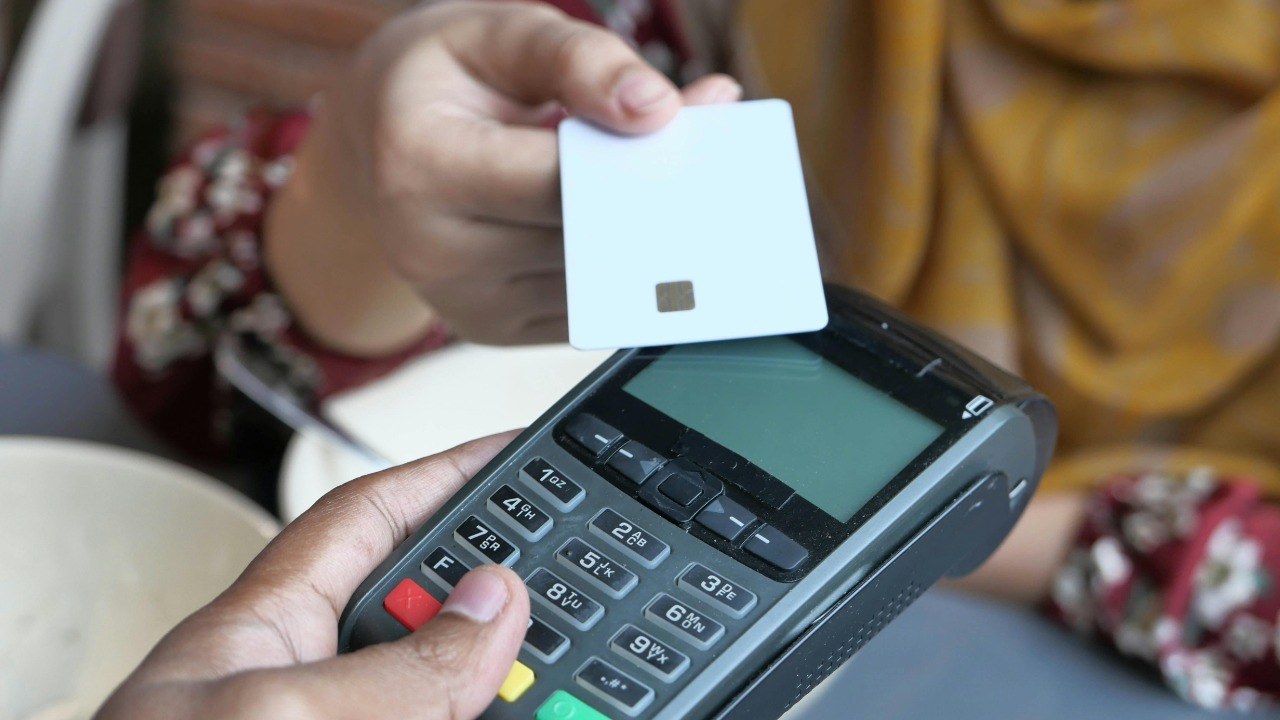
Thousands of SNAP households who watched their monthly grocery money vanish to a card-skimming scheme built their recovery plan around a federal repayment rule that quietly expired in December 2024. Congress has not brought that authority back since, which means anyone skimmed after that date is depending on whatever their own state chooses to do, not a guaranteed federal refund. The chip-embedded EBT card frequently floated as the real fix for skimming still is not in any state’s wallet, so the same PIN-only card behind the original wave of thefts remains the only option nationwide.
The 2023 Law That Funded SNAP Skimming Refunds
Card skimming became a nationwide SNAP problem as thieves attached hidden devices to point-of-sale terminals and ATMs, then used the copied card numbers to drain benefits before a household noticed anything was wrong. In December 2022, Congress responded with a law letting state SNAP agencies use federal funds to replace benefits stolen this way, covering thefts that occurred between October 1, 2022, and an initial cutoff of September 30, 2024. Every state had to submit its own replacement plan to federal regulators by February 27, 2023, spelling out how it would verify a claim and calculate the payout.
Under the law, known as the Consolidated Appropriations Act, 2023, a replacement could never exceed the actual amount stolen or the household’s average benefit for the two months before the theft, whichever was lower. That formula is still the baseline every approved state plan follows for any claim still working its way through the system today.
Free download: The recertification document list, how to handle a missing benefit or skimmed card, and when to ask for a fair hearing. Download the free SNAP checklist.
Free download from RetireShield. Getting it also signs you up for the free Retirement Money Brief, a weekday email. Unsubscribe anytime.
The Cutoff Moved to December 20, 2024, and Then Stopped Moving
The September 30, 2024 deadline did not hold. A stopgap spending bill, the Continuing Appropriations and Extensions Act, 2025, pushed the covered theft period out to December 20, 2024, giving state agencies a few more months of federal backing to work with. That extension turned out to be the last one: the American Relief Act, 2025 that followed did not renew the replacement authority for any theft dated after that day.
USDA’s Food and Nutrition Administration still describes December 20, 2024 as the end of the covered window on guidance last updated September 8, 2026, with no newer legislation listed anywhere that reopens it. A theft dated the day before qualifies for consideration under an approved state plan; a theft dated the day after does not, regardless of how identical the circumstances look.
A State Can Still Pay a Claim, Just Not With Federal Money
Nothing stops a state SNAP agency from covering a post-2024 theft out of its own budget, and the agency’s guidance notes states retain that option going forward. What no state gets anymore is any guarantee that Washington will reimburse whatever it chooses to spend doing so, which changes the calculation for a state agency weighing a skimming claim against every other demand on a tight budget. A household reporting a skimmed card today needs to ask its own state SNAP office, not federal rules, what happens next, since the filing window and the odds of actually getting paid both now vary state by state instead of following one uniform standard.
That variation is not new. FNA’s own list of approved state plans and estimated implementation dates, compiled back when federal funding was still available, already showed states rolling out different verification steps, documentation requirements and processing timelines under the same underlying law. Losing the federal backstop did not create the inconsistency between states; it simply removed the one piece, the federal dollars and the statutory deadline behind them, that had been holding every state plan to a common floor.
A Federal Dashboard Still Tracks How Much States Have Paid Out
The Food and Nutrition Administration also maintains a public dashboard of state-reported skimming claims and replacements, refreshed quarterly since October 2023. The tool only ever tracked the window the federal law actually covered, October 2022 through December 20, 2024, so it will not show a dollar paid out for a 2025 or 2026 theft unless a state funded that replacement on its own and chose to report the figure.
For a household budgeting around a fixed monthly SNAP allotment, that gap matters more than the dashboard’s quarterly update schedule suggests. A card skimmed this week has no federal count tracking it and no federal fund standing behind it, no matter how quickly the theft gets reported to a caseworker.
No State Has Issued a Chip-Enabled EBT Card
Chip cards are the reason skimming works so well against SNAP in the first place: a magnetic-stripe card can be copied in seconds at a tampered terminal, while a chip generates a one-time code that a cloned stripe cannot reproduce. The agency’s own questions-and-answers page states plainly that no state currently issues a SNAP EBT card with a chip, though it notes some states are in the planning stages and that mobile contactless payments are being tested as another possible layer of protection.
Until a chip card actually reaches a mailbox somewhere, the practical advice has not changed: change the PIN at least once a month, ideally right before the benefit issuance date, and check the EBT account often enough to catch an unauthorized charge before the balance is gone. Those habits, not a card upgrade, are what USDA’s Food and Nutrition Administration is telling SNAP households to rely on in guidance it last updated this month.
The Renewal Deadlines That Determine Whether a Case Stays Open
None of the rules above change the separate clock still running on a household’s own SNAP or Medicaid case: recertification paperwork, income reporting and renewal deadlines keep moving whether or not a benefit was ever skimmed. A missed renewal document closes a case faster and more permanently than any theft, and most households have no single place where every state’s deadline and form requirement is written down next to the others.
The SNAP & Medicaid Renewal Organizer is a 13-page organizer with 51 state packs, a renewal document checklist, and a renewal and reporting calendar covering the 90-day window after coverage is dropped.
See The SNAP & Medicaid Renewal Organizer.
AI-assisted research and drafting; reviewed by an editor.


