
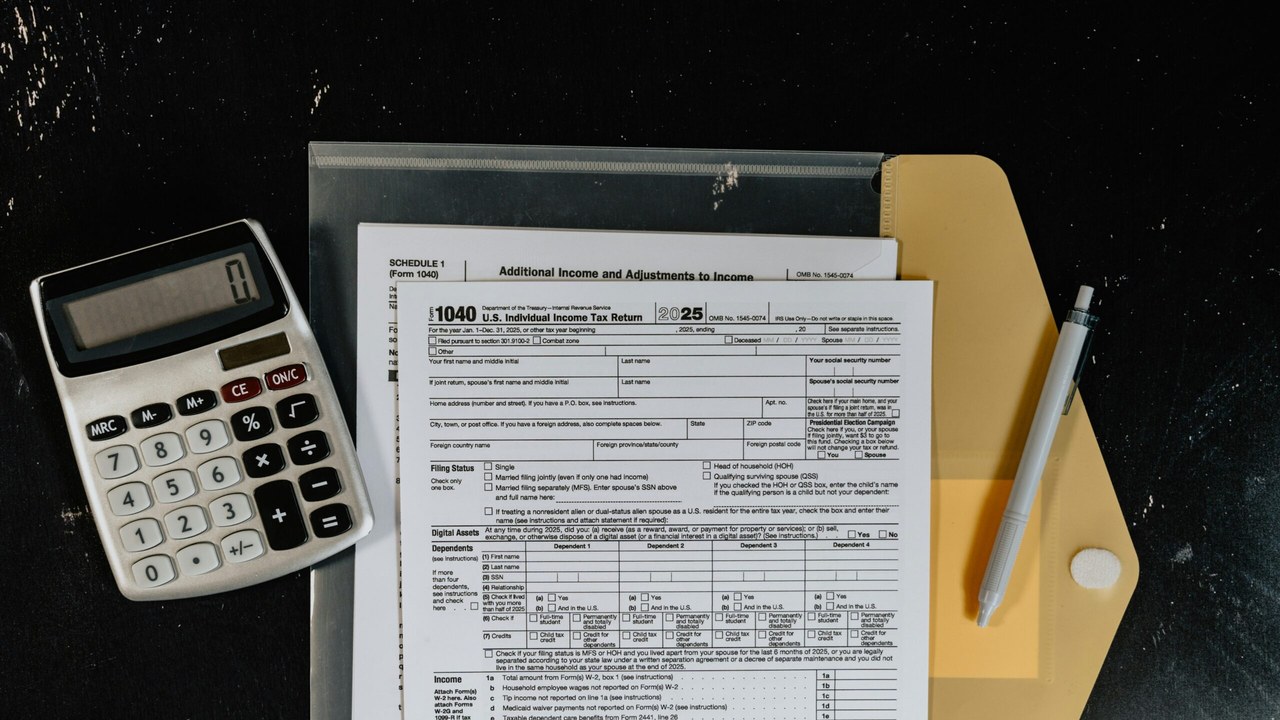
A single two-letter code sitting in box 12 of a 2026 Form W-2 now decides whether a household’s overtime pay carries a federal tax deduction at all. Under new IRS guidance, the amount an employer types next to code TT is the only figure the tax code will recognize for the qualified overtime deduction that took effect with the 2025 tax law — not a pay stub, not a personal log, not an employee’s own math. For a family that worked extra shifts through the year, a single payroll entry now stands between claiming that deduction and losing it outright.
The Reporting Mandate Behind Box 12, Code TT
The requirement comes from Fact Sheet FS-2026-13, which the IRS issued August 6, 2026 to update its guidance on the qualified overtime compensation deduction created under the One Big Beautiful Bill Act. The fact sheet instructs employers to report the total qualified overtime compensation paid to each eligible employee in box 12 of Form W-2 using code TT, for tax year 2026 and every year after through 2028, when the deduction is scheduled to expire.
That reporting line is not a courtesy total or an optional memo item. Per the fact sheet’s own questions-and-answers, a filer may not count any qualified overtime beyond what an employer actually reports under code TT when calculating the deduction on a federal return. A household’s own tally of extra shifts, however carefully kept, carries no weight once the box has been filled in — or left blank.
Payroll departments, in turn, now have to isolate the FLSA-required overtime premium on a workweek-by-workweek basis and carry that running total into a single W-2 field, a task that didn’t exist in this form before this tax year.
Free download: What each refund-status message means, the direct-deposit and paper-check paths, and when to follow up with the IRS. Get the free refund delay decision tree.
Free download from RetireShield. Getting it also signs you up for the free Retirement Money Brief, a weekday email. Unsubscribe anytime.
Why the 2025 Workaround Doesn’t Carry Forward
For the 2025 tax year, the IRS gave both sides room to catch up. One notice excused employers from information-reporting penalties while payroll systems were rebuilt to track a pay category that had never needed its own line item, and a companion notice let individual filers substantiate the deduction with pay stubs or daily logs if an employer’s statement fell short. The IRS’s questions-and-answers page on the deduction confirms that grace period applied only to returns for the 2025 tax year.
Fact Sheet FS-2026-13 removes that approximation option entirely starting with 2026 returns. A worker who kept detailed overtime records all year gains nothing from them if the employer’s code TT entry doesn’t match — the deduction, as the IRS now enforces it, recognizes only what the required W-2 reporting actually shows, not what an employee can independently document.
What Recourse Exists When the Employer’s Number Is Wrong
The fact sheet anticipates that employers will sometimes get the figure wrong, and it draws a narrow line for what fixes that and what doesn’t. A substitute Form 4852 — the standard stand-in workers file when a W-2 never arrives or is clearly incorrect — does not satisfy the deduction’s reporting requirement, because it isn’t the statement the law requires. The only document that cures a missing or understated code TT figure is a corrected Form W-2c, issued directly by the employer.
That leaves a worker with one real move: check the box 12, code TT figure against pay records as soon as the W-2 arrives, and if it’s missing or too low, request a W-2c from payroll before filing. A detailed analysis of the fact sheet, prepared for tax practitioners the week it was released, describes the shift plainly: the burden of substantiating the deduction has moved from the employee’s own records to the employer’s payroll execution, with no individual workaround left once a return is filed.
The Ceiling Employers Still Have to Report Past
The code TT figure isn’t capped at the level a given worker can actually deduct. The underlying deduction tops out at $12,500 on a single return and $25,000 on a joint return, phased down for filers with modified adjusted gross income above $150,000 (or $300,000 filing jointly) — but employers are instructed to report the full qualified overtime total in box 12 regardless of whether it exceeds those limits. The deduction math happens on the individual return, not on the W-2; the W-2 only has to state, accurately, how much qualified overtime was actually paid.
That distinction matters to anyone reconciling a pay stub against a finished W-2. A code TT amount larger than the personal deduction ceiling isn’t a payroll error — it reflects an employer reporting correctly and leaving the ceiling calculation exactly where the statute puts it, on the individual’s own return.
Where the Reporting Requirement Doesn’t Apply
The mandate isn’t universal across every worker who logs long weeks. The fact sheet clarifies that an employee who holds at least a 20-percent equity stake in a business and is actively engaged in running it counts as a bona fide executive exempt from the overtime requirement in 29 U.S.C. § 207 — and someone in that position has no qualified overtime compensation to report in box 12 at all, regardless of hours worked. The code TT line exists only for employees whose overtime pay was actually required under federal wage law in the first place, which keeps the reporting mandate narrower than the deduction’s broad name might suggest.
Tracking a Refund After a W-2 Correction
A worker who catches a missing or understated code TT figure and secures a corrected W-2c still has to deal with what that correction does to a return already on file — an amended filing, a recalculated refund, and typically a wait with no printed timeline attached to it. This piece stops at the correction itself; it doesn’t walk through the notice codes or refund-tracing steps that a delayed adjustment can trigger next.
The IRS Refund Recovery Kit is a 13-page kit built around a notice decoder and the refund-trace steps that use Form 3911, paired with a refund status tracker spreadsheet.
See the notice decoder and Form 3911 refund-trace steps in The IRS Refund Recovery Kit.
AI-assisted research and drafting; reviewed by an editor.


