
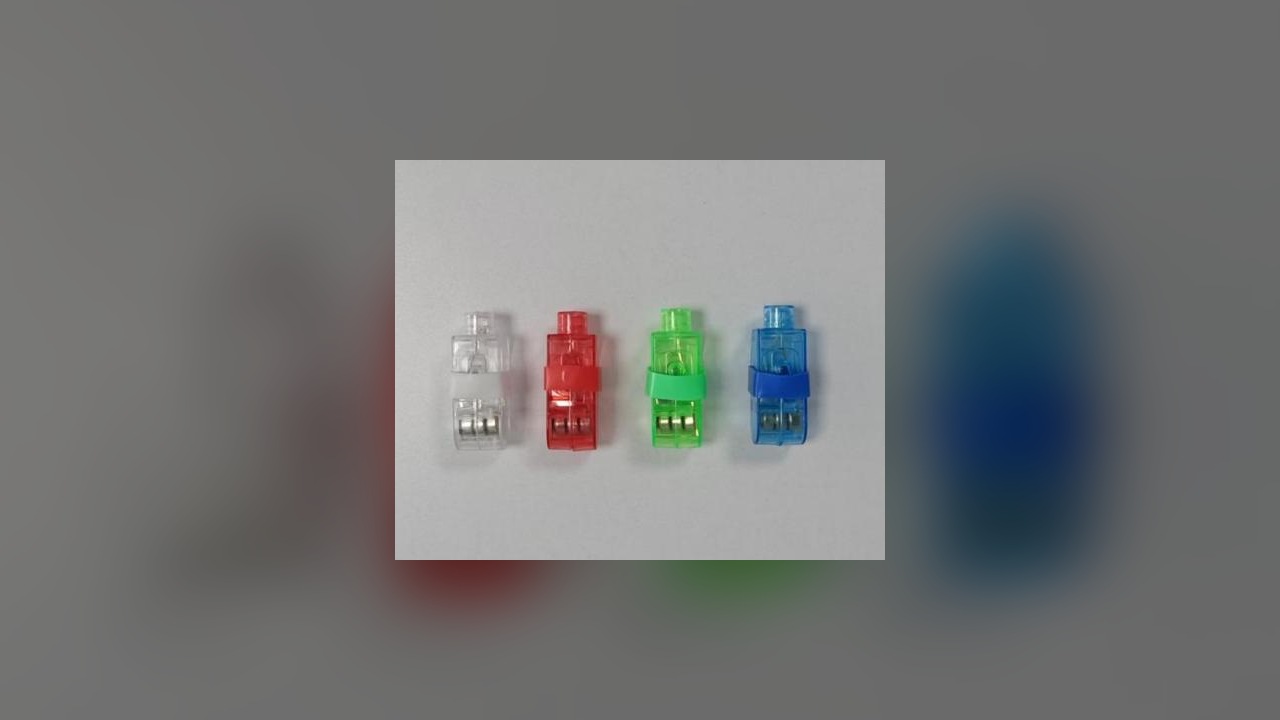
A small novelty toy sold by the box now carries a serious household cost question: whether to keep a product with an accessible button battery or complete the refund process. Federal safety officials say roughly 179,739 California Cade Electronic finger-light toys are covered by a September recall. The remedy is a full refund, but it requires disposal and photographic proof rather than a return shipment.
The recall covers one identifiable 50-piece package
The affected product is the California Cade Electronic Projecting Finger Light Toy, sold as 50 lights in a box. The lights came in white, blue, red and green, and each contains three button-cell batteries. Labels on the package carry the names “California Cade Electronic” and “Finger Flashlights,” which distinguishes the recalled product from other light-up party favors.
The lights were sold on Amazon from March 2015 through July 2026. Prices ranged from $5 to $16, according to the recall notice. That long sales window matters because a box may have moved from a party-supply drawer into a toy bin years ago, well beyond the point when an online order is easy to remember.
Free retirement updates: Miss an enrollment or claim deadline and it may be gone. Our free Retirement Shield newsletter keeps readers ahead of the ones that matter. Get the free newsletter.
Accessible batteries created the federal safety violation
The Consumer Product Safety Commission notice says children can easily reach the batteries inside the toys. That violates the mandatory federal standard for toys. No incident or injury had been reported when the recall was announced on September 10, but the remedy applies because the design itself creates the hazard.
Button batteries can lodge in the body after they are swallowed. Electrical current can produce hydroxide and cause severe internal burns in a short period, even when a battery appears spent. The CPSC’s button-cell and coin-battery information center explains the broader federal response, including child-resistant packaging and secure battery compartments under Reese’s Law.
The practical financial issue is not the original price alone. A low-cost item can carry a much larger medical risk, while continued resale is prohibited once a product is subject to a voluntary recall conducted with the commission. The recall therefore removes the reason to keep a questionable toy merely because it cost only a few dollars.
The refund route depends on a disposal photo
Cade instructs owners to stop using the finger lights, remove them from children and contact the company by email. The company will ask for a photograph showing that the lights were properly discarded. The refund is described as full, not prorated, and the federal notice does not state a claim deadline.
Battery disposal still requires care. The recall says button cells should be discarded or recycled under local hazardous-waste procedures. The Environmental Protection Agency’s household-battery guidance recommends checking local rules because management options vary by battery chemistry and community. That means the product photo requested for the refund should follow proper disposal, not replace it.
The contact listed in the notice is [email protected]. A household documenting the process can retain the email, the disposal photograph and the original Amazon order record if it remains available. Those records create a simple trail showing the covered product and the remedy request.
Secondhand sale is not an alternative
Federal law bars the sale of products covered by a CPSC-ordered recall or a voluntary recall conducted in consultation with the agency. That restriction reaches secondhand listings as well as ordinary retail shelves. Donating the box or passing it to another family would also transfer the same battery risk rather than resolve it.
The years-long sales period also makes order-history searches useful. Amazon accounts can retain product names and dates long after paper packaging disappears, and a search for “finger light” or the Cade label may connect an unidentified box to the seller and price. That record can help establish that the item came from the covered channel, though the recall notice itself identifies the product rather than limiting the remedy to buyers who still have an invoice.
Households with several boxes should document each package before disposal. The stated count is units, while the product was sold in 50-piece boxes, so a refund request may need to distinguish boxes from individual lights. The company’s email process, rather than an Amazon return window, controls the remedy described by CPSC. A retained copy of the sent message also records when the request began if follow-up becomes necessary.
The lack of a published end date does not make delay useful. Button batteries remain hazardous in stored toys, and the refund process expressly starts with removing them from children. The federal notice supplies a remedy without requiring an injury, which is the economic point of a preventive recall: it shifts the cost of retiring the defective product back to the responsible company before medical harm creates a far larger loss.
The official notice remained live when rechecked on September 15, 2026, with the unit count, Amazon sales channel and full-refund remedy unchanged. The most useful distinction is between a box that merely resembles the product and one carrying the named Cade labels. Once that identification is made, the federal record points to disposal and the company’s refund process, not continued use or resale.
Inside the guide
A 5-tab Excel tracker pre-filled with all 51 state unclaimed-property offices, the source vault of 12 official places money sits, and a step-by-step filing walkthrough.
The Settlement & Refund Recovery System includes a 36-page guide, a 5-tab Excel tracker pre-filled with all 51 state unclaimed-property offices and the four-date rule for reading a settlement notice.
Open The Settlement & Refund Recovery System.
This article was produced with AI assistance and reviewed by a human editor.


