
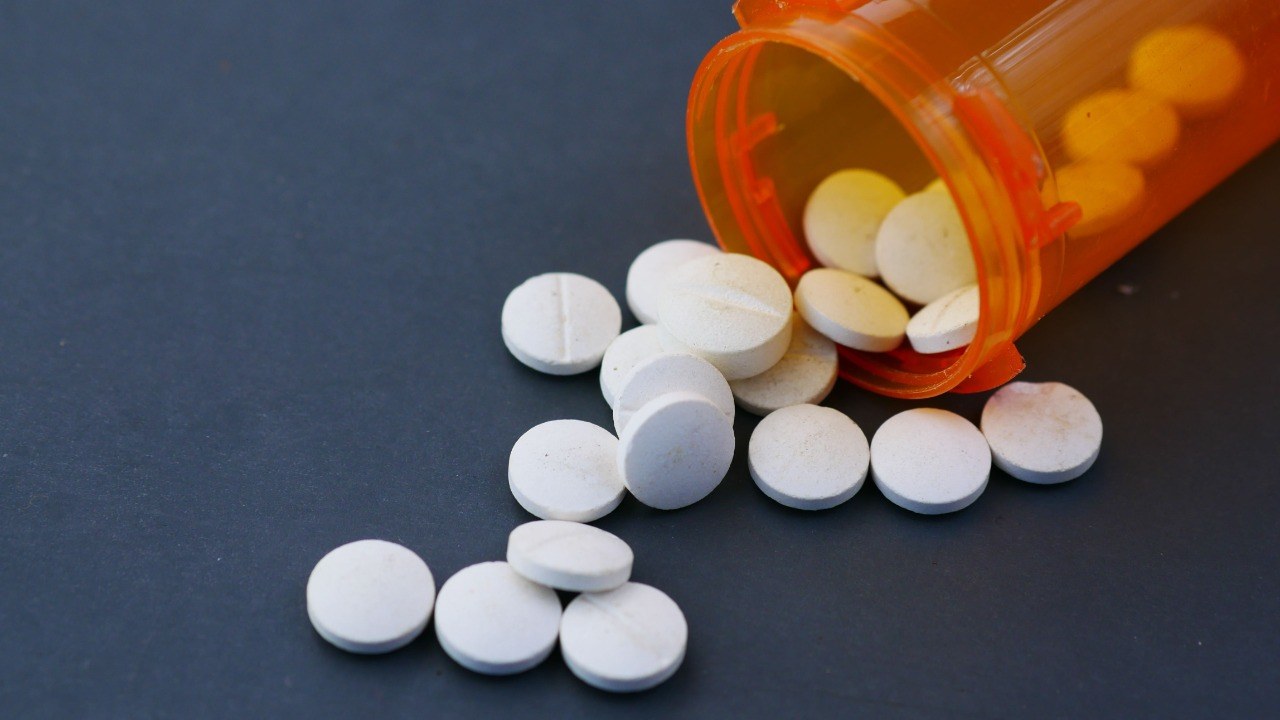
Medicare Part D isn’t supposed to pay for drugs a person could just pick up off a store shelf. Federal auditors found that for three straight years, Part D plans kept paying pharmacies for five drugs long after their brand-name versions had switched from prescription-only to over-the-counter, and nothing in the system was set up to catch it.
Five Drugs That Quietly Kept Billing Like Prescriptions
The Department of Health and Human Services Office of Inspector General reviewed Medicare Part D claims for calendar years 2021 through 2023 and found five generic drugs, versions of the arthritis gel Voltaren, the allergy eye drops Pataday and Lastacaft, the nasal spray Astepro, and the head-lice treatment Sklice, that were still labeled “prescription-only” more than a year after their brand-name equivalents had already moved over the counter.
Because Part D doesn’t cover OTC products, none of that spending should have happened. The audit put the total ineligible payments at $587.7 million, with generic Voltaren accounting for the great majority of it.
Free retirement updates: A quiet rule change can shrink your Social Security or Medicare check, and no one warns you. The free Retirement Shield newsletter catches these early and tells you what to do. Get it free.
How the $587.7 Million Breaks Down by Drug
Generic Voltaren accounts for nearly all of it: $562,073,487 across 15,870,464 prescription drug events tied to 12 different National Drug Codes, all still carrying prescription-only labels more than a year after the brand-name gel switched to OTC on February 14, 2020. Generic Pataday added another $25,506,367 over 885,950 claims spread across 16 NDCs. The remaining three drugs were comparatively minor: Astepro nasal spray totaled $95,703, Lastacaft eye drops $3,413, and Sklice head-lice treatment $1,469. Altogether, the full audit tallies $587,680,439 in ineligible payments across 16,758,847 claims tied to 35 NDCs, and the total grew every year OIG measured: $184 million in 2021, $194.54 million in 2022, and $209.14 million in 2023. Auditors reviewed six brand-name drugs covering eight approved drug applications that had switched from prescription to OTC status between 2020 and 2022; the sixth drug on that list produced no improper payments at all, which is what happens once a generic’s labeling actually catches up with its brand-name twin.
How a Prescription Drug Becomes a Shelf Item
When the FDA approves a brand-name drug’s switch from prescription to over-the-counter status, the generic versions of that same drug are supposed to follow with updated labeling. Until that relabeling happens, the generic can still carry old “Rx-only” markings, which is exactly the loophole auditors found Part D sponsors falling through. It wasn’t the first warning sign: the generic drugmaker Akorn had already agreed in September 2022 to pay $7.9 million to the Department of Justice to resolve claims that it caused false Part D claims by continuing to sell three of its own generic drugs under obsolete prescription-only labeling long after their brand-name equivalents switched to OTC.
A pharmacy submitting a claim generally has no easy way to know, on its own, that a drug’s brand-name twin switched to OTC status a year earlier. That information has to come down from CMS through the systems sponsors use to decide what’s payable, which is exactly the link the audit found broken.
The CMS File That Never Caught Up
The root cause, according to the report highlights, sits with CMS itself. The agency updates the Part D Formulary Reference File that sponsors rely on using FDA labeling data, but that data was obsolete, and CMS never set a deadline for sponsors to stop paying claims for a drug once it had gone OTC. Without a clock running, ineligible claims kept clearing for well over a year in each case. The gap traces back to how the FDA itself tracked these switches: each January, the agency reviewed drug listings and inactivated any that manufacturers hadn’t updated or recertified in the prior year, but before its December 2025 policy took effect, FDA had no firm deadline for a generic manufacturer to relabel after a brand-name switch, so it leaned on complaints from other drug manufacturers to flag stragglers. A generic could sit in the FDA’s own National Drug Code Directory under its old Rx-only listing for years without anyone at the agency catching it, and CMS’s Formulary Reference File simply inherited whatever status that directory showed, obsolete or not.
A Fix Already Moving, an Answer Still Missing
Before OIG finished its draft report, the FDA had already issued a policy in December 2025 requiring generic manufacturers to update their labeling within six months of a brand-name switch to OTC. That closes one half of the problem, the labeling itself. The other half is Part D’s own claims processing: OIG recommended CMS set a firm timeframe for sponsors to reject payments on drugs sold under obsolete Rx-only labels, and CMS concurred. According to the recommendation tracker, that guidance is still due, with an update expected by February 27, 2027. Until CMS actually issues it, the Formulary Reference File problem that let $587.7 million through in the first place has no hard deadline attached to fixing it.
What This Actually Costs a Household
The $587.7 million didn’t come out of any one person’s premium bill in a way anyone could trace, since Part D plan costs are pooled and spread across enrollees and the federal government over time. What it shows is a system with more slack in it than most Part D enrollees would assume, at exactly the kind of routine drugstore purchase, arthritis gel, allergy eye drops, a nasal spray, a lice treatment, that a lot of people already buy for themselves without thinking to check whether their plan should be billed at all.
The audit doesn’t say any individual enrollee owes money back or did anything wrong; the ineligible payments ran between Part D sponsors and pharmacies, not through a beneficiary’s own copay in a way OIG flagged as recoverable from patients. The fix OIG is pushing for is entirely upstream, in how CMS updates its own reference data and how quickly sponsors are required to act once a drug’s status changes.
Where the help is written down
The programs that lower Medicare costs each run on a different form and a different office, and no single notice lists them together.
The Medicare Cost & Coverage Protection Kit includes a 10-page kit, 51 state Medicare cost-help packs and the new Part D out-of-pocket cap.
See the state cost-help packs in The Medicare Cost & Coverage Protection Kit.
This article was produced with AI assistance and reviewed by a human editor. Figures are linked to their primary sources; where a claim could not be verified from the public record, we say so.


