Starting July 1, 2026, Medicare began covering three specific weight-loss and metabolic drugs through a new program called Medicare GLP-1 Bridge, priced at a single flat monthly amount no matter what a beneficiary earns. It is not a blanket expansion of GLP-1 coverage to every Medicare enrollee who wants a prescription — it is a narrow program with a four-part eligibility test, and most people with a Medicare card will not qualify for it. For the households who do meet every requirement, the pricing is unusual for Medicare: no income brackets, no sliding scale, just one number every month.
A Flat $50, With No Income Test
Medicare’s new bridge program prices these drugs at $50 for a one-month supply, regardless of income, and that payment sits outside the standard Part D cost-sharing structure altogether.
According to Medicare’s own fact sheet on the program, that flat $50 applies “no matter your income level,” and the drugs also are not eligible for enrollment in the Medicare Prescription Payment Plan, the separate program that lets enrollees spread drug costs over monthly installments. GLP-1 Bridge already caps the monthly bill on its own, so there’s nothing left to spread out.
Medicare’s guidance to Part D plans adds a detail that matters for anyone tracking drug spending against Part D’s cost structure: because GLP-1 Bridge drugs are billed outside the standard Part D benefit, neither the $50 copay nor the drug cost behind it counts toward a beneficiary’s gross covered prescription drug costs or true out-of-pocket spending. CMS’s guidance to Part D plans confirms the $50 price holds steady no matter which phase of the standard Part D benefit — deductible, initial coverage, or catastrophic — a beneficiary is in when a covered prescription is filled.
Free retirement updates: Miss an enrollment or claim deadline and it may be gone. Our free Retirement Shield newsletter keeps readers ahead of the ones that matter. Get the free newsletter.
Three Drugs, With One Notable Exclusion
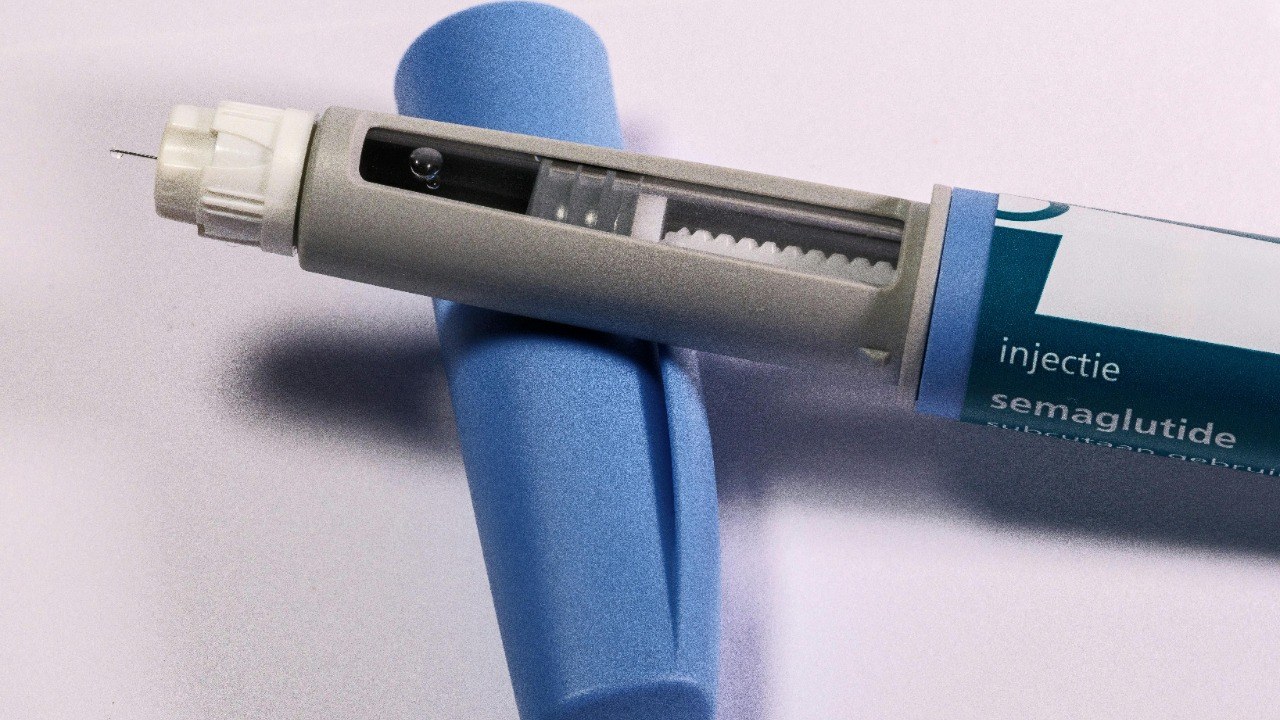
The program covers Foundayo tablets, Wegovy in either injection or tablet form, and Zepbound — but only the KwikPen formulation of Zepbound. The single-dose Zepbound pen and Zepbound vials are explicitly excluded from the $50 pricing, a distinction easy to miss for anyone assuming “Zepbound” alone guarantees the flat rate. A pharmacist filling a prescription for the wrong formulation would price it under standard Part D rules instead.
The Four-Part Eligibility Test
To get any of these drugs at $50 a month, an enrollee must clear all four of the program’s requirements at once. First, they need Part D drug coverage through a standalone plan or a Medicare health plan that includes drug coverage — enrollees whose only coverage is a private fee-for-service plan, a cost contract plan, or a PACE organization do not qualify. Second, they cannot already be receiving a GLP-1 drug paid for by their Medicare drug plan; anyone already using one for any reason has to keep getting it through that plan rather than switching to the Bridge. Third, they cannot have type 2 diabetes, moderate-to-severe sleep apnea, or fatty liver disease — people with those conditions are directed back to their existing Part D plan, which may already cover a GLP-1 drug for them.
Fourth, the enrollee must be at least 18 and meet one of three body mass index thresholds tied to other health conditions: a BMI of 35 or higher on its own; a BMI of 30 or higher plus certain heart failure, hard-to-control high blood pressure, or chronic kidney disease at stage 3a or beyond; or a BMI of 27 or higher plus prediabetes, a prior heart attack, stroke, or blocked arteries in the legs or arms. A BMI of 30 marks the threshold for obesity under CDC’s own classification, so the program’s lowest qualifying tier — 27, with added risk factors — sits in the “overweight” range rather than obesity itself.
How the Approval Moves Through the Pharmacy
The process starts with a doctor’s conversation about whether a GLP-1 drug is appropriate and whether the patient meets the program’s criteria. If so, the doctor sends the prescription to the pharmacy, which may contact the patient for a Medicare ID number — or the last four digits of a Social Security number if the card isn’t handy. Once the pharmacy confirms eligibility, the doctor submits a separate approval form to Medicare, and the beneficiary receives a letter confirming the drug is covered before picking up the first month’s supply for $50. Refills after that don’t require a new approval, as long as the patient stays on the same drug, even if the dose changes.
What $50 Replaces at the Pharmacy Counter
The flat price stands out mainly by comparison to what these drugs cost outside the program. Novo Nordisk set a cash-pay price of $399 a month for its new high-dose Wegovy through the company’s own direct-purchase channel in April 2026, a figure Bloomberg reported runs roughly 40% below what Eli Lilly charges cash-pay patients buying the top three doses of Zepbound directly from the manufacturer. Those manufacturer prices serve people who don’t qualify for the Bridge; for the narrow group that does, $50 undercuts even that discounted rate by a wide margin.
A Fixed-Term Demonstration, With Its Own Exclusions
The program’s legal footing shapes both what it covers and what happens when it stops. CMS’s guidance to pharmacies describes GLP-1 Bridge as a Section 402 demonstration rather than a standing Part D benefit, running from July 1, 2026, through December 31, 2027; prior-authorization approvals stay valid only through that same end date, and the guidance directs anyone needing drug coverage once the demonstration closes to contact 1-800-MEDICARE or a State Health Insurance Assistance Program rather than assume the Bridge continues on its own. The same guidance confirms dually eligible beneficiaries in a qualifying Part D plan type can use the Bridge on identical terms, and that pen needles for the Zepbound KwikPen are excluded from the $50 price entirely — billed separately, to the beneficiary’s Part D plan or out of pocket, not to GLP-1 Bridge.
A Narrow Bridge, Not a Broad Subsidy
The headline claim checks out on its own terms: the price genuinely does not vary by income, and CMS’s provider-facing guidance on the Bridge program confirms the same clinical criteria apply uniformly to every applicant regardless of financial circumstance. What the flat price doesn’t do is open GLP-1 access to every Medicare enrollee curious about weight-loss drugs. Between the plan-type restrictions, the exclusion of anyone already covered through their Part D plan, and the specific BMI-and-comorbidity math, the program is built for a defined clinical slice of the Medicare population — not as a general entitlement priced the same for everyone who asks.
This article was produced with AI assistance and reviewed by a human editor. Figures are linked to their primary sources; where a claim could not be verified from the public record, we say so.
More Financial Reading