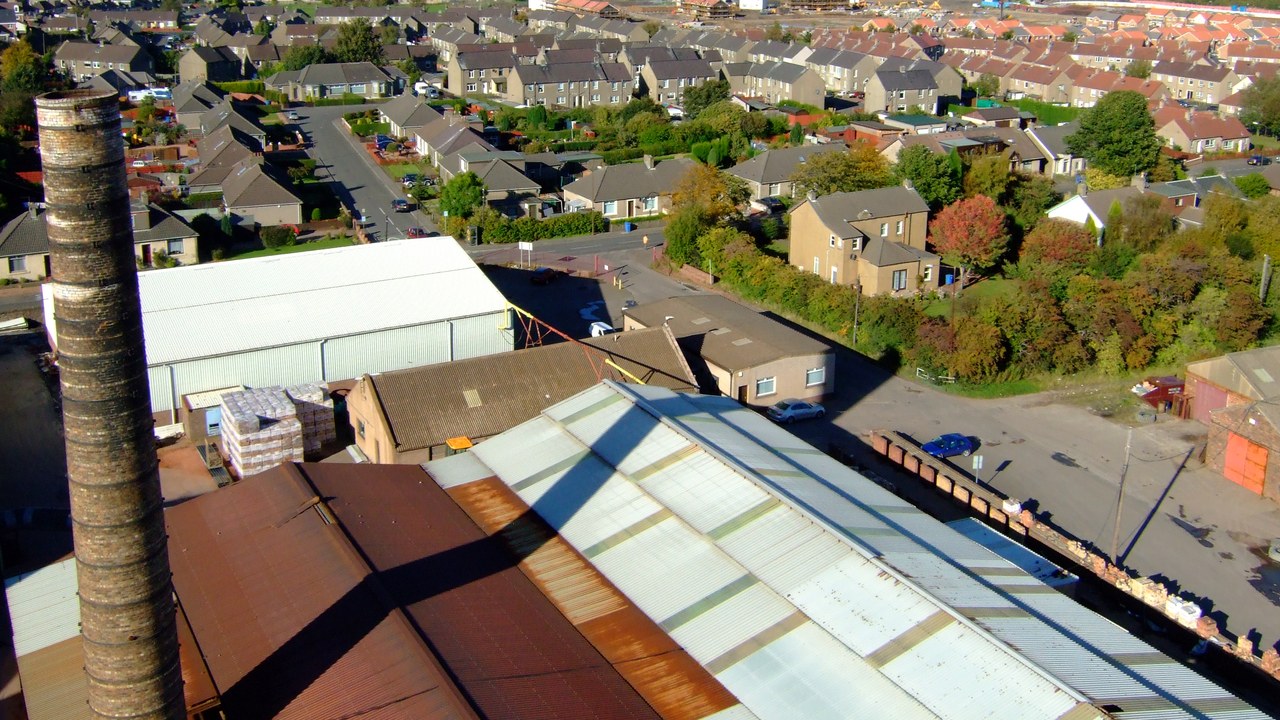
Inspectors who walked through Plant 3 at Watsontown Brick Company in central Pennsylvania on February 12 found workers breathing air loaded with crystalline silica dust — the same hazard behind an incurable lung disease called silicosis. Federal investigators say the company already knew about the exposure and did not fix it or require workers to wear respirators. On August 26, the U.S. Department of Labor’s Occupational Safety and Health Administration proposed $496,528 in fines against General Shale Brick Inc., which does business as Watsontown Brick Company. The citations are proposed, not final, and the company has the legal right to contest every dollar of them.
What OSHA’s Inspectors Found Inside Plant 3
The February 12 inspection came out of two overlapping OSHA programs: the agency’s Site-Specific Targeting plan, which sends compliance officers to worksites with unusually high injury and illness rates, and its ongoing national emphasis program on respirable crystalline silica. What inspectors documented led OSHA to issue eight violations against General Shale Brick Inc. — three willful, four serious, one repeat and one other-than-serious — according to the U.S. Department of Labor’s August 26 announcement.
The willful violations carry the most weight. OSHA says the company knew workers in Plant 3, where molded brick is manufactured, were breathing silica dust above safe limits and did not fix the exposure or require respirators. Inspectors also found the company had not fit-tested respirators annually, had not established regulated areas to limit who could enter the highest-exposure zones, had not measured how much silica specific jobs exposed workers to, and had not provided the medical exams required for anyone exposed more than 30 days a year. Combined, those eight findings produced the $496,528 proposed penalty.
Watsontown Brick is not a large, faceless operation. It has been making brick in the same corner of central Pennsylvania for more than a century, and General Shale — itself the North American brick subsidiary of the Austrian building-materials company Wienerberger — acquired it in 2018. The plant employs roughly 50 people, which means the workers OSHA says breathed unsafe silica dust are a meaningful share of the town’s manufacturing workforce, not an anonymous line on a corporate spreadsheet.
Free retirement updates: Enrollment and claim windows come and go, and missing one can cost you real money. The free Retirement Shield newsletter keeps you ahead of the deadlines that matter. Sign up free.
Why “Willful” Is the Most Expensive Word in an OSHA Citation
OSHA sorts violations by how much the employer knew and did about a hazard. A “serious” violation means the employer should have known about a risk of real harm. A “repeat” violation means OSHA cited the same or a substantially similar problem there before. A “willful” violation means the agency believes the employer knew about the hazard and disregarded it or acted with plain indifference. That distinction, more than the number of violations, is what pushed this case into six figures — three willful findings weigh far more heavily than an equivalent stack of serious ones.
If you work in a plant that grinds, cuts, crushes or molds brick, concrete or stone, that word choice matters to you directly. The gap between “serious” and “willful” in a citation like this one is the gap between a mistake and a decision your employer made anyway, with your lungs on the other side of it.
The Health Cost of Silica Dust Follows Workers Home
Respirable crystalline silica — dust particles far smaller than ordinary sand — causes silicosis, an incurable and sometimes fatal lung disease, along with lung cancer, chronic obstructive pulmonary disease and kidney disease, according to federal health researchers at the National Institute for Occupational Safety and Health. Millions of U.S. workers in construction, brickmaking, quarrying and similar trades are exposed to it every year, and symptoms often do not show up until years after the exposure that caused them — a worker can leave a job like this one feeling fine and still be diagnosed a decade or more later, long after any connection to a specific employer feels obvious.
OSHA’s own standard sets the legal limit at 50 micrograms of respirable crystalline silica per cubic meter of air, averaged over an eight-hour shift, with a lower “action level” of 25 micrograms that triggers monitoring requirements on its own. For your household budget, a silicosis or lung-disease diagnosis years down the road can mean mounting medical bills, an early exit from the workforce, and a scramble for disability income to replace wages that stopped sooner than planned.
What Happens Next — and Why $496,528 May Not Be the Final Number
General Shale Brick Inc. has 15 working days from receiving the citation to contest it in writing, or to request an informal conference with OSHA’s area office to negotiate the citations and penalty before that window closes. Many proposed OSHA penalties end up reduced through settlement, even when the underlying safety requirements — fixing the actual hazard, known as abatement — do not go away.
It is also worth being clear about where the money goes. If the fine is ultimately paid, it goes to the U.S. Treasury, not to the workers who were exposed. The penalty functions as an incentive to fix the hazard, not as compensation. Any medical costs a worker later faces from a silica-related diagnosis would typically run through workers’ compensation or a separate legal claim, not this OSHA case.
Your Right to See Your Own Exposure Records
Under OSHA’s silica rule, you have the right to see your employer’s air-monitoring results for your workplace and your own medical surveillance records, and to have a representative see them on your behalf. If you work around brick, concrete, stone or sand dust and have never seen those numbers, you can ask your employer’s safety office or human resources department for them in writing.
OSHA’s own standard sets that limit at 50 micrograms of respirable crystalline silica per cubic meter of air over an eight-hour day — the same number the agency says Watsontown Brick’s Plant 3 exceeded for years before anyone was required to wear a respirator.
This article was produced with AI assistance and reviewed by a human editor. Figures are linked to their primary sources; where a claim could not be verified from the public record, we say so.
More Financial Reading