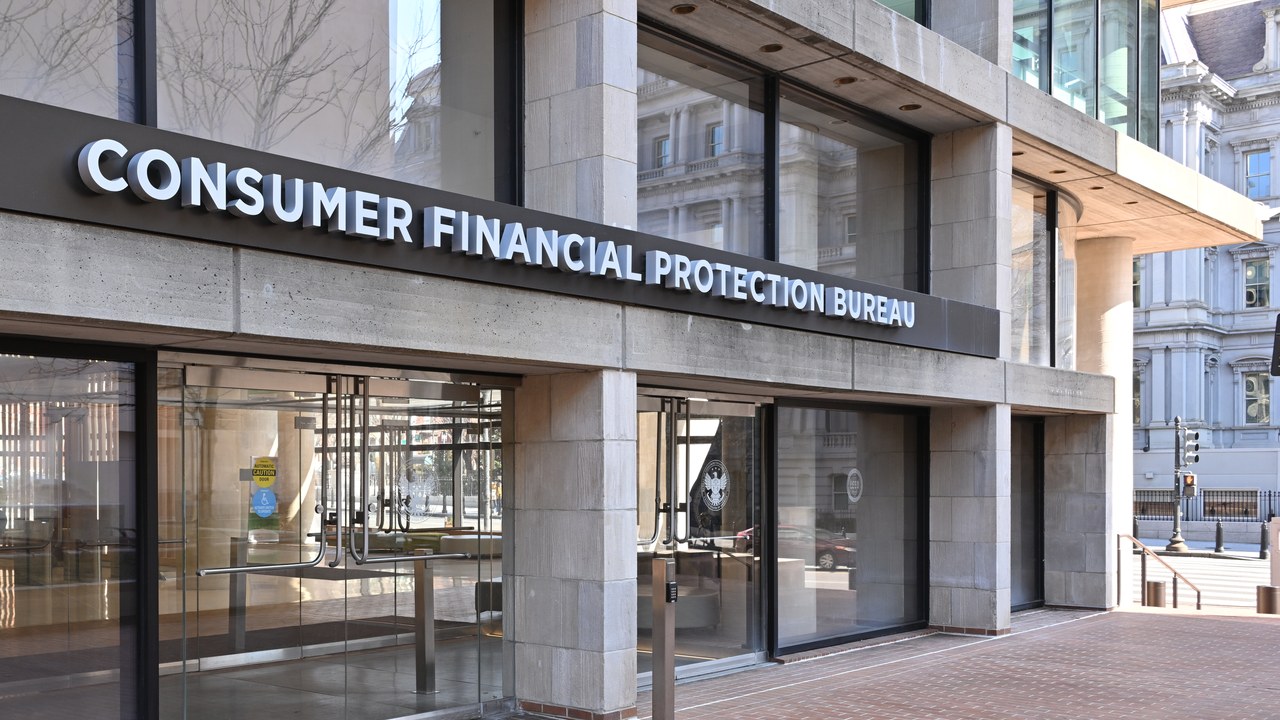
A group of House Republicans introduced a bill this week that would redraw the line determining which banks answer directly to the federal government’s consumer watchdog. Right now, banks with more than $10 billion in assets are examined directly by the Consumer Financial Protection Bureau for how they handle overdraft fees, credit card terms and debt collection complaints. The new bill would move that line to $30 billion, shifting a large batch of regional banks out of the CFPB’s direct exam room. It is, so far, only a bill: introduced August 31 and referred to committee, with no vote in either chamber.
Who The CFPB Actually Checks On Today
The CFPB does not oversee every bank in the country. Under current law, its supervisory authority reaches banks, thrifts and credit unions with more than $10 billion in total assets, along with their affiliates. According to the bureau’s own description of its supervisory reach, that group of large depository institutions collectively holds more than 80% of the banking industry’s total assets, even though it’s a relatively small number of banks. Institutions below that $10 billion mark are instead examined for consumer-compliance purposes by their regular banking regulator — the Office of the Comptroller of the Currency, the Federal Reserve, the FDIC or the National Credit Union Administration, depending on how the institution is chartered. In practice, a CFPB exam typically reviews how a bank discloses fees, processes complaints, and handles overdraft and debt-collection practices — the kind of everyday account issues that show up on a household’s monthly statement.
Free retirement updates: Keep more of your Social Security and savings with plain-English updates on the changes, deadlines, and costly mistakes retirees miss. Subscribe free.
What H.R. 10184 Would Actually Change
The bill is called the Consumer Financial Protection Accountability and Reform Act of 2026, introduced as H.R. 10184 on August 31 by Rep. Andy Barr (R-Ky.), with roughly 30 Republican co-sponsors including House Financial Services Committee Chairman French Hill (R-Ark.). Its central supervision provision would raise the bank-asset threshold for direct CFPB oversight from $10 billion to $30 billion, with the number adjusted periodically starting in 2031 based on nominal U.S. GDP growth. The committee formally rolled the bill out on September 1, after circulating an earlier discussion draft for public comment.
Banks Above $30 Billion Could Still Opt Out Of CFPB Exams
The supervision change goes further than just moving a number. Under the bill, eligible banks, savings associations and credit unions above the new $30 billion line could elect to have their consumer-compliance supervision handled the same way institutions below the threshold are handled today — meaning primary responsibility would sit with their prudential regulator instead of the CFPB, according to a detailed breakdown of the bill’s supervision language. If the CFPB spots a possible violation at one of those institutions, it could refer the matter to the prudential regulator; the bureau could only step in itself if that regulator hasn’t opened an enforcement action within 120 days. The largest banks — those designated globally systemically important — would remain under direct CFPB supervision regardless. That systemic-risk category currently covers only a handful of the country’s largest institutions, the ones already subject to the most intensive federal oversight across multiple regulators.
The Funding And Penalty Provisions Riding Along
Supervision isn’t the only thing the bill touches. It would also move the CFPB off its current funding source, which comes through requests to the Federal Reserve, and onto the regular congressional appropriations process — the same annual budget fight every other federal agency goes through. It would create a dedicated CFPB inspector general, require the bureau to define “abusive” conduct more narrowly and bar it from treating discriminatory practices as automatically abusive, add a safe-harbor from certain penalties for qualifying small-dollar credit products, and reduce the size of civil money penalties the bureau can impose. ABA Banking Journal’s summary of the bill notes the bank industry group has been pushing for these funding and penalty changes for years. The bill also reaches into newer corners of consumer lending: companies offering earned wage access — the cash-advance features increasingly built into payroll and gig-work apps — would have to offer a no-cost option if they charge a fee for faster access, and the bill would keep qualifying earned wage access products out of the definition of “credit” under the Truth in Lending Act.
Why The Threshold Number Matters To A Regional-Bank Customer
For a household with a checking account, credit card or overdraft dispute, the practical question is which regulator is checking whether the bank is following the rules. Today, a bank with $15 billion or $25 billion in assets is examined directly by the CFPB — the same agency that handles complaints on overdraft fees, credit card practices and debt collection nationally. If the threshold moves to $30 billion, banks in that $10-to-$30-billion range would instead fall under whichever prudential regulator supervises their charter for consumer-compliance purposes, the same regulators that already oversee community banks under $10 billion. That doesn’t eliminate consumer-protection law — the underlying rules banks must follow don’t change — but it does change which federal agency is doing the direct examining and how a consumer complaint about that bank might get routed. Whether that shift makes exams tougher or lighter is the actual fight behind the bill’s supervision section: bank trade groups argue prudential regulators understand their industry better and examine more efficiently, while the CFPB’s supporters have long argued its single-purpose focus on consumer protection, rather than bank safety and soundness, makes it a more consistent enforcer on things like fees and disclosures.
Where The Bill Stands Right Now
None of this is in effect. H.R. 10184 was referred the same day it was introduced to the House Financial Services Committee, and in addition to the Judiciary, Small Business, and Oversight and Government Reform committees, according to the House Financial Services Committee’s own announcement of the bill. As of September 2, it has not been marked up in committee, has not received a floor vote in the House, and has no Senate companion. Nothing about bank supervision changes unless and until Congress passes it and it’s signed into law — for now, it’s a proposal with 29 Republican co-sponsors and no Democratic support on record. Committee referral is a routine first step for any bill and isn’t, on its own, a sign of momentum; most bills introduced in Congress never get a committee vote at all, let alone a floor vote in either chamber.
This article was produced with AI assistance and reviewed by a human editor. Figures are linked to their primary sources; where a claim could not be verified from the public record, we say so.
More Financial Reading