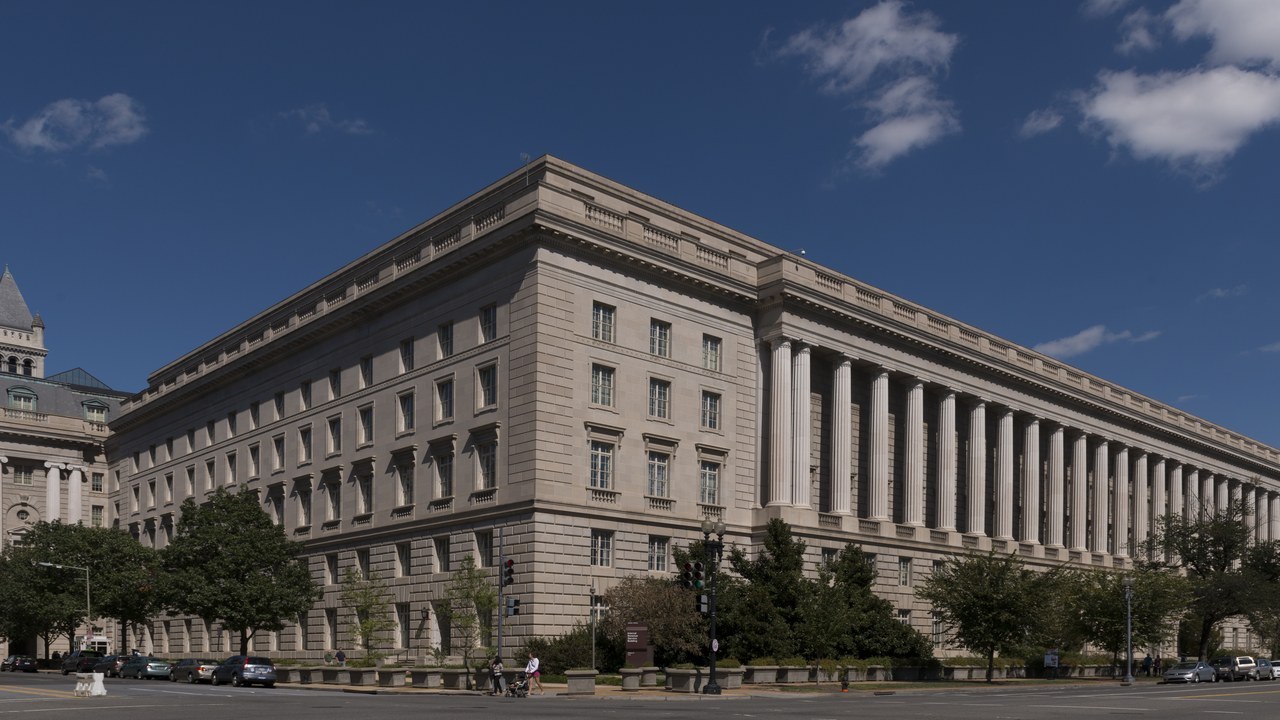
The Justice Department’s Antitrust Division has widened its year-long look at beef prices beyond the meatpacking plants and onto the shelves where households actually shop. Four of the country’s biggest grocery sellers — Walmart, Costco, Amazon and Kroger — are now among eight retailers that received formal letters asking about recent increases in retail beef prices. Nobody has been accused of breaking the law. But for a household budget already stretched by grocery bills, it signals that federal regulators think the price of a package of ground beef deserves scrutiny at every link in the chain, not just at the processing plant.
Eight Grocery Chains Now Answering DOJ Letters on Beef Prices
Associate Attorney General Stanley E. Woodward Jr. sent the letters to eight of the country’s largest food retailers this week, asking each company about recent increases in the price shoppers pay for beef. The list includes Walmart, Costco, Amazon and Kroger alongside Publix, Albertsons, Aldi and Ahold Delhaize USA, the parent company behind grocery brands such as Stop & Shop and Giant.
The department described the move as an extension of its existing meatpacking case rather than a new accusation against any one company. “Beef prices are a critical concern to Americans, and a priority for this Justice Department,” the department said, in comments reported by Fox Business, which also confirmed that none of the eight retailers has been accused of wrongdoing at this stage.
Free retirement updates: A quiet rule change can shrink your Social Security or Medicare check, and no one warns you. The free Retirement Shield newsletter catches these early and tells you what to do. Get it free.
How a Meatpacker Probe Grew Into a Retailer Investigation
The retailer letters build on an antitrust investigation the Justice Department’s Antitrust Division opened in May into the country’s four largest beef processors — JBS, Cargill, Tyson Foods and National Beef — which together control more than 85% of U.S. beef processing capacity. Investigators have said they are reviewing more than 3 million internal documents and interviewing industry participants to determine whether that concentration has kept consumer prices high while squeezing what ranchers are paid for their cattle. The May probe was the department’s first formal acknowledgment that beef pricing itself, not just industry structure, was under review.
That processor-level inquiry traces back to Executive Order 14364, which President Trump signed in December 2025 directing the Justice Department and Federal Trade Commission to form task forces examining price fixing and anti-competitive behavior across the food supply chain, with beef and meatpacking named as an early focus. Extending the inquiry to retailers this week means investigators now want to see whether the markup grocery chains add on top of wholesale beef prices tracks with what’s happening further up the supply chain, or whether stores are adding their own separate squeeze once the meat reaches the shelf.
The Shrinking U.S. Cattle Herd Behind the Investigation
Part of what’s driving the scrutiny is a herd that keeps getting smaller. The U.S. Department of Agriculture’s National Agricultural Statistics Service reported 86.2 million head of cattle and calves on U.S. farms as of Jan. 1, 2026, the smallest national herd since 1951. Beef cow numbers alone fell 1% from the year before to 27.6 million, and the annual calf crop dropped 2% to 32.9 million head, continuing a drought-driven contraction that has squeezed supply for several years running.
A smaller herd naturally supports higher wholesale prices no matter how competitive the market is, which is exactly why the Justice Department’s questions matter here. Investigators are trying to separate how much of the price at the meat case reflects a genuinely tighter cattle supply, and how much reflects a lack of competition among the small number of companies that now slaughter, process and, the department wants to know, sell the beef to households. Agriculture officials have pointed to the same herd numbers to argue the supply problem is real, not manufactured.
A Whistleblower Program With Real Money on the Table
The retailer letters land on top of an enforcement push the department has been building all year. In January, the Antitrust Division and the U.S. Postal Service announced the first payout under its whistleblower rewards program, confirming that anyone whose tip helps the department secure a criminal fine of at least $1 million can be entitled to 15% to 30% of what’s recovered. Attorney General Todd Blanche pointed to that same program when he announced the original meatpacker investigation in May, signaling the department wants people inside the industry, not just retailers’ internal records, to come forward.
Sherman Act violations carry serious criminal exposure for both companies and individuals, which is what makes a letter asking for pricing data more than a formality here. If the documents eventually show coordination rather than just a tight cattle supply, the same whistleblower program that paid out its first award in January gives current or former employees at any of the eight companies a direct financial reason to hand over what they know.
No Retailer Accused of Wrongdoing — Yet the Bill Keeps Climbing
For now, a letter asking questions is not a lawsuit, a subpoena or a finding of wrongdoing, and none of the eight companies named has been charged with anything. Retailers typically have to respond to this kind of inquiry with data on pricing and purchasing practices, a process that can take months to work through before regulators decide whether to escalate to a subpoena or a formal case.
What the letters do confirm is that the checkout scanner is now part of the same federal review as the packing plant, a scope the meatpacker investigation didn’t carry when it opened in May. Whether that produces lower prices, a formal case, or nothing at all will depend on what the eight retailers hand over next — and on whether a herd sitting at its smallest size since 1951, per USDA, has room to rebuild before any of it plays out.
This article was produced with AI assistance and reviewed by a human editor. Figures are linked to their primary sources; where a claim could not be verified from the public record, we say so.
More Financial Reading