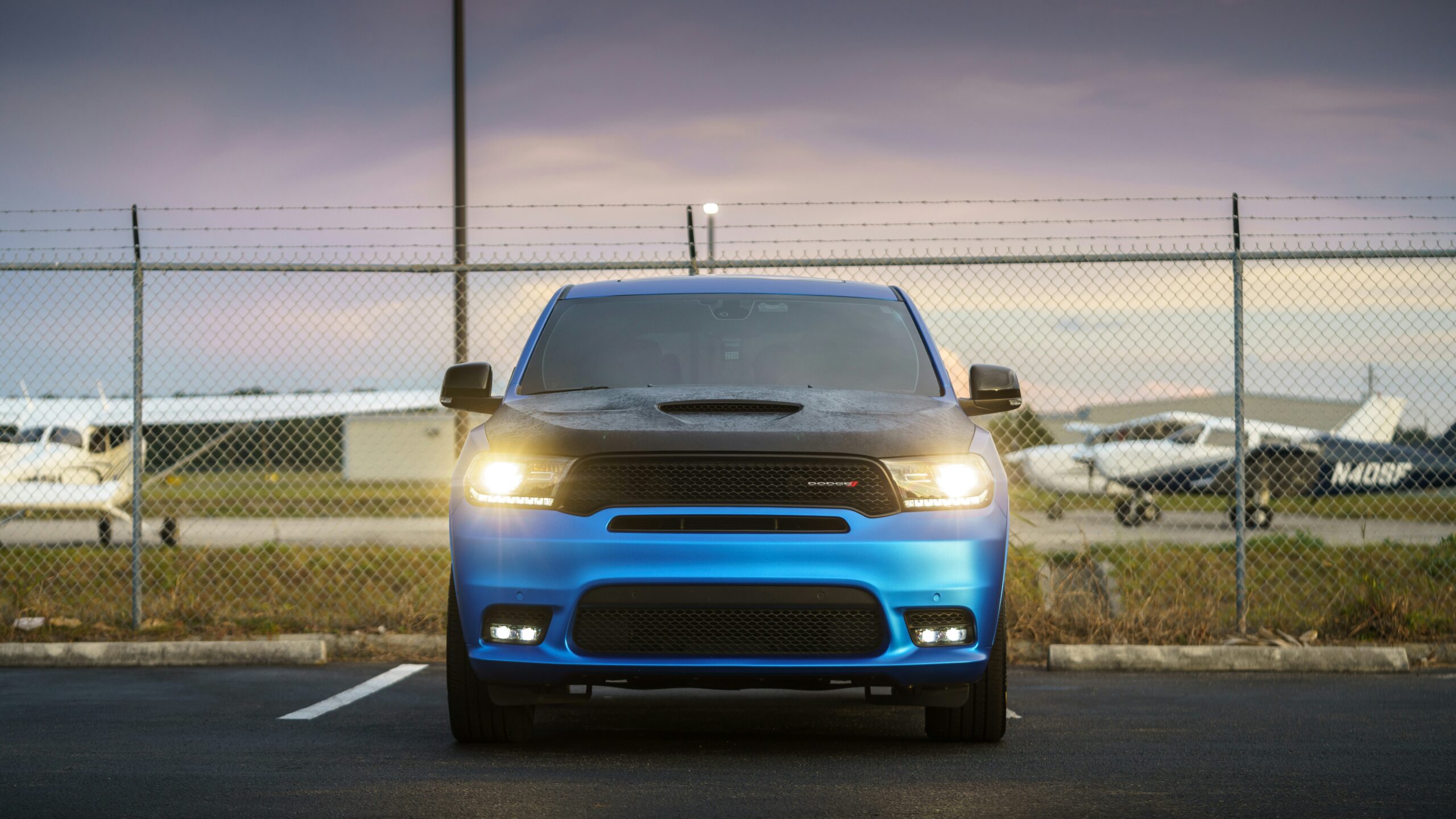
Nearly 75,000 Dodge Durango SUVs are heading back to dealers for a rear spoiler that can detach while the vehicle is moving, and this is not the first time Stellantis has tried to fix this specific part. Federal regulators confirm it is the third recall campaign tied to the same underlying defect since 2021, a repeat-repair pattern that owners of the affected SUVs should know about before assuming a prior visit already solved the problem.
What the Recall Actually Covers
The recall, filed with the National Highway Traffic Safety Administration under campaign number 26V528000 on August 13, covers 74,578 model year 2021 through 2023 Dodge Durangos built between July 13, 2020 and March 28, 2023. The defect involves a rear spoiler that was not properly aligned with the roofline during assembly, which can cause it to strike the roof every time the liftgate is opened and closed. Over repeated cycles, that contact can wear the spoiler’s mounting points enough that it partially or fully detaches, creating a road hazard for the vehicle behind it. No crashes or injuries have been tied to the defect so far, and the repair itself is free to owners under federal recall law.
Free retirement updates: Enrollment and claim windows come and go, and missing one can cost you real money. The free Retirement Shield newsletter keeps you ahead of the deadlines that matter. Sign up free.
The Third Attempt at the Same Fix
This is where the recall stands out from a routine safety notice. Stellantis, the automaker behind Dodge, first addressed this spoiler-alignment issue in 2021 under a separate campaign covering a smaller group of Durangos, then expanded the fix in 2023 after the original repair did not hold up on every vehicle. Detroit News reporting on the August 2026 filing confirms regulators explicitly noted that two earlier campaigns, in 2021 and 2023, targeted this same defect and did not permanently resolve it, prompting owners who already had a spoiler serviced once or twice to return to a dealer a third time. Coverage of the new recall confirms no crashes or injuries have been reported to date.
How the Earlier Inspections Actually Worked
The earlier campaigns were not a rubber stamp. FCA’s own dealer service instructions for the original 2021 recall, filed as Safety Recall Y73, laid out a five-point physical inspection: technicians measured the gap between the spoiler and the roof at each end, checked the spoiler’s flushness against the body with a straight edge, and cycled the liftgate repeatedly to watch for the seal catching on the roof. Only a vehicle that failed one of those five checks got a new spoiler; the rest were returned to owners as already compliant. That original campaign estimated roughly 23 percent of the approximately 4,830 covered Durangos actually had the defect, yet the same underlying problem resurfaced in a much larger 2023 campaign covering about 139,000 vehicles, that time estimated at under 2 percent, and now again in this month’s filing covering 74,578 vehicles at an estimated defect rate below 1 percent.
That declining defect-rate pattern across three campaigns does not necessarily mean earlier repairs failed on every vehicle; it more likely reflects engineers narrowing in on which specific build dates and assembly lines were actually affected each time. But it also means a Durango that passed inspection under the 2021 or 2023 criteria has no guarantee of passing under this month’s newly filed campaign, since each filing is a fresh determination rather than an audit of prior repair work. FCA’s own recall letters describe why regulators keep treating this as urgent: a partially detached spoiler “may separate from the vehicle while driving, potentially creating a road hazard to operators and occupants of other vehicles, and can cause such vehicles to crash without prior warning,” a risk framed around everyone sharing the road, not just the Durango’s own driver.
Why the Earlier Repairs Didn’t Hold
Regulators’ own numbers explain why a third campaign was necessary. As of late July 2026, the manufacturer had logged 116 warranty claims, eight customer-assistance records and 37 additional service reports describing spoiler problems on vehicles that had already been through a prior repair. That volume of post-remedy failures is what triggered the newest, broader recall rather than a simple parts-replacement bulletin. Notably, the automaker has not yet finalized a permanent technical fix; the current campaign addresses the immediate safety risk, while engineering work on a lasting repair is described as still in development, meaning owners could plausibly see a follow-up service action once that permanent fix exists.
What Affected Owners Should Do Now
Dealers were formally notified of the recall on August 20, and VINs became searchable on NHTSA’s recall lookup tool the same day, ahead of owner notification letters that are scheduled to begin mailing September 10. Owners of a 2021 through 2023 Durango do not need to wait for that letter to check their status; entering a vehicle’s VIN into NHTSA’s online recall search will confirm whether it is included, regardless of whether the vehicle was serviced under either of the two earlier campaigns. Given that this is the third attempt at the same defect, owners who had the spoiler addressed in 2021 or 2023 should not assume that repair still holds and should treat this notice as a reason to schedule a new inspection rather than something to set aside.
The Free-Repair Baseline Owners Can Count On
Federal law requires that safety recall repairs be performed at no cost to the owner, regardless of the vehicle’s age, mileage or warranty status, and regardless of how many times a given defect has already been serviced. Owners with questions can contact NHTSA’s Vehicle Safety Hotline or the automaker’s customer service line directly rather than relying solely on the mailed notice, since letters can take weeks to arrive after a recall is filed with regulators.
This article was produced with AI assistance and reviewed by a human editor. Figures are linked to their primary sources; where a claim could not be verified from the public record, we say so.
More Financial Reading