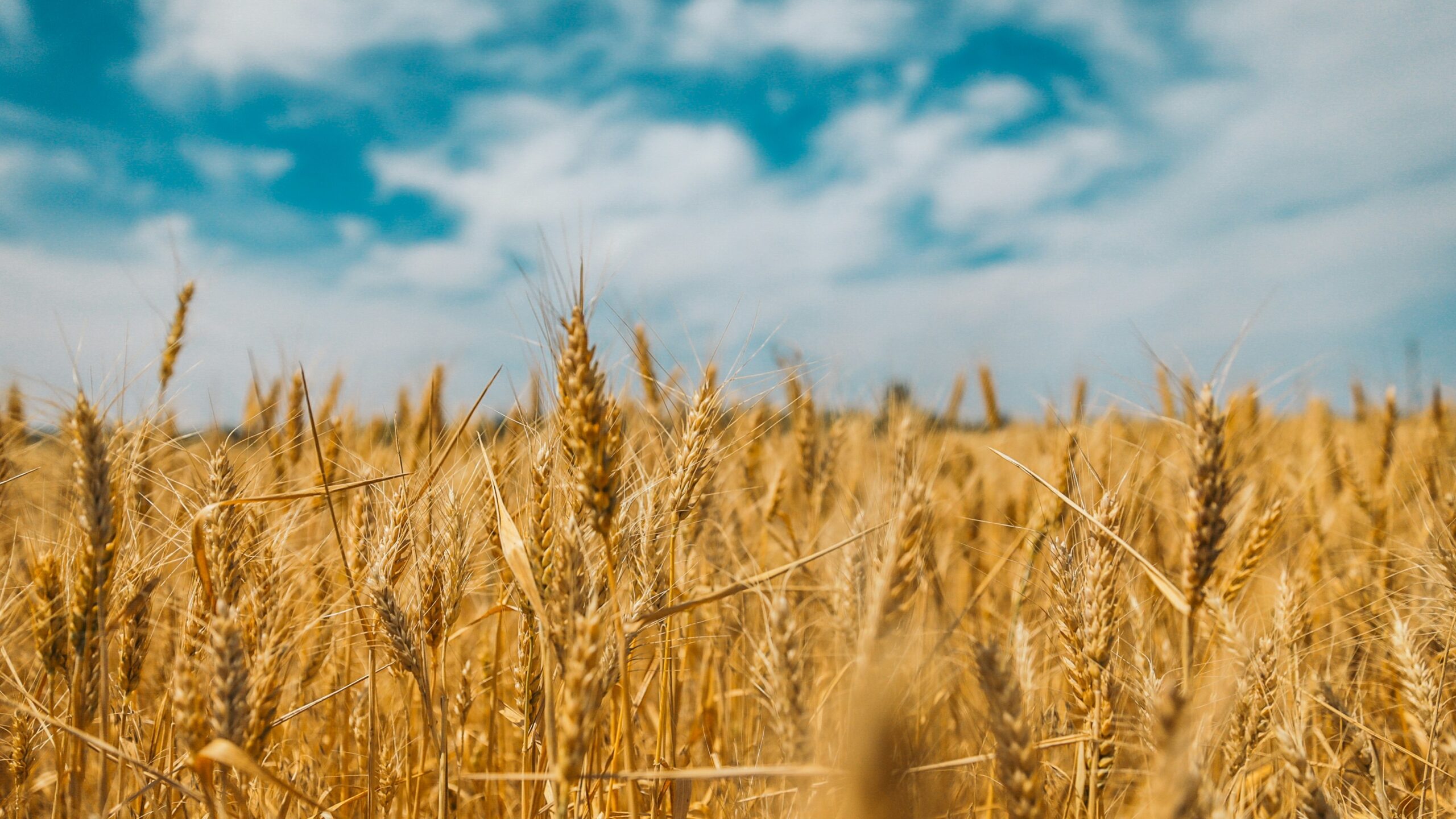
Long before a loaf of bread or a box of cereal gets a new price tag, the wheat that goes into it gets one first. USDA’s Economic Research Service reported this week that the price farmers are paid for wheat jumped 9.3 percent in a single month, from June to July 2026, and now sits 25.5 percent above where it was a year earlier. That number lives several steps upstream of a grocery store shelf, but the government’s own data show it tends not to stay there.
The Farm-Level Number Behind the Headline
According to the USDA Economic Research Service’s Food Price Outlook, farm-level wheat prices rose 9.3 percent from June to July 2026 and were 25.5 percent higher in July 2026 than in July 2025. Looking ahead, ERS forecasts farm-level wheat prices will increase 17.1 percent for all of 2026, with a wide forecast interval running from 7.9 to 28.4 percent — a range that reflects how volatile these upstream commodity prices can be compared with the retail prices consumers eventually see.
This is a Producer Price Index figure, not a Consumer Price Index figure. A PPI measures what is paid to domestic producers — in this case, wheat farmers — rather than what a shopper pays at checkout. ERS tracks these separately because the two indexes behave differently: PPIs are typically far more volatile, and price swings at the farm level generally have to move through milling, baking, packaging and distribution before they show up as a different number on a bag of flour or a loaf of bread.
Free retirement updates: One number can cost or save hundreds a month in retirement. The free Retirement Shield newsletter surfaces the ones worth knowing. Sign up free.
Why a Farm Price Is Called an “Early Warning” at All
ERS explains its own reasoning for tracking these two measures side by side: because of the multiple processing stages in the U.S. food system, retail food prices “typically lag movements in” producer prices, which is why ERS describes the PPI as “a useful tool for understanding what may soon happen to” retail prices. That lag is the entire basis for calling a farm-level jump an early warning rather than simply a separate, unrelated statistic. It is a documented tendency in how the two indexes have historically moved relative to each other, not a guarantee about any specific future retail price.
Notably, ERS itself stops short of turning that tendency into a specific forecast. The agency states plainly that it “does not forecast industry-level PPIs for unprocessed, processed, and finished foods and feeds” the way it forecasts retail CPI categories, even though it says the two have “historically shown a strong correlation.”
What’s Actually Driving Wheat Prices Higher
The increase traces back to supply, not demand. ERS attributes the recent run-up in farm-level wheat prices to “a large projected decline in U.S. wheat output,” a finding detailed in the June 2026 Wheat Outlook report from USDA. When the expected harvest shrinks, the price buyers are willing to pay for the wheat that is available tends to rise, which is the mechanism behind both the 9.3 percent monthly jump and the 25.5 percent year-over-year increase reported this month. For official USDA production estimates behind these forecasts, the agency also publishes its WASDE farm-level price projections as a running reference point.
Wheat is not the only farm-level price moving sharply this year. The same August update shows farm-level cattle prices forecast to rise 9.9 percent in 2026, wholesale beef climbing 9.4 percent, and farm-level vegetable prices up 17.8 percent for the year despite a 29.4 percent one-month drop from June to July, while farm-level egg prices are forecast to fall 82.1 percent as flocks recover from avian influenza. That spread, some farm-level prices climbing sharply while others fall just as fast, is why ERS treats the producer index as inherently more volatile than the retail index it eventually feeds into.
What This Signal Does and Doesn’t Tell a Grocery Shopper
It would be a mistake to read a 25.5 percent farm-level wheat jump as a promise of a similarly sized jump in bread or cereal prices. USDA’s own retail forecast, published on the same page as the wheat figures, shows cereal and bakery product prices are expected to rise at only their 20-year historical average pace in 2026 — not the accelerated pace the farm-level number might suggest on its own. Wheat is also only one input among many in a finished loaf of bread or box of cereal, alongside packaging, labor, transportation and retail markup, all of which can offset or amplify what happens at the farm gate.
What the wheat figure does reliably show is direction, not magnitude: producer prices for wheat are rising sharply, and the government’s own forecasting logic says the retail side of that supply chain has some catching up to do over time. Whether that shows up as a small increase spread across the year or something larger concentrated in a few months is not something this data set, on its own, can answer.
This article was produced with AI assistance and reviewed by a human editor. Figures are linked to their primary sources; where a claim could not be verified from the public record, we say so.
More Financial Reading