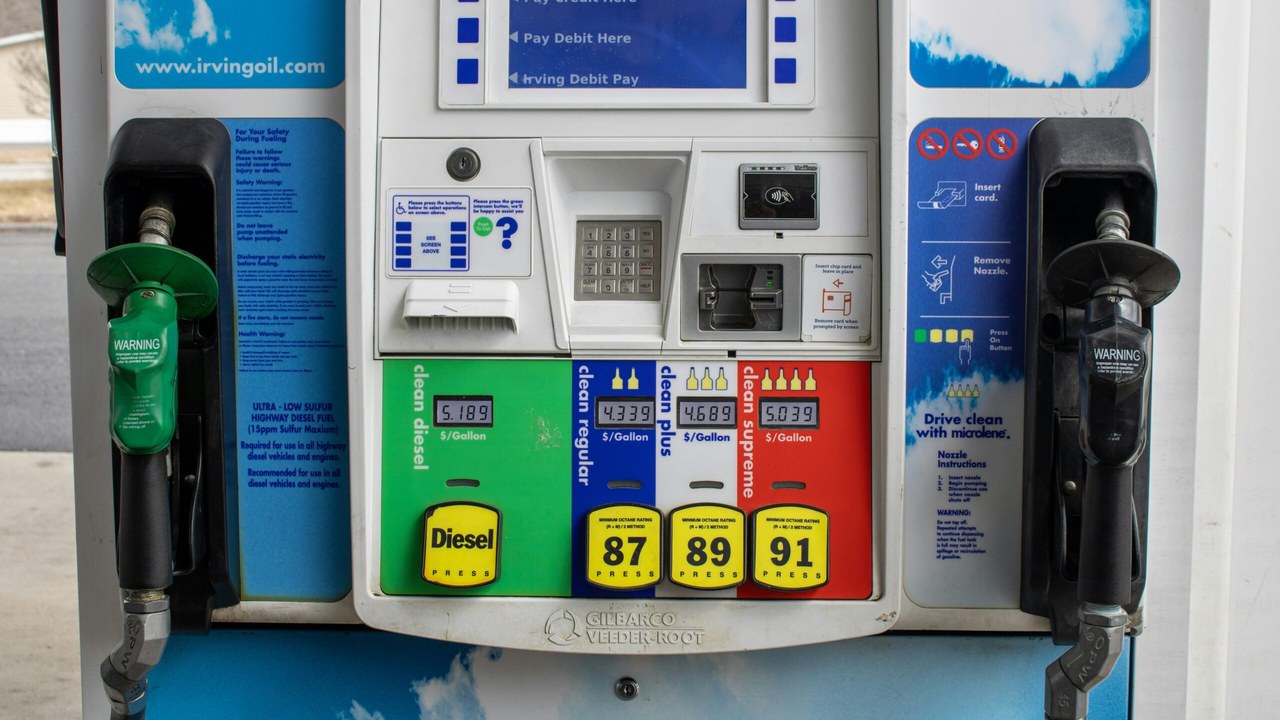
AAA’s daily fuel-price tracker has never made this claim about any previous August: not one day this month has closed with the national average below $4 a gallon. That finding, published in AAA’s August 27, 2026 report, means a household that fills up two vehicles a week has been paying real extra money at the pump all month, cash that would otherwise go toward groceries or a car payment. The streak was still holding as the month neared its end, with AAA’s own reading still above $4 on August 29.
AAA’s Own Numbers: Above $4 Every Day This Month
AAA publishes a national average gas price every day, and in its August 27 report the organization described the month’s pattern in blunt terms: the national average had held above $4 a gallon on every single day of August up to that point, something it said had never happened in any prior August. That day’s reading was $4.09 a gallon, a penny below the week before, even though crude oil prices had barely moved.
AAA laid out that finding in its August 27 report, and two days later AAA’s live national average page was still showing the same pattern holding: $4.0810 a gallon on August 29. That is roughly 88 cents higher than the same date a year ago, when the average sat at $3.2013, and it remains well below the all-time high of $5.0165 a gallon AAA recorded on June 14, 2022. The gap to that record is real, but the length of this run — an entire month without a single dip below $4 — is what AAA is calling unprecedented. For a driver filling a 15-gallon tank, that 88-cent gap to a year ago works out to more than $13 extra at the pump on every single fill-up, an amount that repeats with every tank for anyone driving a normal weekly commute.
Free retirement updates: Keep more of your Social Security and savings with plain-English updates on the changes, deadlines, and costly mistakes retirees miss. Subscribe free.
A Separate Federal Survey Shows the Same Pattern
AAA’s daily number is not the only measurement showing sustained prices above $4. The U.S. Energy Information Administration runs its own weekly Gasoline and Diesel Fuel Update, a government survey built from a different sample of stations and a different collection method than AAA’s daily average, released every Monday afternoon.
EIA’s own regular-gasoline price series puts the national average at $4.001 a gallon on July 20, then $4.096, $4.079, $4.006, $4.049 and $4.085 in the five weekly readings that followed through August 24 — every single one above $4. Two measurements built from different data, collected on different days by different organizations, are telling the same story about what households have been paying at the pump this summer.
What’s Keeping Prices Up: A Tight Crude Market
AAA’s report tied the sustained prices to a crude oil market that has not eased rather than to any single spike. West Texas Intermediate crude closed at $82.23 a barrel the Wednesday before the report, with prices holding in the $80 range because of continued volatility around the Strait of Hormuz, the shipping channel through which a large share of the world’s oil moves. Behind that, EIA’s own Weekly Petroleum Status Report for the week ending August 21 shows commercial crude oil inventories at 428.9 million barrels, about 1% above the five-year average, while total motor gasoline inventories fell to 206.8 million barrels, down from 209.4 million the week before and roughly 6% below the five-year average, even as refineries kept gasoline production near 9.8 million barrels a day.
Put simply, gasoline supply has been shrinking against demand that has not let up, and crude prices have stayed elevated rather than retreating the way they typically do once summer driving season winds down. EIA’s own four-week product-supplied figures back that up: motor gasoline demand averaged 8.9 million barrels a day over the four weeks ending August 21, essentially flat with the same period last year even as supply has tightened, which is part of why the usual late-summer relief at the pump has not shown up. That combination, more than any single event, is why AAA says the month’s prices have refused to come down.
Not Every State Is Living the Same $4 Story
The national average is exactly that — a national blend, not a price every driver is paying. AAA’s state-by-state average page, current as of August 29, shows the most expensive markets running more than $2 a gallon above the cheapest ones: California ($5.67), Hawaii ($5.43), Washington ($5.29), Alaska ($4.84) and Nevada ($4.82) sit at the top, while Indiana ($3.42), Texas ($3.61), Mississippi ($3.64), South Carolina ($3.65) and Louisiana ($3.68) sit at the bottom, all still below the $4 mark that has defined the national conversation this month. A driver in Indianapolis and a driver in Sacramento are living two very different Augusts even as the national figure tells one unbroken story.
How This August Stacks Up Against 2022’s Record
AAA’s own framing goes further than just the daily streak: the organization said this August is on pace to become the single most expensive August the national average has ever recorded, surpassing the previous August high set in 2022. That is a different claim from the all-time record for any month, which AAA’s data still places at $5.0165 a gallon on June 14, 2022 — a level this August’s prices have not approached. What AAA is describing is narrower and, by its own daily numbers, already unusual: a full month that never dipped under $4, arriving three years after the last time gas prices spiked this hard, and doing it with none of the single dramatic price jump that defined that earlier run.
This article was produced with AI assistance and reviewed by a human editor. Figures are linked to their primary sources; where a claim could not be verified from the public record, we say so.
More Financial Reading