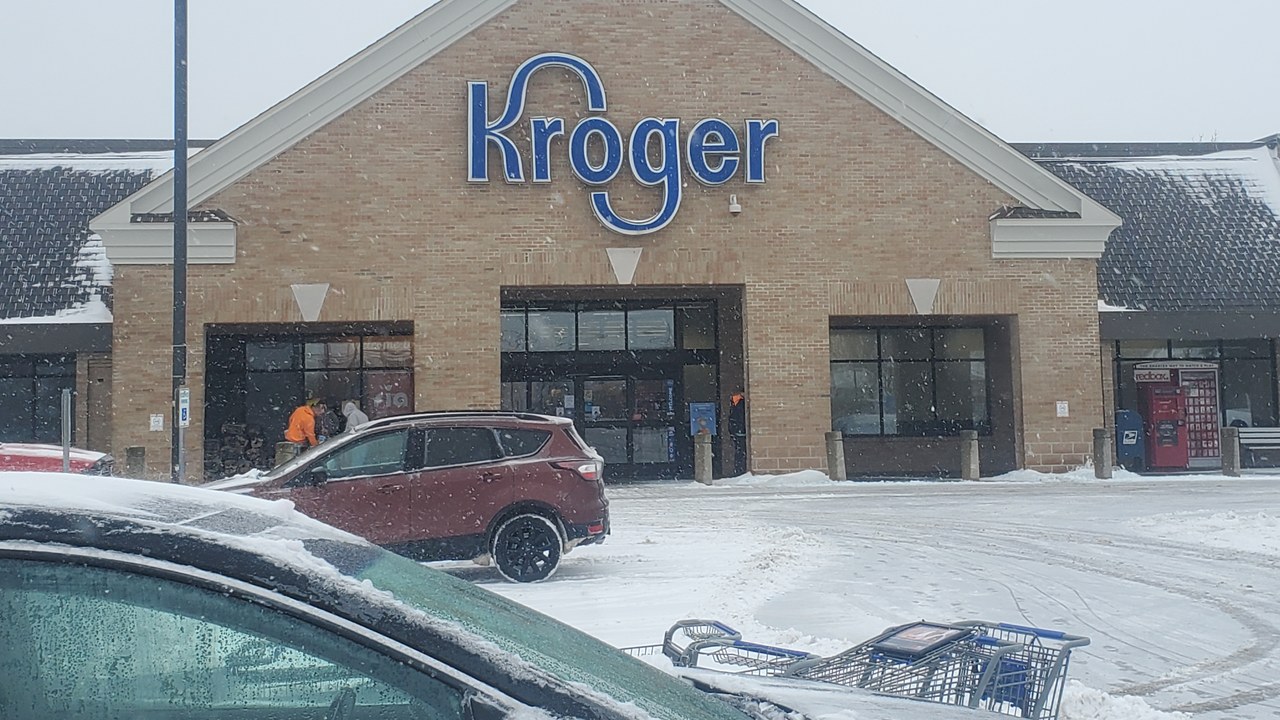
Kroger, the country’s largest traditional supermarket operator, is working through a plan to close about 60 of its stores — and for the towns losing one, the hit lands on both the grocery aisle and the in-store pharmacy at once. The retailer laid out the plan in mid-2025 and has been carrying it out on an 18-month timeline, so closures are still rolling out across the country this year. Where a Kroger-owned store is the main place to buy fresh food or pick up prescriptions, its departure can turn a routine errand into a long drive.
What Kroger announced, and how big it is
In its first-quarter fiscal 2025 results, released June 19, 2025, Kroger said it would close roughly 60 underperforming stores over the following 18 months and recorded a $100 million charge tied to the decision.
In its own earnings statement, the company framed the move as a way to redirect resources toward stronger markets, saying it expects a “modest financial benefit” and plans to reinvest the savings into the customer experience. Sixty stores is a small slice of Kroger’s roughly 1,200 supermarkets, but the closures are not concentrated in one region, so the effect is spread across many communities rather than confined to a single state. Kroger also said the closures would run alongside the completion of dozens of major store projects in fiscal 2025 and an expected acceleration of new openings starting in fiscal 2026, aimed at faster-growing areas. In other words, the company is reshaping its map — pulling back where sales are soft and pushing into places it expects more customers — rather than simply shrinking.
Free retirement updates: Enrollment and claim windows come and go, and missing one can cost you real money. The free Retirement Shield newsletter keeps you ahead of the deadlines that matter. Sign up free.
Why a store closing hits the pharmacy too
For many households, a supermarket is not just where the groceries are — it is also where the pharmacy is. When a combination grocery-and-pharmacy store closes, customers lose a nearby place to fill prescriptions on the same trip, which matters most for older residents and anyone without an easy way to get across town. Prescriptions can usually be transferred to another pharmacy, but that requires knowing the closure is coming and acting before the doors shut. For someone on several regular medications, a missed refill during the switch is not a minor inconvenience, so it is worth confirming the new pharmacy has your prescriptions on file before the old store closes. Kroger has said it will offer roles at other locations to associates at the affected stores, but employees and shoppers alike depend on getting clear notice of exactly which stores are on the list and when each one will close.
The bigger backdrop: a merger that fell apart
The closures come after Kroger’s attempt to merge with rival Albertsons collapsed. In December 2024, a federal court sided with the Federal Trade Commission and blocked the roughly $25 billion deal; the FTC called it a victory for competition, arguing the combination would have concentrated too much of the grocery market in too few hands. With that growth-by-acquisition path closed off, Kroger turned to trimming weaker stores and opening new ones in high-growth areas — pruning the footprint rather than expanding it through a takeover. For shoppers, the lesson is that decisions made in a boardroom over antitrust and profit margins can quietly change where you buy milk and pick up a prescription months later.
What it means where you shop, and how to prepare
If your local Kroger-owned store is one of the closures, the practical fallout is real: a longer trip for fresh food, a pharmacy to transfer, and, in some smaller communities, fewer options left behind. Losing a full-service grocery store is one of the ways a neighborhood can slip toward limited food access, a problem the U.S. Department of Agriculture tracks through its work on food access and food deserts, where distance to a supermarket becomes a genuine barrier for households without a car. Kroger operates under many banner names beyond its own — so the store affected in your area may not say “Kroger” on the sign. If you hear your store is closing, transfer any prescriptions early, ask where the nearest open location is, and check whether delivery or pickup from a neighboring store is an option before your last shopping trip.
This article was produced with AI assistance and reviewed by a human editor. Figures are linked to their primary sources; where a claim could not be verified from the public record, we say so.
More Financial Reading