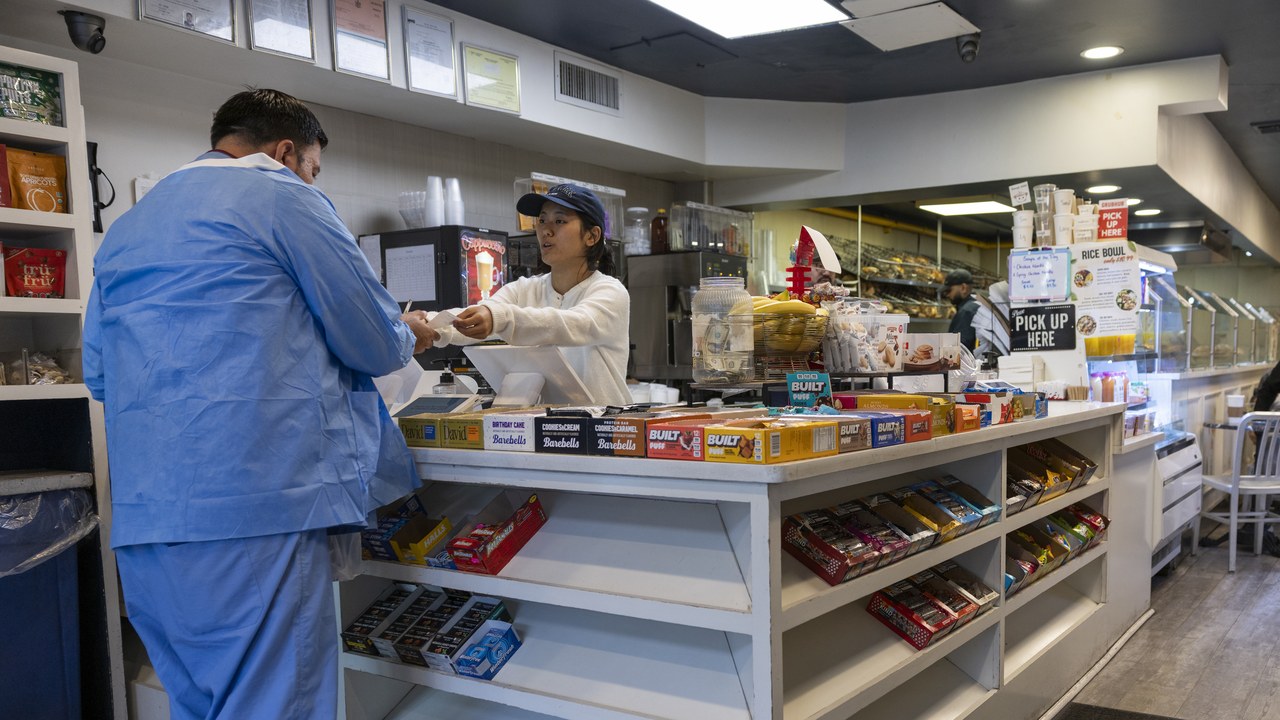
Federal wage investigators keep finding the same arrangement in restaurants: one set of timecards for the payroll system and another that records the hours actually worked. A Michigan case resolved this summer describes exactly that, with a detail that turns an ordinary overtime case into something harder to explain away. The second set of records was routinely destroyed.
What the investigation found
The U.S. Department of Labor’s Wage and Hour Division announced on July 30 that a federal consent judgment requires four Leo’s Coney Island franchise locations to pay 143 employees $515,857 in overtime wages and damages. The restaurants are in Clarkston, Dearborn, Livonia and Sterling Heights. The judgment was entered on May 26, 2026 in the U.S. District Court for the Eastern District of Michigan, Southern Division.
The named defendants are owner Kiriakos Vlahadamis and the four franchise entities: Sterling Ponds LLC, doing business as Leo’s Coney Island #61; Clarkston Restaurant Inc., #22; Dearborn Plaza Coney Island Inc., #41; and Stass Restaurant Inc., #38. Investigators found the defendants maintained two sets of timecards, and that the timecards tracking overtime hours were regularly destroyed.
Averaged across the 143 workers, the recovery comes to roughly $3,607 each. Averages flatten a lot in a wage case — the individual amounts turn on hours worked and length of employment — but for a restaurant worker, an average of that size represents a substantial stretch of unpaid overtime rather than a rounding error in a payroll system.
Free retirement updates: Want plain-English help keeping more of your money in retirement? The free Retirement Shield newsletter covers the benefits, deadlines, and money mistakes that cost retirees, a couple times a week. Subscribe free.
This was not the first judgment
The part of the case that separates it from a routine recovery is what came alongside the back wages. The judgment also requires $73,784 in penalties, and the defendants paid $10,000 in attorney fees to resolve a contempt petition — one alleging that Vlahadamis and Sterling Ponds LLC had violated a 2018 consent judgment that already required them to comply with the Fair Labor Standards Act.
A consent judgment is a court order, not a settlement letter, and violating one is contempt. That sequence — an FLSA judgment in 2018, a contempt petition, and a second judgment eight years later — is the reason the penalties are attached. It also explains why the Labor Department pursued the case to a judgment rather than an administrative resolution.
The overtime rule the case turns on
The Fair Labor Standards Act requires covered, non-exempt employees to be paid at least one and one-half times their regular rate for every hour worked beyond 40 in a workweek. It applies regardless of whether the employer calls someone salaried, whether the worker agreed to a flat weekly rate, and whether the employer’s records show the hours.
That last point is the load-bearing one in a case built on destroyed timecards. When an employer fails to keep accurate records, the burden does not shift onto the worker to produce records the employer was legally required to maintain. Courts have long held that an employee may establish hours worked by reasonable inference, and the employer bears the consequence of the gap it created. An employer who keeps no honest record of overtime does not thereby escape paying it.
Restaurants show up disproportionately in these cases for structural reasons: cash-heavy operations, high turnover that thins out institutional memory, workers who may be reluctant to complain, and shift patterns that push past 40 hours in busy weeks without anyone formally scheduling overtime. Franchise structures add a layer, since the practices at issue sit with the franchisee rather than the brand.
The database worth searching regardless of where you worked
The most useful thing about a case like this for a reader in another state is not the case at all. When the Labor Department recovers back wages, it often cannot locate every worker owed money — people move, change phone numbers, or left the job years before the investigation concluded. Those unclaimed wages sit in a federal account.
The department maintains a searchable database, Workers Owed Wages, that lets anyone check by name and employer whether money has been recovered on their behalf. It is free, it takes a minute, and it covers employers nationwide rather than any single case. Two details are worth knowing before searching: as of October 1, 2025 the division makes all payments electronically, so anyone who finds a match will need to supply current banking information rather than wait for a check. And the department holds unclaimed back wages for three years before remitting them to the U.S. Treasury, after which they cannot be claimed.
That three-year clock is the reason to search now rather than eventually. Someone who worked a restaurant, retail, warehouse or care job any time in the past few years — particularly one they left before an investigation would have reached them — is exactly the profile of a worker whose money is sitting in that database unclaimed.
This article was produced with AI assistance and reviewed by a human editor. Figures are linked to their primary sources; where a claim could not be verified from the public record, we say so.
More Financial Reading