Kroger set out a store-closure program more than a year ago and put a number on it in a quarterly earnings release. What the company has never published is a list. That gap is why the count of stores actually closed has been assembled by reporters rather than announced, and it is worth separating the two before drawing conclusions about any particular neighborhood.
What the company itself said
The closure program is company-confirmed and dated. In its first-quarter 2025 earnings release, Kroger disclosed that it “recognized an impairment charge of $100 million related to the planned closing of approximately 60 stores over the next 18 months,” and said it expected a modest financial benefit as a result. The same release states that Kroger “will offer roles in other stores to all associates currently employed at affected stores.”
That quarter ended in late May 2025, which puts the 18-month horizon in the neighborhood of late 2026. The $100 million impairment is the more telling detail for anyone trying to gauge how firm the plan is: a company books an impairment charge when it has concluded the assets will not generate their carrying value, which is an accounting acknowledgment that the closures are decided rather than contemplated.
For scale, Kroger operated 2,697 supermarkets across 35 states under about 20 banners as of January 2026, per the company’s own securities filings. Sixty stores is a little over 2% of that footprint.
Free retirement updates: Keep more of your Social Security and savings with plain-English updates on the changes, deadlines, and costly mistakes retirees miss. Subscribe free.
Where the 39 comes from, and what it is worth
The count of stores already closed does not come from Kroger. Fox Business reported in August that Kroger “did not release a full list of stores or banners slated for closure,” and that “online searches listed 39 locations” across nine banners as no longer operating. The outlet said it had contacted Kroger for more information.
That is a legitimate way to establish a floor and a poor way to establish a total. A compiled count of stores confirmed dark tells you at least that many have closed; it cannot tell you none were missed, and it carries whatever errors the underlying listings carry. Anyone reading a state-by-state breakdown of these closures — several are circulating — should treat the specific per-state numbers as the least reliable part, since they are downstream of the same compilation rather than of any company disclosure. Kroger’s own investor filings on the SEC’s EDGAR system remain the place where store counts are stated by the company rather than inferred.
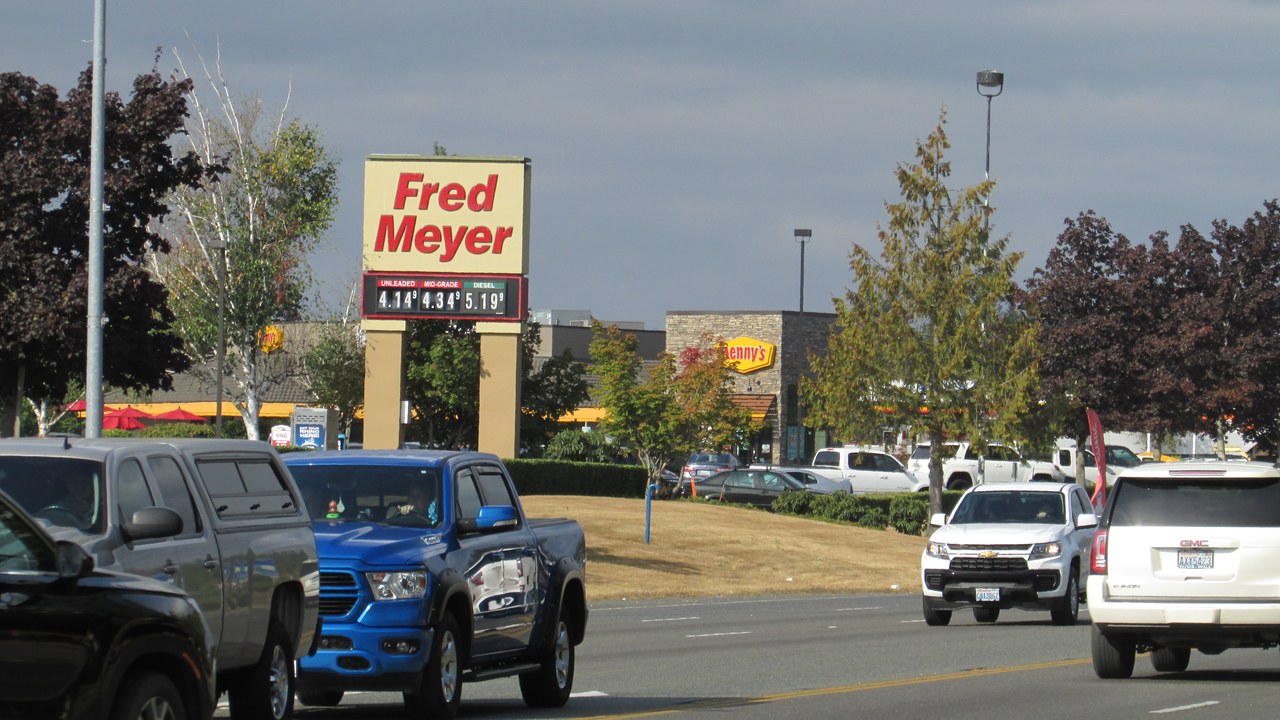
The banners named in the reporting span most of the portfolio: Kroger, Fred Meyer, Fry’s Food and Drug, Harris Teeter, Jay C, King Soopers, Mariano’s, Pick ‘n Save and QFC. That breadth is itself informative. A closure program concentrated in one region or one banner usually signals a market exit; one spread across nine banners in roughly 15 states reads as store-by-store performance pruning.
The pharmacy counter is the part that hurts
For most households, a supermarket closing means a longer drive and a different set of prices. For an older household, the more disruptive loss is often the pharmacy inside it.
Supermarket pharmacies are a meaningful share of retail pharmacy capacity, particularly outside dense urban areas, and they tend to serve customers who chose them for proximity rather than price. When one closes, prescription files are typically transferred to another location in the same chain, which can be considerably farther away. The transfer itself is usually automatic, but three things are worth confirming rather than assuming: which pharmacy the file went to, whether that pharmacy is in-network for the customer’s Part D or Medicare Advantage drug plan, and whether it is a preferred pharmacy under that plan. The difference between a standard and a preferred pharmacy in the same network can be substantial on the same drug.
Any household on a Medicare drug plan that loses its pharmacy this fall has convenient timing on its side, since the annual enrollment period beginning October 15 is the window to change plans if the new pharmacy is worse-positioned under the current one. A household outside that window can generally still switch pharmacies at will; what it cannot do mid-year is switch plans.
What closes and what does not
Kroger’s statement that it will offer roles in other stores to affected associates is a commitment worth holding the company to, though it is not the same as a guarantee of comparable hours, shift, or commute — the three variables that decide whether a transferred job is actually a kept job.
The broader pattern behind a program like this is one of consolidation rather than retreat. A chain closing 60 underperforming locations while operating nearly 2,700 is redistributing volume, not exiting. For the roughly 2% of neighborhoods on the wrong side of that arithmetic, though, the distinction is academic. The practical question in those places is what remains within reasonable distance — and in areas where the closing store was the only full grocery for several miles, the answer determines whether the household is looking at a longer trip or at a genuine gap in food access.
This article was produced with AI assistance and reviewed by a human editor. Figures are linked to their primary sources; where a claim could not be verified from the public record, we say so.
More Financial Reading