
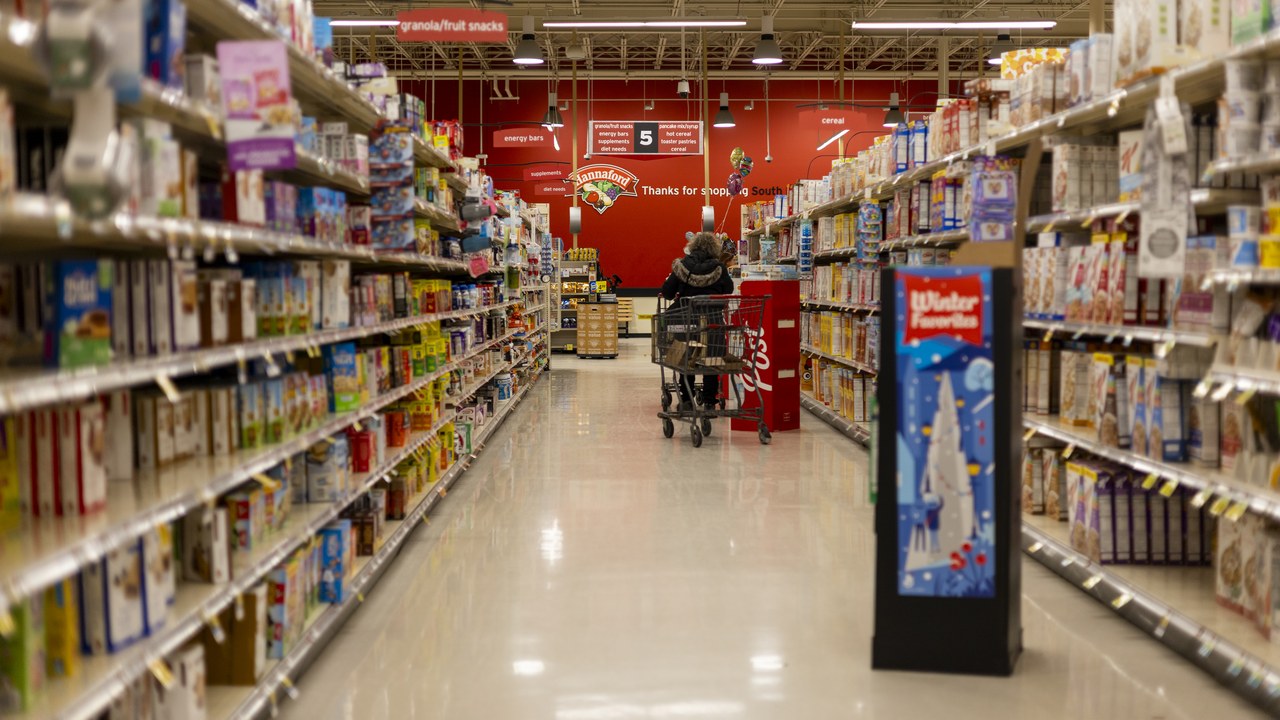
Stores that accept SNAP have until November 4, 2026 to meet a tougher stocking rule, or the U.S. Department of Agriculture will take them out of the program. The rule calls for at least seven varieties in each of four staple food categories, which adds up to 28. A store that falls short can no longer take SNAP benefits, and it has to wait six months before it can apply again.
USDA’s Food and Nutrition Service says that as of November 4, 2026, SNAP-authorized retailers other than specialty food stores, such as butchers, fish markets and produce stands, must comply with the updated standards. A store that does not meet them “will be withdrawn from participating in SNAP.”
What a store has to keep on its shelves
The four staple categories are dairy, grains, protein, and vegetables or fruits. Under the final rule, which the Federal Register published on May 8, 2026 over the signature of Deputy Agriculture Secretary Stephen Vaden, a store needs seven distinct varieties in every category. The old standard was three, so the number more than doubles.
Each variety also needs at least three stocking units on hand, for a minimum of 84 units across the four categories. And the store must offer one perishable variety in at least three of the four categories, which works out to at least 3 of the 28 varieties and 9 of the 84 units. The old rule asked for perishables in only two categories.
Will the neighborhood store still take SNAP?
For households on SNAP, the practical question is whether the store where the card gets used will still be authorized on November 4, and what to line up if it is not. Anyone who shops at a small market, a convenience store or a rural grocery can ask the manager directly, and can look up other authorized stores near an address on USDA’s SNAP Retailer Locator.
Retirement deadlines, in your inbox: Miss an enrollment or claim deadline and the money can be gone. The Retirement Money Brief keeps you ahead of the ones that matter, every weekday.
Get the Retirement Money Brief →
We may earn a commission from links on this page.
The locator is a map tool. It lets people enter a street address, city and state, or ZIP code to find nearby SNAP-authorized retailers, pick one to see its details, and get directions. For someone without a car, knowing the second-closest authorized store before a first store drops out is the whole point.
The rule falls hardest on small stores. The Federal Register notice says it primarily affects convenience stores, small grocery stores and combination stores, and counts 269,217 SNAP-authorized retailers as of April 30, 2025. That is the pool of stores whose shelves are measured against the new standard.
Why the November 4 date is not expected to move
Nothing on USDA’s retailer page, last updated October 15, 2026, delays the November 4 date. The page points retailers to a calculator and guidance notices instead. USDA also posted SNAP Policy Memo 2027-01, updated October 13, 2026, covering the stocking standards for stores applying for or renewing authorization.
A September 4, 2026 retailer notice, titled New Guidance on How to Meet the Updated Staple Food Stocking Standards, went out two months before the deadline. The rule itself took effect July 7, 2026. November 4 is the date by which stores must put it into practice.
One wrinkle is how quickly a store gets checked. The Federal Register notice says stores already in the program are generally assessed when they come up for reauthorization, which happens within five years of authorization and every five years after. USDA can assess a store at any time, though, and it encourages stores to comply by the implementation date.
What the change costs stores, and what a turned-down store faces
USDA’s own cost estimate shows why some owners are worried. The Federal Register notice puts the first-year cost to retailers at about $77 million, then about $1 million to $2 million a year for the following four years. For the average affected small store, it estimates about $407 in the first year and $482 over five years.
Stocking seven kinds of dairy, grains, protein and produce, three units of each, is not a trivial order for a tiny shop. Food ordered or received up to 21 days before a store visit counts toward compliance if the store documents it, according to the same notice. That gives owners some room to stock up close to a check.
USDA’s retailer page says a store that was withdrawn can reapply six months after the date it was withdrawn. The same six-month wait applies to a store that is denied. The Federal Register notice says the same wait applies to retailers denied authorization or reauthorization for missing the staple food requirements.
That clock starts on the withdrawal or denial date, not on November 4. A store pulled out in, say, January could not apply again until July. For a household that depends on one nearby store, that is months of longer trips or a different grocery routine.
The rule leaves the benefits themselves alone. It changes which stores can accept them. Households that keep their recertification and reporting dates on schedule can use the benefits anywhere else that is authorized, which is why the date calendar matters more than any single store.
Is the corner store near the SNAP household’s home about to lose its authorization?
If the store drops out and the household has not lined up another one, the first sign is a declined card at the register. In the same weeks, a missed recertification or a late income report can cost the benefit itself, and that is a much bigger loss than a longer drive.
The SNAP & Medicaid Renewal Organizer, written for households that keep their benefits through rule changes like this one, holds 51 state packs and a renewal and reporting calendar. Each state pack lays out that state’s SNAP renewal and reporting rules, so the dates sit in one place while the shopping routine changes.
More Financial Reading
- 21 Ways to Stretch a $2,087 Social Security Check
- 15 Places to Find Your Share of the $4.25 Billion States Give Back
- 15 Steps to Stop the Scams That Took $7.7 Billion From Seniors
This article was produced with AI assistance and edited for accuracy against the sources linked above.


