
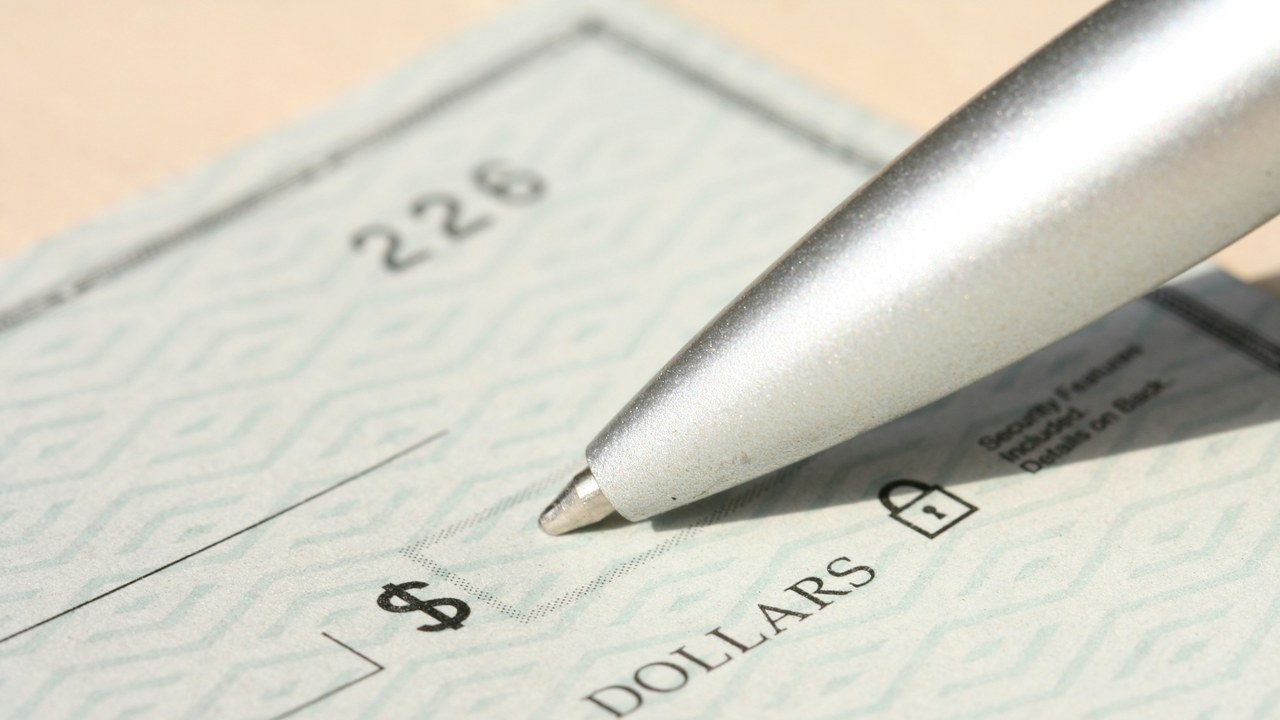
A federal judge in the Southern District of New York sentenced Laquan Williams, 42, of Florham Park, New Jersey, to 200 months in prison on October 13, which is 16 years and 8 months. The U.S. Attorney’s Office for the Southern District of New York announced the sentence in a press release dated October 14. Prosecutors say Williams took part in depositing a stolen U.S. Treasury check for $13.9 million into a recently opened account at a bank branch in Massachusetts.
What the judge ordered
U.S. District Judge Laura Taylor Swain imposed the sentence. Williams also received three years of supervised release and must forfeit about $1.8 million. The release says restitution was ordered but does not give an amount.
Williams pleaded guilty on September 4, 2025, to conspiracy to commit bank fraud and aggravated identity theft. It was not his first sentence for a similar scheme: in May 2018, Judge John G. Koeltl gave him 64 months for bank fraud, and prosecutors say he committed these crimes while on federal supervised release from that case.
U.S. Attorney Jamie McDonald said in the release that “Laquan Williams is a bank fraudster who has stolen millions of dollars from Americans,” and that the office “will aggressively pursue serial fraudsters and hold them accountable.”
The $13.9 million check was one piece of the case
The Treasury-check scheme ran from October 2021 to May 2024. Prosecutors say stolen Treasury checks were deposited into accounts opened for that purpose, while co-conspirators posed as the owners of the entities named as payees. The release does not say how the checks were stolen, and it names no co-conspirators.
The $13.9 million is the face value of a single check. It is not what banks lost. The release puts the actual losses from the Treasury-check scheme at no less than $1,157,029.78 and the intended loss at more than $30 million. The gap between the two is a reminder that a large check on a deposit slip is not the same as money that left the bank.
The sentence is now on the record, and the one open number in the case is restitution, which the U.S. Attorney’s release does not put a figure on.
Get the next update the morning it lands →
Two other schemes in the same case
The release describes two impersonation schemes alongside the checks. In the first, from May to June 2023, co-conspirators posed as customers at banks in New York, New Jersey and Connecticut. One target was a former senior federal official, and a co-conspirator used that person’s Social Security number in an attempt to move money by phone. The intended loss was about $827,568.33, and the actual loss was about $43,361.28.
In the second, from September to November 2023, a co-conspirator posed as small business owners at banks in New Jersey and New York and directed transfers into look-alike accounts that Williams controlled. The money was then withdrawn as cash or sent through CashApp. The intended loss was about $218,123.22 and the actual loss about $87,761.08.
What agents found when Williams was arrested
The sentence came more than two years after the May 23, 2024, arrest and about 13 months after the guilty plea. Assistant U.S. Attorneys Ryan Allison and Andrew K. Chan of the office’s Violent Organizations and Crime Unit handled the case, and the Secret Service and NYPD did the investigating.
The U.S. Secret Service and the NYPD investigated. At the arrest and search on May 23, 2024, they recovered about 1,102 blank state identification cards, 571 counterfeit IDs, 524 counterfeit credit and debit cards and 56 stolen credit cards. They also found about 1,015 stolen or altered checks worth about $3.35 million and nine stolen Treasury checks worth about $506,010.83, along with two handguns and ammunition. Across the case, the release counts more than 1,000 stolen or counterfeit checks, more than 500 counterfeit IDs and at least $1.8 million in losses to financial institutions.
Keeping a federal payment off paper
The victims in this release are banks, small business owners and one former federal official. The release does not describe anyone’s benefit check being taken. The checks at issue were made out to entities.
For a federal benefit, Treasury’s rule is that payments go electronically. The Treasury Fiscal Service says that “all federal benefit payments must now be paid electronically,” by direct deposit to an account or to a Treasury-sponsored account. Check recipients can enroll at GoDirect.gov, or call the Treasury Electronic Payment Solution Center at (877) 874-6347 to enroll in direct deposit or the Direct Express card. People without a bank account can use the FDIC’s #GetBanked site to find help opening one.
The requirement has a legal basis. Federal law, 31 U.S.C. 3332, generally requires most federal payments other than those under the Internal Revenue Code to be made by direct deposit unless a waiver applies, and the updated rule at 31 CFR Part 208 took effect March 22, 2024, according to the same Treasury page.
Treasury lists the benefits of direct deposit as safe and secure, efficient and less expensive than paper checks. Anyone who still gets a paper check should keep an eye on the mailbox on payment days and call the paying agency if one does not arrive.
More Financial Reading
- 24 Ways to Stretch a $2,087 Social Security Check
- 17 Places to Find Your Share of the $4.25 Billion States Give Back
- 17 Ways Retirees Are Tapping a Record $14.9 Trillion in Home Equity
This article was produced with AI assistance and edited for accuracy against the sources linked above.


