
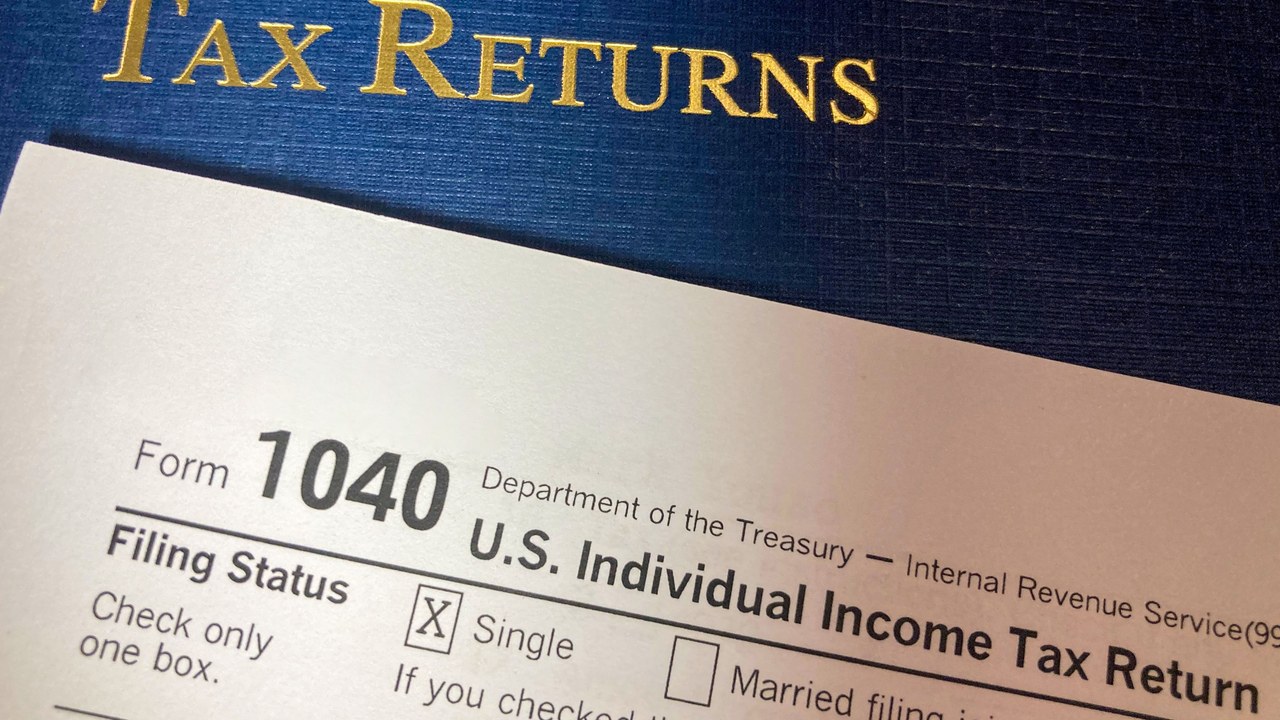
A new federal tax break for older Americans comes with a filing-status rule that can shut out married couples. The 2025 tax law lets people age 65 and older take an extra $6,000 deduction for tax years 2025 through 2028, but a married taxpayer has to file a joint return to claim it. Couples who file separately do not get it.
How the $6,000 deduction works
The Internal Revenue Service describes the break in its fact sheet on the One Big Beautiful Bill Act tax deductions for working Americans and seniors, FS-2025-03, issued July 14, 2025. Individuals who are 65 or older “may claim an additional deduction of $6,000,” the agency says, and the extra amount is separate from the existing senior add-on to the standard deduction.
It is a deduction, not a payment. A deduction lowers the income a household is taxed on, so the dollars it saves depend on the tax rate that applies to that income. The IRS fact sheet does not put a dollar figure on the savings, and it does not call the $6,000 a refund.
Who has to file jointly
Each eligible person gets $6,000, so a married couple in which both spouses qualify can deduct $12,000. The route to that figure runs through a single return. The IRS says married taxpayers must file jointly to claim the deduction, and the page names no separate-filing option. A husband and wife who file as married filing separately are therefore outside the benefit, even if both are over 65.
For couples, the question is whether the deduction reaches their income and whether the way they file rules it out. The income test is explicit: the IRS says the deduction phases out for modified adjusted gross income above $75,000, or above $150,000 for joint filers. The fact sheet does not state the rate at which it shrinks, so the size of a reduced deduction for a household over the line cannot be worked out from that page alone.
A joint-filing couple with income near the $150,000 line can lose part of a $12,000 deduction without noticing. The Retirement Tax & Withdrawal Planner covers the senior deduction and includes four calculators (provisional income, IRMAA tier, RMD schedule, Roth bracket fill) for seeing where income lands before the return is prepared.
Test the $6,000 senior deduction against your income in the Planner →
Age, Social Security numbers and itemizing
Two other requirements sit alongside the filing rule. A person must reach age 65 on or before the last day of the tax year, so someone who turns 65 on December 31 qualifies for that year. And the return has to include the Social Security number of each qualifying individual.
The deduction is available to people who itemize and to people who take the standard deduction, according to the fact sheet. That matters for retirees whose deductions are too small to itemize, because the break does not depend on how the rest of the return is built.
Which years it covers
The deduction applies to tax years 2025 through 2028. That makes the return for 2025, filed in 2026, the first one on which it appears, and the return for 2028 the last. The fact sheet states the four years flat and says nothing about adjusting the $6,000 for inflation, so no 2027 or 2028 amount other than $6,000 is published on the page.
The fact sheet’s own dates are worth knowing. It was issued on July 14, 2025, and carries an update dated July 25, 2025. The IRS includes a notice that news items may not be updated after release, so details on later guidance would come from the agency’s tax pages and form instructions.
What changes between spouses
Consider two retired spouses who each reach 65 during the tax year. On a joint return with income under $150,000, the fact sheet lets the couple deduct $12,000. If one spouse is 66 and the other 63, only the 66-year-old counts, and the deduction is $6,000. If the couple files separately, the fact sheet leaves them out entirely.
Checking income and filing status before the return
The free starting point is the IRS fact sheet itself, published on IRS.gov, which lists the $6,000 amount, the 2025 through 2028 window, the phase-out thresholds, the age test and the joint-filing rule.
Before a return is prepared, a household can gather three things: each spouse’s date of birth to confirm both reach 65 by the last day of the tax year, the Social Security number for each qualifying person, and a rough total of modified adjusted gross income to compare with $75,000 or $150,000. Couples considering a separate return for another reason should weigh that against losing this deduction.
The IRS fact sheet FS-2025-03 remains the source for every figure in this story.
A $6,000 deduction that a separate return voids
A couple that files separately gives up the $6,000 senior deduction, and one that crosses the income line sees it shrink, because the IRS fact sheet ties the break to a joint return and to income above $75,000 or $150,000. The Retirement Tax & Withdrawal Planner covers the senior deduction and includes four calculators (provisional income, IRMAA tier, RMD schedule, Roth bracket fill) to see where a household’s income falls.
Run the senior deduction and income calculators in the Planner →
This article was produced with AI assistance and edited for accuracy against the sources linked above.


